Updated: 5:45 a.m. ET (EST), Thursday, December 18, 2025 — Electric vehicle (EV) stocks are waking up to a policy-and-regulation-heavy news cycle that’s colliding with a broader tech reset. Before U.S. markets open, investors are juggling three headline forces that can move EV shares quickly: Tesla’s regulatory risk in California, Ford’s deepening pivot away from large EV commitments (with direct fallout for battery suppliers), and a major shift in Europe’s 2035 “all-electric” trajectory that could reshape the competitive map for legacy automakers and EV pure-plays.
Below is the key EV stock news, analyst commentary, and sector outlook hitting the wires on December 18, 2025—and what it could mean for EV stocks today.
EV stocks today: what investors are watching at 5:45 a.m. ET
If you follow EV stocks as a sector (not just one ticker), today’s setup is about policy certainty vs. policy whiplash:
- Regulatory risk is back in focus for Tesla (TSLA) after California moved toward penalties tied to how the company markets “Autopilot” and “Full Self-Driving.” AP News
- EV capex pullbacks are hitting the battery supply chain after Ford canceled a major battery supply agreement, sending LG Energy Solution shares sharply lower in South Korea and intensifying scrutiny of battery-makers’ utilization rates and order pipelines. Reuters+1
- Europe’s EV mandate is being rewritten—not as an “EV reversal,” but as a delay-and-flexibility move that could give incumbents more room to sell hybrids and range-extended vehicles beyond 2035. Reuters
- Macro matters again for long-duration growth names: Reuters notes markets are trying to recover from an AI-led bruising while traders brace for central bank decisions and U.S. inflation data—conditions that often amplify volatility in EV and autonomy-linked stocks. Reuters
Tesla stock: California threatens a 30-day sales suspension over “self-driving” marketing
Tesla headlines are dominating the EV stock narrative early Thursday after California regulators threatened to suspend Tesla’s license to sell vehicles in the state for 30 days—unless the company changes how it markets its driver-assistance features. AP News
What happened
According to the Associated Press, the potential suspension stems from a decision by an administrative law judge who found Tesla had engaged in deceptive marketing by using terms such as “Autopilot” and “Full Self-Driving,” which can imply capabilities beyond what the systems actually deliver. AP News
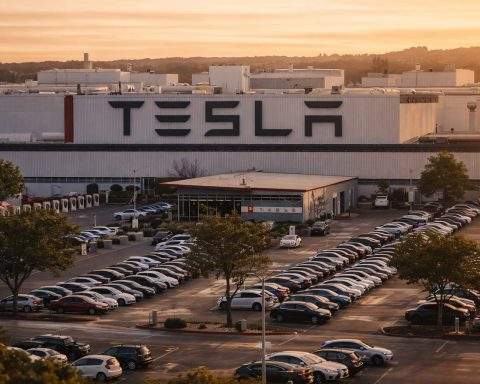
Crucially for investors, California did not move forward with suspending Tesla’s manufacturing license, which would have raised the stakes materially given Tesla’s Fremont production footprint. AP News
How long does Tesla have to respond?
Reports differ on the exact corrective-action timeline, but the practical takeaway is the same: Tesla appears to have weeks—not days—to adjust language and avoid a sales blackout.
- AP reports Tesla will have a 90-day window to make changes that clarify the limits of its system. AP News
- Investor’s Business Daily reports Tesla has 60 days to take corrective action, and frames the issue as unlikely to disrupt the business due to the grace period and Tesla’s ability to tweak branding quickly. Investors.com
Why the market may be less panicked than the headline suggests
Even with regulatory scrutiny, Tesla’s stock has been trading like a hybrid of automaker + AI/autonomy optionality. AP notes Tesla shares touched an all-time high around $495 in Wednesday trading before pulling back below $470 later. AP News
AP also emphasizes that investors have increasingly focused on Musk’s AI and robotics push, including robotaxi efforts—an attention shift that can mute near-term fear around “traditional auto” headlines. AP News
Bottom line for TSLA today: The California action is real and potentially costly if mishandled, but the market is likely to treat it as a brand/communications compliance problem first—and a demand or delivery problem only if it escalates into a prolonged sales disruption.
Ford’s EV pullback hits EV battery stocks: LG Energy Solution slides as orders get harder to replace
While Tesla grabs U.S. headlines, the battery supply chain is dealing with a concrete demand signal: Ford is stepping back again.
Reuters reports shares of LG Energy Solution (LGES) dropped as much as 7.6% in morning trade in South Korea after the company disclosed Ford had canceled an EV battery supply deal. Reuters
Why this matters beyond one contract
According to Reuters, LGES said the termination followed a notice from Ford after the automaker decided to halt production of some EV models due to policy changes and shifts in the EV-demand outlook. Reuters also highlights an investor-relevant detail: because the canceled contract was scheduled to begin in January 2027, analysts warned it could be difficult to quickly replace that volume—raising the risk of delayed utilization improvements at LGES’s European plant. Reuters
That matters because battery economics are brutally sensitive to utilization rates: when big plants run below capacity, fixed costs get spread across fewer cells, pressuring margins and forcing strategic pivots.
Korea’s battery giants are leaning harder into energy storage (ESS)
Two Korean outlets are explicit about what’s happening next: battery makers are shifting focus toward energy storage system (ESS) batteries—helped by rising demand tied to data center buildouts.
- The Korea Times reports Korean battery companies are pivoting toward ESS batteries, noting LGES is expected to accelerate conversion of production lines (including in Poland and Michigan) toward ESS. The Korea Times
- Korea JoongAng Daily adds detail on utilization and market reaction, noting the Poland plant referenced in the Ford context is operating at less than 50% utilization, and that battery-sector shares fell sharply in Thursday’s session. Korea Joongang Daily
Korea JoongAng Daily also reports Ford intends to leverage CATL licensing to establish lithium iron phosphate (LFP) production at a Kentucky plant within 18 months, signaling a push toward cheaper chemistries and potentially more localized control over battery supply. Korea Joongang Daily
What this means for EV battery stocks today: The market is increasingly distinguishing between battery makers with (1) diversified end-markets (EV + ESS), (2) flexible manufacturing, and (3) resilient order backlogs—and those that are heavily exposed to slowing EV demand and single-customer concentration.
Europe’s 2035 EV rules are being softened: hybrids and even conventional engines remain legal beyond 2035
One of the biggest EV-policy stories hitting markets on Dec. 18 is out of Brussels.
Reuters reports the European Commission published plans to abandon an effective 2035 ban on combustion-engine cars, extending the runway for Europe’s legacy automakers to sell plug-in hybrids—and even allowing conventional engines to remain legal beyond 2035. Reuters
What’s changing—and why it matters for EV stocks
According to Reuters, the Commission’s shift follows lobbying from Europe’s auto sector and is framed as a competitive response to fast-moving Chinese rivals. Reuters
The Commission also proposed a new category of small EVs with extra credits for models built in Europe—concessions that analysts say deliver much of what automakers were pushing for. Reuters
Winners and losers (and why this isn’t a simple “anti-EV” move)
Reuters outlines how different segments of the market could benefit:
- Premium incumbents like Mercedes and BMW may gain more time to monetize plug-in hybrids before transitioning fully. Reuters
- Mass-market groups with lots of small models—Reuters specifically mentions Stellantis and Renault—could benefit from the new small-EV category and subsidies aimed at Europe’s city-car market. Reuters
But Reuters also stresses that, longer term, EVs are still the future—and the economics of China’s EV scale remain a central competitive threat regardless of EU rule changes. Reuters
The forecast embedded in today’s news
This is where “EV stocks today” meets longer-term forecasting.
Reuters notes that before this week’s announcement, consultancy AlixPartners forecast Europe’s fully electric cars would make up only 62% of sales by 2035, partly because it wasn’t convinced the ban could be enforced. Importantly, a partner at the firm said they did not expect major changes to that forecast. Reuters
Reuters also cites industry data showing EU fully-electric car sales rose 25.7% year-on-year through October, reaching 16.4% of total sales—while remaining low in parts of southern and eastern Europe. Reuters
Why EV investors should care: Policy flexibility may reduce near-term compliance pressure on legacy automakers, but it can also increase uncertainty for pure EV makers and suppliers that built multi-year plans around “hard” deadlines. In markets, uncertainty often translates to higher required returns—especially for smaller, cash-burning EV names.
Rivian stock (RIVN): Wall Street upgrades the “R2 cycle” as a 2026 catalyst
Among U.S. EV pure-plays, Rivian (RIVN) is getting a clear, dated catalyst narrative in today’s analyst coverage.
Investing.com reports Baird upgraded Rivian from Neutral to Outperform early Thursday and raised its price target to $25 from $14, explicitly ahead of Rivian’s R2 launch expected in mid-2026. Investing.com
Baird’s thesis, as reported by Investing.com, is essentially: own the stock into a new product cycle, with R2 expected to support brand momentum and demand as deliveries begin. The note also points to Rivian’s autonomy and AI messaging, including the unveiling of custom chips and a deeper autonomous driving strategy. Investing.com
Investing.com adds that other firms have been adjusting targets as well—citing Needham, Canaccord Genuity, and Evercore ISI with price targets in the high teens to low 20s, reflecting a range of expectations for how quickly Rivian can translate autonomy storylines into monetizable features and improved unit economics. Investing.com
A popular debate on Dec. 18: Rivian vs. Tesla as the “better EV stock”
A separate Dec. 18 analysis piece from The Motley Fool frames the current EV investing trade-off in plain terms: Tesla’s operating expenses are rising and net income is declining, while Rivian’s upcoming R2 (and later R3) could broaden its addressable market if it executes. The Motley Fool
Whether you agree with the conclusion or not, this is the kind of stock-selection framing that often shows up in retail flow—especially when combined with an analyst upgrade cycle.
Lucid stock (LCID): valuation debate intensifies as investors reassess dilution and timelines
Lucid has been one of the most polarizing EV stocks of 2025, and a Dec. 18 valuation analysis from Simply Wall St captures why.
Simply Wall St notes Lucid trading around $11.52 versus a “most popular narrative” fair value estimate near $18.43, framing the shares as undervalued under its scenario model—but also highlighting the core risks: persistent losses, capital needs, and potential dilution that could derail the path to margin expansion. Simply Wall St
The analysis also points to a key product-timeline watch item: an upcoming midsized EV platform targeted for late 2026, meant to expand Lucid into a broader, higher-volume segment. Simply Wall St
For EV stock investors, Lucid remains a classic “story vs. balance sheet” trade—especially in an environment where macro (rates, risk appetite) can change quickly.
Macro backdrop: AI jitters, central banks, and inflation data can amplify EV stock volatility today
Even the most EV-specific headlines are landing inside a macro market that’s still digesting a tech shock.
Reuters reports global shares “crept higher” after renewed concern over AI spending hit tech, while investors prepared for a run of central bank decisions (including the Bank of England and European Central Bank) and awaited U.S. inflation data. Reuters
That matters for EV stocks because many of the biggest names in the space—Tesla in particular—trade partly as long-duration growth assets, meaning they can be especially sensitive to:
- rate expectations and bond yields,
- risk-on/risk-off sentiment in tech,
- shifts in the AI narrative (which increasingly overlaps with autonomy and “physical AI”).
EV stocks outlook: the “2026 playbook” is shifting in real time
Taken together, today’s news flow suggests a sector where the center of gravity is moving:
- Regulators are tightening language, not just safety standards. Tesla’s California situation is a reminder that autonomy branding can become a material stock driver. AP News
- Automakers are re-optimizing for hybrids, range extenders, and affordability. Europe’s proposed changes explicitly keep multiple drivetrain pathways open beyond 2035, even as EV adoption continues. Reuters
- Battery suppliers are being forced to diversify. The Ford–LGES fallout is accelerating the pivot toward ESS batteries—an adjacent market increasingly tied to grid upgrades and data centers. Reuters+1
For investors, “EV stocks today” isn’t just about who sold the most cars last quarter. It’s about who can survive (and fund) the next phase of the transition while policy, technology, and macro conditions keep moving.
Note: This article is for informational purposes and reflects publicly reported news and analysis as of the timestamp above. It is not investment advice.