
NEW YORK, Dec. 28, 2025, 10:58 a.m. ET — Market closed (weekend)
Exxon Mobil Corporation NYSE:XOM enters the final stretch of 2025 with investors balancing two competing narratives: a steady, shareholder-friendly capital return story at one of America’s biggest integrated oil companies, and a crude-market backdrop that has been pressured by oversupply concerns heading into 2026. With U.S. markets closed for the weekend, attention turns to what could move XOM when trading resumes Monday—especially oil prices, thin year-end liquidity, and the broader risk mood after a strong year for U.S. equities.
Exxon Mobil stock price: where XOM stands going into Monday
As of the latest available pricing, Exxon shares were last around $119 and slightly lower versus the prior close, with recent trading placing the stock near its 52-week high (roughly $120.81) and well above its 52-week low (roughly $97.80).
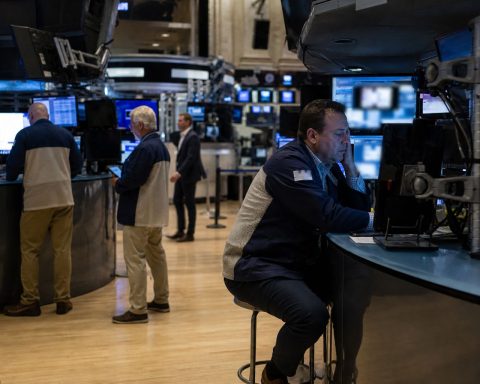
Friday’s session offered a snapshot of what tends to happen in holiday-thinned trading: small moves, sector-driven. Exxon slipped about 0.09% on Friday, a relatively modest move versus refining peers and the broader market’s near-flat performance.
That sets up a familiar dynamic for Monday: for an integrated major like Exxon, the near-term “tape” often follows crude prices and macro sentiment, while longer-term investors increasingly focus on dividends, buybacks, and execution in advantaged assets.
The biggest immediate catalyst: crude oil and the oversupply narrative
The most market-sensitive input for Exxon is still the commodity complex—especially crude.
On Friday, oil sold off sharply as traders weighed a looming global supply glut and monitored geopolitical developments tied to the Russia–Ukraine situation and potential implications for sanctioned barrels. Brent settled at $60.64 and WTI at $56.74, both down more than 2% on the day, according to Reuters.
Two expert takes from Reuters’ reporting highlight why energy investors remain laser-focused on the supply side:
- Aegis Hedging analysts said near-term geopolitical premiums have offered support but haven’t changed the underlying oversupply story.
- Dennis Kissler, senior vice president of trading at BOK Financial, pointed to elevated global storage and incremental progress in peace-related developments as negatives for oil pricing.
Reuters also referenced figures from the International Energy Agency’s December oil market report indicating next year’s oil supply could exceed demand by 3.84 million barrels per day, reinforcing the “surplus” framing that has weighed on energy sentiment. Reuters
For Exxon shareholders, this matters in a straightforward way: lower oil prices can pressure upstream realizations, while downstream/chemical profitability can vary with margins and demand. The integrated model helps cushion volatility, but the direction of crude still drives investor positioning—especially at year-end.
Why Exxon’s long-term plan still matters—even in a softer oil tape
While the day-to-day trade can be oil-led, Exxon has been trying to keep the market anchored on what it can control: capital discipline, cost structure, and volume growth from advantaged basins.
In December, Exxon updated its corporate plan through 2030, raising its outlook for earnings and cash flow growth and emphasizing Permian, Guyana, and LNG as core drivers.
Reuters reported that Exxon is targeting $25 billion in earnings growth from 2024 to 2030 and expects upstream production to reach 5.5 million barrels of oil equivalent per day by 2030. Reuters also reported a notable leadership update: CFO Kathy Mikells is expected to retire effective Feb. 1, with Neil Hansen set to succeed her.
For investors, those points matter because they influence how Wall Street models Exxon’s “through-cycle” earnings power—especially if crude stays range-bound or pressured. In other words: a weaker oil environment tends to increase scrutiny on cost advantages and capital returns.
Dividend and buybacks: the core XOM shareholder pitch
Exxon’s dividend profile remains a central reason many investors hold the stock.
In its third-quarter 2025 results release, Exxon said it:
- delivered Q3 earnings of $7.5 billion (GAAP) and returned $9.4 billion to shareholders in the quarter through dividends and share repurchases, and
- increased its fourth-quarter dividend to $1.03 per share.
The company also reiterated a plan to repurchase $20 billion of shares in 2025 (as cited in its results materials), which matters for per-share growth and downside support when energy sentiment weakens.
This is the key “investor tension” heading into 2026: if oil remains under pressure due to oversupply, Exxon’s ability to sustain its dividend and repurchase pace becomes even more important to the equity story.
Analyst forecasts: what Wall Street thinks XOM is worth
Analyst targets currently suggest modest upside from the latest trading levels—though the spread between bullish and cautious views remains meaningful.
Investing.com’s compiled analyst data shows an average 12‑month price target around the low $130s, with a high estimate of $158 and a low estimate near $109, implying a wide range of scenarios depending on oil prices, margins, and macro conditions.
Recent analyst commentary has also leaned constructive in spots. For example, an Investing.com analyst-rating update said Wells Fargo raised its price target to $158 from $156 while maintaining an overweight stance.
One important way to read these targets: at around $119, “consensus” upside is typically not a call for explosive growth—it’s often a blend of dividend yield plus mid-single-digit price appreciation, assuming oil doesn’t deteriorate sharply.
The latest 24–48 hour headline flow: institutional filings and year-end positioning
Because it’s a weekend and the market is in a holiday period, company-specific breaking headlines have been limited. Still, in the past 24–48 hours, one recurring theme in the news flow has been institutional ownership updates tied to SEC filings.
MarketBeat published multiple items pointing to third-quarter positioning changes, including:
- Cwm LLC increasing its Exxon stake during Q3 (as reported by MarketBeat based on its filing), and
- World Investment Advisors also increasing its Exxon position (again, as reported by MarketBeat based on Form 13F filings).
Two important investor notes about these headlines:
- They’re backward-looking (Form 13F data reflects prior-quarter holdings), so they don’t necessarily predict Monday’s trading.
- They do reinforce that Exxon remains a heavily institutionally owned large-cap, which can matter in year-end rebalancing or sector rotation.
Market backdrop: why Monday could still be volatile even if news is quiet
For Exxon, macro can matter almost as much as micro—because macro influences the dollar, rates, and crude.
A Reuters “Week Ahead” markets piece highlighted that U.S. equities are closing out 2025 near record levels, with investors watching for catalysts such as Federal Reserve meeting minutes and potential year-end positioning effects in thin liquidity. Reuters
Reuters quoted:
- Paul Nolte, senior wealth adviser and market strategist at Murphy & Sylvest Wealth Management, who said market momentum has favored bulls absent an exogenous shock, Reuters
- Michael Reynolds, vice president of investment strategy at Glenmede, who said the Fed minutes could be illuminating as markets handicap the rate-cut path, Reuters
- and Anthony Saglimbene, chief market strategist at Ameriprise Financial, who pointed to signs of rotation into non-tech areas where valuations are more moderate.
Why this matters for XOM: shifts in rate expectations and risk appetite can move the U.S. dollar and influence commodities—sometimes quickly. And in holiday-thin trading, small catalysts can have outsized price effects.
What investors should know before the next session
With the NYSE closed today, the practical setup for XOM investors is a checklist for Monday:
1) Watch crude first (Sunday night / early Monday).
Oil’s Friday drop was tied to oversupply concerns and geopolitics; if futures extend that move, energy equities often feel it at the open.
2) Expect thinner liquidity into year-end.
Reuters flagged that light volumes can exaggerate moves, and portfolio adjustments can add noise. That can show up as bigger swings than the headline flow would suggest.
3) Know the trading schedule.
NYSE core hours are 9:30 a.m. to 4:00 p.m. ET, with additional sessions depending on venue. New York Stock Exchange
For the holiday week, Investopedia reported that markets are scheduled for a full trading day on New Year’s Eve (Dec. 31) and closed on New Year’s Day (Jan. 1, 2026). Investopedia
Nasdaq’s trader calendar also details late‑December holiday closures/early closes for U.S. markets.
4) Frame XOM’s key levels and catalysts.
With shares near the top of their 52‑week range, investors often watch whether the stock can hold near recent highs if oil weakens again. Investing.com
On fundamentals, the debate tends to revolve around the durability of Exxon’s capital returns (dividend + buybacks) if crude stays subdued.
Bottom line for Exxon Mobil stock heading into Monday
Exxon Mobil stock is starting the week with a familiar energy-investor setup: shares near highs, a dividend and buyback framework that appeals to long-term holders, and an oil market that’s still wrestling with the idea of oversupply into 2026. The next session’s direction may come down less to Exxon-specific headlines and more to whether crude stabilizes after Friday’s selloff—and how markets behave in the final, liquidity-light days of the year.
Related articles: NYSE:XOM