Frontier Group (NASDAQ:ULCC) Extends Route Reductions With Knoxville Withdrawal Ahead of Q3 Earnings
·3 min read
Marcin Frąckiewicz
NEW YORK, July 27, 2026, 04:15 EDT — U.S. premarket activity
Frontier is set to halt its Denver-Knoxville route starting August 17, describing the decision as a pause for the season.
Nearly 88% of Frontier’s 26 scheduled route changes are set to begin after June 30.
Shares closed on Friday at $5.81, falling 6.7% across the past week. Quarterly earnings are scheduled for release on Wednesday.
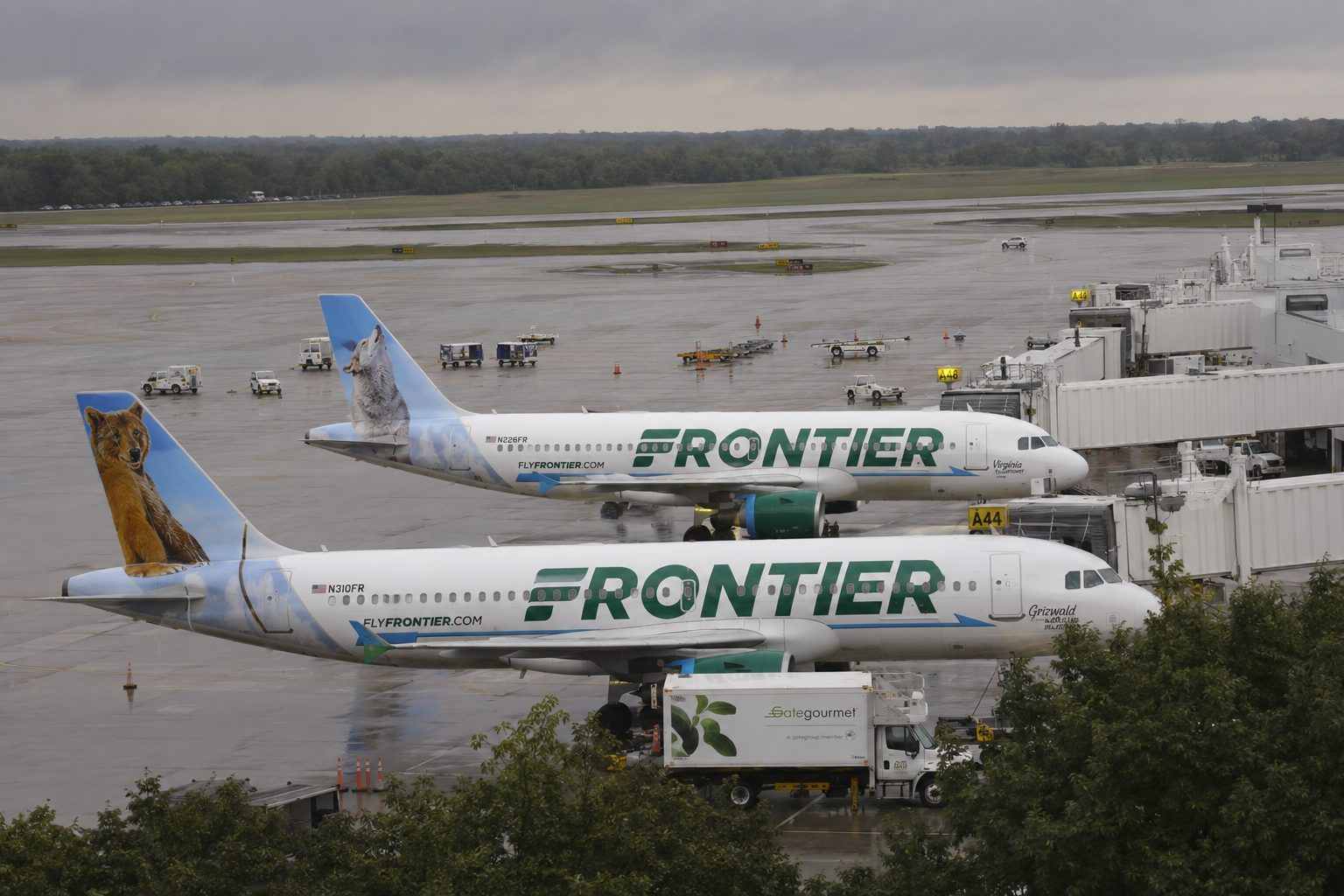
Frontier Group Holdings NASDAQ:ULCC plans to halt its sole Knoxville service on August 17, as part of a wider network overhaul ahead of its earnings announcement on Wednesday.
The timing is significant.
AeroRoutes lists 26 scheduling adjustments, with 23 set to begin following June 30. These reductions will not affect the second-quarter results that Frontier announces this week.
Frontier described the Knoxville decision as a “planned, seasonal pause.” The carrier added it continues to evaluate upcoming schedules network-wide. WBIR
AeroRoutes reported six market exits along with 26 route discontinuations or pauses. These changes represent under 6% of Frontier’s scheduled 2025 routes. This figure does not reflect capacity.
Guidance between $900 million and $950 million PR Newswire
Frontier’s own forecast puts Wall Street’s 47-cent loss projection toward the more optimistic side. This means there’s minimal margin for error if fuel or other operating costs increase.
Frontier projected a 6% to 8% increase in second-quarter capacity and anticipated revenue per available seat mile would grow by over 20%.
The fuel estimate for May stood at $4.25 a gallon, roughly 48% higher than the average price in the first quarter.
Frontier posted a $68 million adjusted loss in the first quarter, despite a 17% rise in adjusted revenue to $1.065 billion, underlining that higher fares alone are not enough.
In May, CEO Jimmy Dempsey stated that increased revenue and liquidity “validates our strategy.” That assertion faces a test on Wednesday. PR Newswire
The fleet is being streamlined in a consistent direction. By year’s end, Frontier projects a total of 171 aircraft, which is 12 less than the figure on March 31. The carrier will dispose of 11 incoming A321neo planes upon delivery.
Competitor results have set higher expectations. On Thursday, American Airlines Group NASDAQ:AAL lowered its full-year forecast, and Southwest Airlines NYSE:LUV reduced its profit minimum on Wednesday. Both companies pointed to fuel costs as the reason.
Frontier’s stock finished Friday at $5.81, gaining 5.6% during the session, though it declined 6.7% across the seven days ending Friday. The trend indicates that worries across the sector overshadowed the news from Knoxville.
McGhee Tyson Airport continues to see strong traffic, processing around 3.6 million passengers in 2025. Southwest began operations at the airport in March. Frontier’s recent exit seems related to specific routes, not a sign of declining demand at the airport overall.
Risks persist. While trimming less-trafficked routes could enhance aircraft utilisation, it may also limit growth prospects and network size. Savings could be offset by fuel and lease expenses, as well as weak demand for leisure travel.
Frontier is set to release its results ahead of Wednesday’s market open. The company’s analyst call is scheduled for 11:00 EDT. Market watchers will be watching for updates on capacity, unit revenue and liquidity in the third quarter.
The assessment uses numbers. Airlines need to generate higher revenue per seat with reduced flights and manage cash burn at a slower rate.
TechStock² • EXTENDED COVERAGE
Further analysis
Editorial insight
What is Frontier's reporting date, and what stands out as this week's primary catalyst?
Frontier will publish its second-quarter 2026 results before the opening bell on Wednesday, July 29, with a management webcast scheduled for 11:00 a.m. Eastern. Investors are watching to see if previously issued adjusted-loss guidance of $0.45 to $0.60 per share holds. The company has guided capacity growth of 6% to 8% compared with the same period last year.
What would qualify as a clear second-quarter beat?
MarketWatch indicates the consensus expects a loss of $0.47 per share. Frontier’s guidance ranges from a loss of $0.45 to $0.60 per share. A result stronger than $0.45 would exceed both benchmarks. Frontier separately projected RASM growth over 20%. Another external consensus anticipates quarterly revenue around $1.22 billion. Estimate sources vary; forward guidance could prove to be the key driver.
What is ULCC's trading level ahead of its earnings report?
Frontier Group Holdings (ULCC) closed at $5.81 on Friday, July 24, assigning the airline a market capitalization near $1.34 billion. Throughout the past 52 weeks, shares have traded between $3.02 and $8.40, and the current price stands roughly 31% below the year’s peak. The company’s trailing earnings are negative, so a standard price-to-earnings ratio is not applicable.
What risk do fuel prices pose to Frontier?
Frontier's average jet-fuel cost in the first quarter stood at $2.88 per gallon. Its second-quarter outlook was based on $4.25 per gallon, or about 48% above Q1. Jet-fuel spot prices rose close to 30% over three weeks. With the second quarter closing June 30, the increase in July mainly impacts third-quarter projections. Frontier reported 106 available seat miles per gallon, creating an efficiency cushion.
Does Frontier still maintain a sufficient liquidity buffer?
Frontier reported $974 million in total available liquidity at the end of March. Leadership forecasted between $900 million and $950 million in available liquidity by the close of June. The maximum limit on the Barclays miles facility increased from $200 million to $375 million, though actual access depends on semiannual program conditions. An initial payment was received ahead of June’s close, but its precise value was not made public.
What is meant by aircraft sales and lease returns?
Frontier has agreed to sell 11 incoming A321neo jets to Avolon, with three deliveries anticipated in late 2026 and eight slated for early 2027. The airline now projects an end-of-2026 fleet size of 171 aircraft. The return of 24 A320neo planes resulted in a $139 million charge for the first quarter. An additional $75 million to $100 million in related second-quarter charges is anticipated. These measures are slowing the growth of the fleet and keeping GAAP earnings especially volatile.
Are the most recent route reductions an indication of softer demand?
Frontier will pause Denver-Knoxville flights starting August 17, describing the move as a temporary seasonal break rather than an exit. More than 20 low-performing routes have recently been dropped, recent reports showed. In July, however, Frontier added eight routes previously operated by Spirit, and it has scheduled four more new routes to begin later in the year. These actions point to targeted adjustments in service, not a large-scale contraction. Investors should take note that daily aircraft utilization declined 12% to 8.5 hours.
Is it possible for loyalty revenue to act as a genuine cushion for earnings?
Frontier generates earnings from fees and mileage sales via its Barclays card alliance. The extended partnership is now set to last until June 2037. Management had earlier aimed for loyalty revenue to reach around $6 per passenger by the end of the year. Adjusted ancillary revenue per passenger in Q1 increased by 1% to $72.50. The Q2 call is expected to provide updates on the pace of card revenue growth.
Might elevated short interest intensify the movement in shares on Wednesday?
By July 15, investors had shorted 23.75 million shares, making up 24.33% of Frontier’s public float, which stood at roughly 97.6 million shares. A positive report could prompt shorts to cover positions, while a negative forecast might trigger further selling. Elevated short interest increases the risk of volatility but does not indicate future direction.
Is the short-term outlook affected by the Starlink announcement?
Frontier expects to roll out its first aircraft fitted with Starlink in early 2027. Details of the financial arrangement and fares for passengers remain undisclosed. The move is not likely to influence the second quarter results reported on Wednesday. However, it indicates an increased focus on attracting premium passengers and enhancing efficiency. Frontier's investment outlook continues to rely on margins, available liquidity, and consistent execution.
Marcin Frąckiewicz is the founder of TechStock² and CEO of TS2 Space. He writes about publicly traded space and satellite companies, telecommunications, AI infrastructure and the market forces shaping those sectors. Follow him on Google News or LinkedIn.