
London, May 9, 2026, 10:40 BST
- Gold ended the week higher, with cooling inflation worries and a softer dollar as optimism faded around a U.S.-Iran agreement.
- Traders are eyeing bullion’s ability to stay above $4,700, with resistance clustered around $4,780 to $4,900.
- U.S. inflation and retail sales numbers, set for release next week, have the potential to shift expectations around Federal Reserve policy.
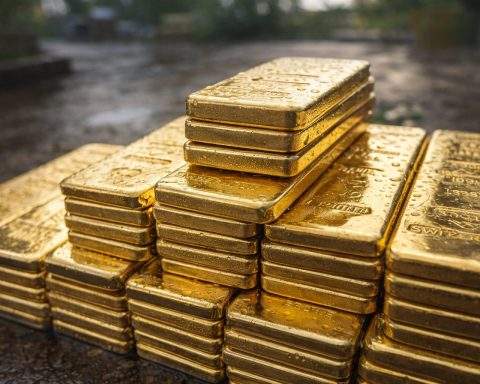
Gold wrapped up the week in positive territory, bouncing back from its lowest point in a month. Investors were positioning for a potential U.S.-Iran peace agreement that could help ease the oil price shock and take some pressure off the Federal Reserve’s policy stance. Spot gold climbed 0.7% to $4,719.68 an ounce as of 1745 GMT on Friday, notching a 2.3% weekly gain. U.S. gold futures finished 0.4% higher at $4,730.70.
It’s a tricky spot for bullion now, wedged between rarely aligned pressures: investors chasing safe haven amid the Gulf conflict, and concerns that the turmoil will keep inflation elevated—bad news for an asset that pays no yield. Higher rates and stronger real yields just make holding gold more expensive.
Gold’s moves are looking more like those of a risk asset, said David Meger, director of metals trading at High Ridge Futures, speaking with Reuters. The metal’s bounce tracked signs that tensions with Iran could be easing. A softer dollar—making bullion more attractive to overseas buyers—and a pullback in oil, which helps curb inflation fears, also played into the rally.
It wasn’t a straightforward jump. April saw U.S. payrolls climb by 115,000, handily beating the 62,000 figure economists in a Reuters poll had penciled in. The unemployment rate stayed put at 4.3%, according to the Bureau of Labor Statistics at the Labor Department. That kind of labor market resilience gives the Fed little urgency to move on rate cuts.
Gold hovered just below a key level Friday. FXStreet’s Dhwani Mehta flagged the $4,778-$4,780 range—where the 100-day and 50-day simple moving averages intersect—as the line to watch for a potential breakout. To get the bulls moving again, a daily close above that zone is needed, she said. Support showed up near $4,713 and then further down at the 21-day moving average, which stood at $4,697.84. The simple moving average tracks a security’s trend by smoothing out price moves over time.
Front-month gold futures finished Friday at $4,720.40, climbing 1.95% for the week, according to a separate MarketWatch report. That marks a fourth consecutive daily gain and the strongest weekly performance since mid-April. MarketWatch also noted bulls are eyeing a decisive move above $4,800-$4,900, while a slip under $4,400 could hint at renewed weakness.
Physical demand painted a mixed picture. Reuters flagged subdued interest from Indian buyers, with steeper prices sidelining some during the wedding season, while Chinese premiums held steady, ranging from $14 to $20 an ounce above global benchmarks. Peter Fung, head of dealing at Wing Fung Precious Metals, noted that Chinese buyers remained drawn to gold for “investment and safe-haven” reasons, pointing to ongoing inflation worries and the Middle East. Reuters
China’s central bank kept building its gold holdings for the 18th consecutive month in April, according to People’s Bank of China figures cited by Reuters. Persistent buying has underpinned forecasts: a Reuters survey released April 27 pegged the 2026 median gold price at $4,916 an ounce—the highest annual projection seen in Reuters polls since 2012.
Bulls aren’t celebrating just yet. StoneX’s Rhona O’Connell told Reuters a ceasefire could spark a relief rally, though she called $5,500 “too rich.” Julius Baer’s Carsten Menke pointed to investment demand possibly heating up again if hopes for more Fed easing come back. Reuters
Other metals found buyers too. Spot silver advanced 2.5% Friday, reaching $80.40 an ounce. Platinum climbed 1.3% to $2,047.88, putting both on track for weekly gains. Palladium, on the other hand, edged down 0.5% to $1,487.71.
The central worry is a potential collapse of the Gulf truce or another spike in energy prices. On Saturday, Reuters noted that the United States and Iran remain deadlocked after new clashes in the Gulf. Washington continues to wait for Tehran’s answer to its proposal, as renewed Iranian missile and drone strikes target the United Arab Emirates.
Looking to next week, the outlook remains range-bound but on shaky ground. Gold has to defend the $4,700 zone to keep its recovery hopes alive—levels to watch above include $4,780, $4,850, then $4,900. If U.S. inflation runs hot, the dollar firms, or oil climbs, bullion could slip back toward $4,600-$4,570. A meaningful Iran agreement and weaker U.S. numbers would bring $4,900 back on the radar. Investors will be watching U.S. inflation, retail sales, developments on Iran, and the Trump-Xi meeting.