
On December 23, 2025, the Indian Space Research Organisation (ISRO) entered the final stretch ahead of a headline-making commercial launch: LVM3-M6, a dedicated mission to deploy BlueBird Block-2—also widely referred to as BlueBird 6—a next-generation communications satellite built for direct-to-smartphone cellular broadband from space.
If the mission proceeds as planned, it will set multiple records at once: the heaviest payload ever launched by LVM3 from Indian soil and one of the most closely watched attempts yet to push “space-to-phone” connectivity from tech promise to operational reality. ISRO+2ISRO+2
What’s happening on December 24: launch time, location, and livestream
As covered across Indian and international outlets on December 23, ISRO’s LVM3-M6 is scheduled to lift off from the Second Launch Pad at Satish Dhawan Space Centre (SDSC SHAR), Sriharikota, targeting a morning launch in India.
Key timing details reported on December 23 include:
- Scheduled liftoff:08:54 a.m. IST on December 24, 2025 The Economic Times+1
- International conversion:10:24 p.m. EST on December 23 (with equivalent GMT/IST conversions noted by international coverage) Space
- ISRO livestream window: ISRO’s mission page indicates coverage from 8:24 a.m. IST onward on launch day ISRO
Both ISRO and AST SpaceMobile have emphasized that orbital launch timing can change due to operational factors—standard practice for major missions in their final day.
December 23 update: countdown underway and mission “go” processes
A major development on December 23 was confirmation that the mission had moved into the final countdown phase, following key readiness checks and clearances. Reports noted that once the relevant boards/committees signed off, countdown operations began, including the critical propellant filling steps for the three-stage vehicle.
This “T-minus” phase is where the mission becomes less about announcements and more about execution: fueling timelines, range safety coordination, final software checks, and the precise choreography of a rocket designed to deliver a very heavy satellite into a relatively low orbit.
The payload: BlueBird Block-2 / BlueBird 6 in plain English
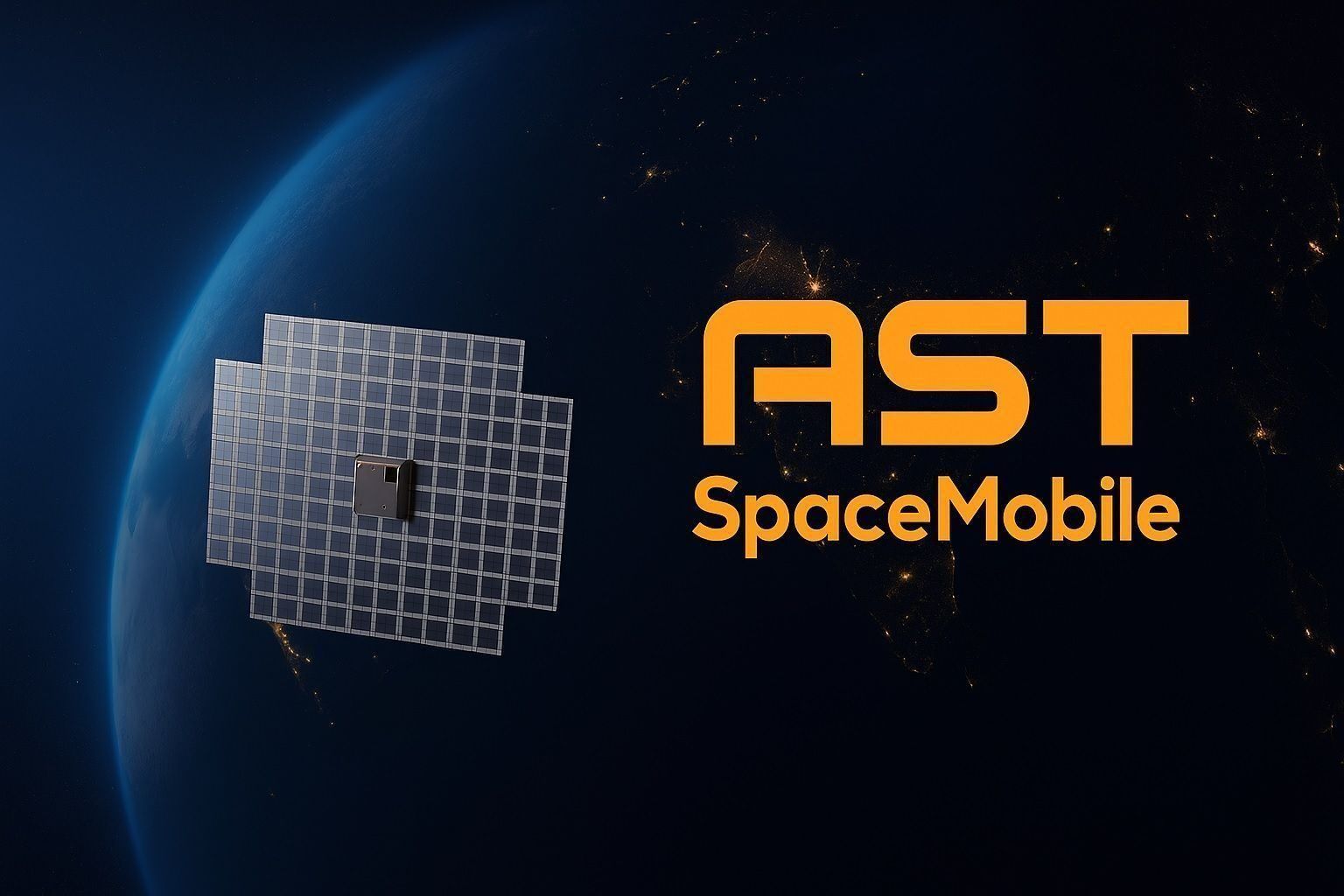
ISRO describes LVM3-M6 as a dedicated commercial mission to launch the BlueBird Block-2 communication satellite for AST SpaceMobile (USA).
What makes BlueBird Block-2 different is not simply that it’s a communications satellite—it’s built for a specific, disruptive goal: cellular broadband connectivity directly to standard mobile smartphones (no specialized satellite dish or consumer terminal).
Record-setting mass and orbit target
On December 23, multiple reports converged on the headline number:
- Mass: approximately 6,100 kg (about 6.1 tonnes) ISRO+1
ISRO’s mission brochure specifies the planned deployment into a circular low-Earth orbit of approximately:
- Altitude:520 km (circular)
- Inclination:53° (±0.1°) ISRO
That orbit matters because it aligns with how large constellations try to balance coverage, latency, and operational efficiency.
Separation timeline: about 16 minutes after liftoff
According to ISRO’s mission brochure, the satellite’s separation is planned at roughly 942 seconds after liftoff (a little under 16 minutes)—the point where the rocket has done its job and the spacecraft begins its own.
Why BlueBird Block-2 is being called the “largest” commercial communications satellite in LEO
ISRO’s own mission description calls it the largest commercial communications satellite to be deployed in low-Earth orbit, and emphasizes the scale of the payload relative to LVM3’s launch history.
One of the standout numbers behind that “largest” claim is the satellite’s antenna system. ISRO’s mission brochure describes a 223 m² phased array, positioning it as a major leap in deployable communications hardware for LEO. ISRO
AST SpaceMobile, on its “Next-Gen BlueBird” materials, similarly highlights nearly 2,400 square feet of phased-array capability and frames it as a record-class system for low-Earth orbit commercial deployments. AST SpaceMobile
The tech promise: direct-to-phone broadband, not “satellite Wi‑Fi”
The most important distinction—especially for mainstream readers—is that direct-to-device cellular is not the same thing as “satellite internet” in the traditional sense.
AST SpaceMobile and coverage around the mission describe a system intended to connect to everyday smartphones through space-based cellular broadband, rather than requiring special consumer equipment.
ISRO’s brochure frames it in practical, consumer terms: the constellation concept is meant to support 4G and 5G voice and video calls, texts, streaming, and data—a broad “full-service” ambition, not just emergency messages. ISRO
AST SpaceMobile also publishes performance-oriented claims for its next-gen architecture, including peak speeds (per coverage cell) up to 120 Mbps and significant onboard processing bandwidth—figures that, if achieved in real-world operations, would shape how the market views direct-to-device satellite systems.
The rocket: what ISRO’s LVM3 (“Baahubali”) brings to this mission
LVM3—often nicknamed “Baahubali” in popular coverage for its heavy-lift stature—is ISRO’s operational workhorse for high-mass missions. ISRO’s mission page describes it as a three-stage launcher consisting of:
- Two S200 solid strap-on motors
- L110 liquid core stage
- C25 cryogenic upper stage ISRO+1
ISRO lists LVM3’s major specs at:
- Height: ~43.5 m
- Lift-off mass: ~640 tonnes
- Payload capability: ~4,200 kg to GTO (and higher to LEO) ISRO+2ISRO+2
ISRO also points to LVM3’s proven track record, including prior flagship missions such as Chandrayaan-2, Chandrayaan-3, and commercial launches like the OneWeb missions.
Why this launch is a big deal for India’s commercial space business
The LVM3-M6/BlueBird Block-2 flight is not framed as a purely scientific or national payload mission. ISRO explicitly identifies it as a dedicated commercial mission, and ISRO’s brochure states it is undertaken under a commercial agreement involving NSIL (NewSpace India Limited) and the U.S. customer entity.
That matters because the global launch market is increasingly shaped by two forces happening at the same time:
- Constellations are getting bigger and heavier (meaning fewer rockets can serve them efficiently).
- Customers want schedule reliability and cost competitiveness—a combination that determines which launch providers win repeat business.
For ISRO and NSIL, flying a record-class commercial satellite is also a high-visibility proof point: it signals that India’s heavy-lift launch services are not only available but trusted for frontier communications missions.
Human-interest detail from the week of launch: seeking blessings before liftoff
Another widely shared detail in the lead-up—covered in December 23 reporting—was ISRO leadership and senior scientists visiting the Tirumala Tirupati temple, reflecting a long-standing tradition of offering prayers before major launches.
It’s a reminder that behind the hardware and orbital mechanics, launches remain high-pressure “all hands” events for teams, where ritual, routine, and engineering discipline often coexist.
What happens after separation: the real work begins
A successful liftoff is only the start.
After the planned separation into ~520 km orbit, BlueBird Block-2/BlueBird 6 will move into commissioning—deployments, health checks, antenna operations, and network tests.
Only then can the central question be answered in operational terms: can the system deliver stable, scalable space-based cellular broadband with the user experience mobile customers expect?
The bigger picture: why “space-to-phone” is becoming the next battleground
The attention around BlueBird Block-2 isn’t just about “one satellite” or “one launch.” It’s about whether direct-to-device becomes a mainstream pillar of connectivity—especially for coverage gaps, disaster resilience, and remote regions where terrestrial buildouts are slow or uneconomical.
ISRO’s mission documentation positions the satellite within a broader constellation vision: connectivity “for everyone, everywhere, at all times.” AST’s own materials similarly describe a global ambition built around next-generation spacecraft scale and capacity. ISRO+1
That’s the context that made December 23’s countdown news travel fast: the LVM3-M6 launch isn’t just a routine deployment—it’s a high-stakes step in a fast-moving race to redefine what a smartphone can connect to, and from where.
Related articles: NASDAQ:ASTS