
NEW YORK, July 17, 2026, 13:09 EDT (U.S. markets open)
- Joby shares hovered around $7.34, steady after falling 5.4% on Thursday.
- The Joby Trust plans to sell 596,666 existing shares worth $4.71 million.
- Early calculations show Thursday’s equity market loss reached approximately $413 million, which is roughly 88 times greater than the proposed sale amount.
Joby Aviation, Inc. NYSE:JOBY shares steadied on Friday following early fluctuations. The stock dropped to $6.90 before rebounding to $7.34. Trading volume exceeded 42.5 million shares by early afternoon.
A Form 144 filed on July 15 involved a significantly lower economic value. The Joby Trust planned to sell 596,666 common shares. Chief Executive JoeBen Bevirt signed the filing.
The shares accounted for 0.061% of the filing’s 983.6 million outstanding shares and were valued at $4.71 million, according to the notice.
Joby dropped 42 cents on Thursday, declining 5.4%. Based on the share count in the filing, that wiped out roughly $413 million. This total is a preliminary estimate.
The estimated loss was close to 88 times the value of the planned sale. That difference is more significant than the main figure in the filing. The comparison alone does not explain the share price drop.
The announcement applies to current shares, not new stock issuance, resulting in no direct dilution. The stock originates from a 2016 membership-interest conversion.
The filing referenced a Rule 10b5-1 trading plan dated March 5. It indicated July 15 as the expected sale date.
By early afternoon Friday, turnover hit 84% of Thursday’s total daily volume, while the stock stayed almost unchanged. Investors took in the morning’s drop, but the price did not fall further.
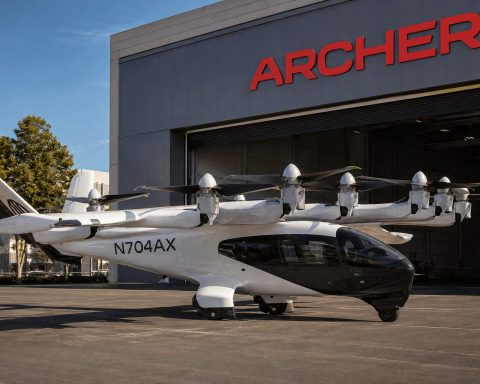
Shares of Archer Aviation Inc. NYSE:ACHR gained 1.2% to $4.55. Joby’s market capitalization stayed nearly double that of Archer’s.
| Metric | Joby NYSE:JOBY | Archer NYSE:ACHR |
|---|---|---|
| Friday closing price and change | $7.34 / unchanged | $4.55 / up 1.2% |
| Market value | $6.92 billion | $3.49 billion |
| Q1 reported liquidity | $2.50 billion | $1.776 billion |
| Market cap minus liquidity | $4.42 billion | $1.71 billion |
| Q1 adjusted EBITDA loss | $178.5 million | $172.5 million |
The table merges Friday’s market values with company disclosures from the March quarter. Market cap minus liquidity offers a basic equity comparison and does not represent enterprise value.
Based on that metric, Joby traded at a premium roughly 2.6 times higher than Archer. The difference in their adjusted EBITDA losses was just 3.5%.
Joby posted first-quarter revenue of $24 million, primarily driven by its newly acquired passenger operations. The company reported a net loss of $110 million.
A provisional estimate values Joby at approximately 63 times the midpoint of its projected 2026 revenue. The company expects revenue to fall between $105 million and $115 million.
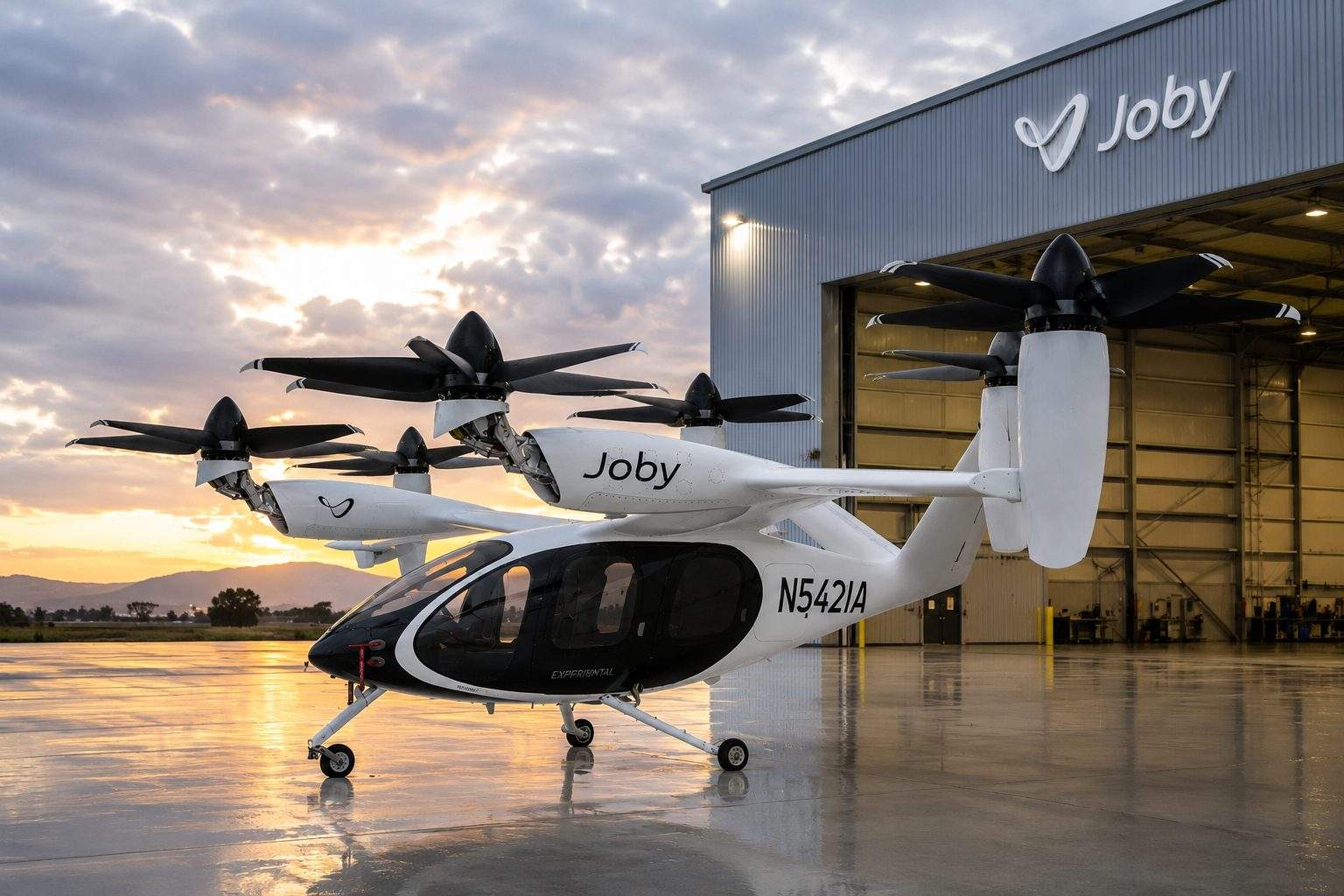
Joby’s 2025 impact report released on Thursday provided new operational data. The company recorded over 850 flights with five aircraft in the past year, marking an increase of 2.6 times compared to 2024.
The report listed 41 flights taking place at the Osaka World Expo. It further noted that initial flight tests were carried out in Dubai. These demonstrations marked an increase in Joby’s operational activities beyond the United States.
Certification continues to be the barrier to launching larger-scale passenger service. In May, Bevirt said Joby had “the clearest path we’ve ever had to beginning passenger operations.”
At that time, Joby’s inaugural FAA-conforming aircraft had taken flight, and the company had finished its SR3 audit, marking the third of four primary certification evaluations.
Toyota Motor Corp. (TYO:7203) has taken a 51% stake in a production joint venture, with Joby retaining 49%. An additional $250 million investment from Toyota is still subject to further agreements.
The modest scale of the filing alone does not account for the change in valuation. Rather, its limited size shifts focus to certification prospects and the premium on Joby as the key concerns for investors.
Risks: Delays from the FAA or UAE, production slowdowns, increased cash consumption, dilution, or more insider share sales could weigh on the premium. The Toyota partnership also needs more agreements and regulatory approvals.
Related articles: NYSE:ACHR