
NEW YORK, July 13, 2026, 13:10 (EDT)
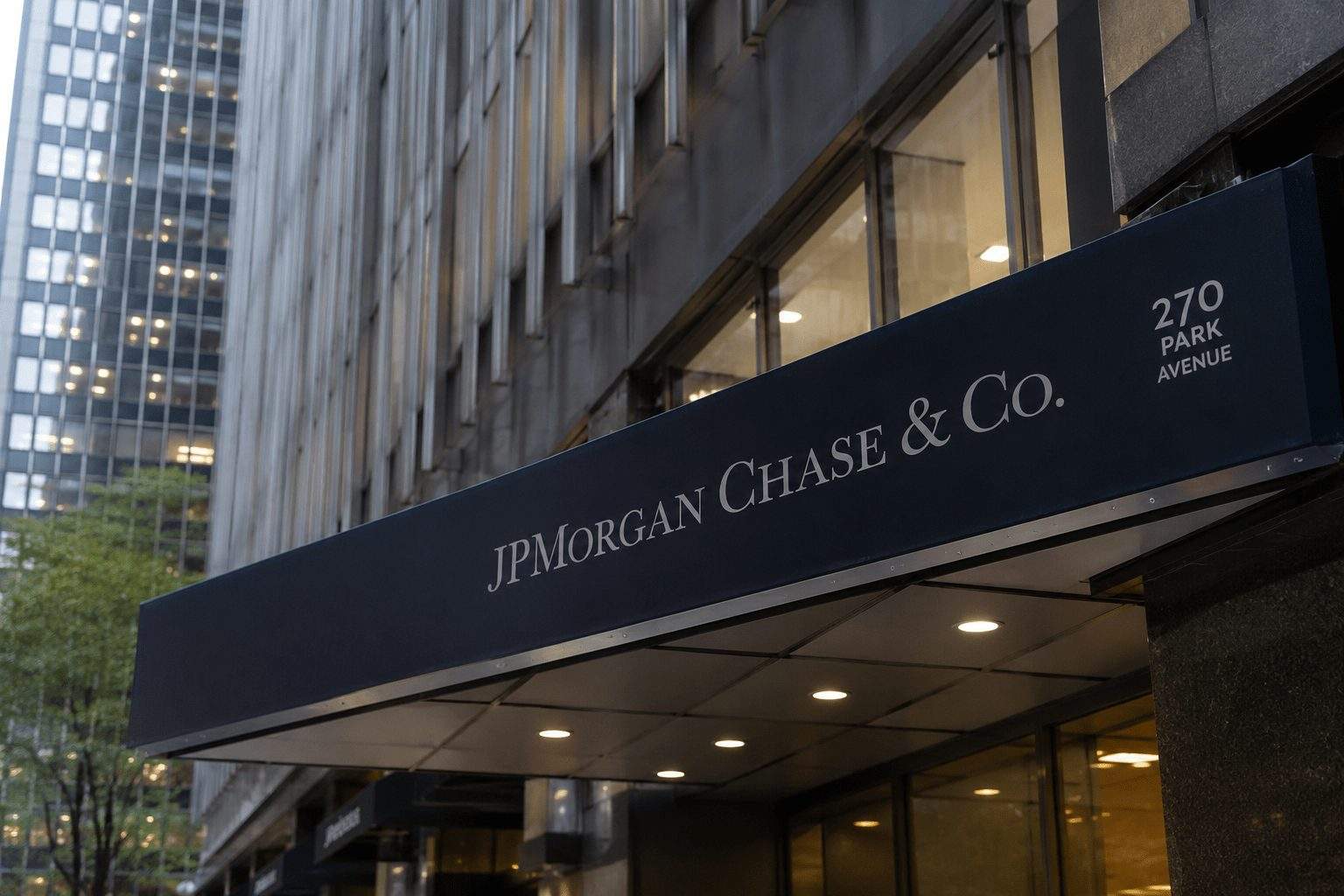
JPMorgan Chase NYSE:JPM options are pricing in a possible $35 billion move in market value tied to Tuesday’s results. Weekly options suggest a 3.77% swing through Friday, which translates to $34.9 billion on the bank’s $925.1 billion market cap. JPMorgan shares slipped 0.7% to $334.27 on Monday afternoon.
The range amounts to about 70% of JPMorgan’s new $50 billion buyback plan. Buybacks let a company cut its share count, boosting earnings per share, but that doesn’t help if revenue stays weak. The board will also raise its quarterly dividend to $1.65 from $1.50. CEO Jamie Dimon pointed to “significant excess capital and robust liquidity” but flagged “an increasingly complex set of risks.” JPMorgan Chase
Traders in prediction markets are looking for management to focus on trading, deals and capital requirements, Seeking Alpha said Monday. Investor’s Business Daily on July 8 pegged the options market move for earnings at 4.3%, higher than the week’s 3.77% from Monday, though the time frames differ. JPMorgan reports results around 7 a.m. EDT on Tuesday, with a call set for 8:30 a.m.
LSEG consensus from Investing.com shows JPMorgan is expected to post Q2 earnings of $5.78 per share on $50.2 billion revenue. Citigroup NYSE:C, also reporting that morning, is forecast at $2.74 a share on $23.8 billion in revenue. Citi’s year-to-date total return through Friday was 21.68%, while JPMorgan’s was 5.82%.
| Tuesday’s setup | JPMorgan | Citigroup |
|---|---|---|
| Earnings-per-share consensus | $5.78 | $2.74 |
| Net revenue consensus | $50.2 billion | $23.8 billion |
| Total return since start of 2026 to July 10 | +5.82% | +21.68% |
The difference in capital return is sharper. JPMorgan bought back $8.1 billion in stock in the first quarter while Citi repurchased $6.3 billion; at Monday’s close, that’s about 0.9% of JPMorgan’s market cap and 2.6% for Citi, roughly a 2.9-to-1 gap.
| Capital-return intensity | JPMorgan | Citigroup |
|---|---|---|
| Monday closing market cap | $925.1 billion | $245.7 billion |
| Q1 buybacks | $8.1 billion | $6.3 billion |
| Buybacks as % of market value | 0.9% | 2.6% |
| Annualized pace | 3.5% | 10.3% |
This is a simple annualization of the Q1 rate, not a forecast from the company. Buybacks are optional and might change or pause.
The ratio is what matters for investors, not just the overall cash. Because Citi’s market value is lower, every dollar it spends on buybacks cuts the share count more sharply, which could be one reason for the gap in stock performance. The annualized numbers are just a way to measure this, not a prediction.
Banks are getting a lift from strong fee income. The top five U.S. investment banks are expected to bring in $11.1 billion in second-quarter fees, up 27% from a year ago and the most since 2021, with M&A fees projected over $4 billion, according to the Financial Times on Monday. Global investment-banking revenue rose 24% in the first half to $61.4 billion. JPMorgan led total revenue, while Goldman Sachs NYSE:GS was ahead in M&A advice. “Equities is set to be the primary engine of growth across global markets,” Coalition Greenwich’s Jamie Vickers said. But Morningstar’s Sean Dunlop said trading growth could slow after a volatile first quarter. Financial Times
JPMorgan heads into Tuesday off a tough setup. Q1 markets revenue was up 20% at $11.6 billion, while investment-banking fees jumped 28%. That raises the stakes for any guidance—the main numbers might look good, but a routine trading update could sting if costs or capital plans weaken.
The risk can swing the other way too. Back in May, JPMorgan bumped up its 2026 expense target to around $106 billion. Argus Research’s Stephan Biggar said, “any increase in expenses worried the market.” Oil gained roughly 5% Monday as U.S.-Iran tensions flared, adding more inflation pressure ahead of consumer-price numbers due Tuesday. Higher rates can boost net interest income—the difference between what banks earn and pay—but they also lift deposit costs and credit risk. Reuters
Board approval doesn’t mean buybacks start right away. Investors want to hear how fast JPMorgan plans to buy near $334, if deal and trading gains last beyond Q2, and whether the bank can cover those payouts without costs climbing faster than revenue. Just an earnings beat probably won’t answer those questions.
Related articles: NYSE:C