
NEW YORK, July 13, 2026, 14:06 (EDT)
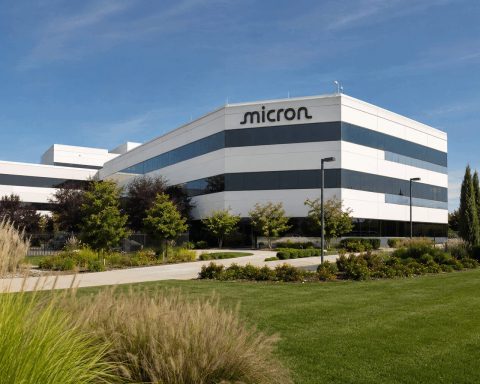
Micron Technology NASDAQ:MU fell 5.3% to $927.10 at 1:51 p.m. EDT on Monday, after touching $902.64, a drop of 7.8%. The retreat erased about $59.8 billion from its equity value compared with Friday’s close as a semiconductor selloff that began in Asia reached U.S. trading.
The market is not signaling that demand for artificial-intelligence memory has vanished. It is cutting the price investors will pay for profits generated during a shortage. The Philadelphia Semiconductor Index fell 3.7% and stood more than 14% below its late-June record by midday. “We’ve never seen this kind of extreme earnings growth,” Interactive Brokers chief market analyst Steve Sosnick said, raising the question of how long it can last. Reuters
Micron’s fiscal third-quarter non-GAAP gross margin — the share of revenue left after direct production costs, excluding certain accounting items — reached 84.9%, up from 74.9% in the prior quarter and 39% a year earlier. The company guided to about $50 billion of fourth-quarter revenue and a margin near 86%. At that sales level, a 10-percentage-point margin change represents roughly $5 billion of quarterly gross profit before operating costs and tax.
On a headline earnings measure, the stock looks inexpensive. Zacks put Micron’s forward price-to-earnings ratio, which divides its share price by expected earnings over the next 12 months, at 13.43 times against 27.73 for the industry. Yet price-to-sales, which compares market value with revenue, and price-to-book, which compares it with net assets, tell a different story. Chief Executive Sanjay Mehrotra said customers expect shortages to take “considerable time to improve,” with industry supply improving gradually in 2028. TradingView
| Valuation measure | Micron | Industry | Micron’s relative valuation |
|---|---|---|---|
| Forward price/earnings | 13.43x | 27.73x | 52% discount |
| Price/sales | 12.41x | 10.00x | 24% premium |
| Price/book | 11.12x | 8.40x | 32% premium |
That split is the central investor problem. Micron is cheap only when measured against expected profit, which is being produced at an exceptional margin. Investors are already paying premiums for each dollar of sales and net assets. If memory prices retreat, the denominator in the earnings multiple falls and the apparently low P/E rises, even without a higher share price.
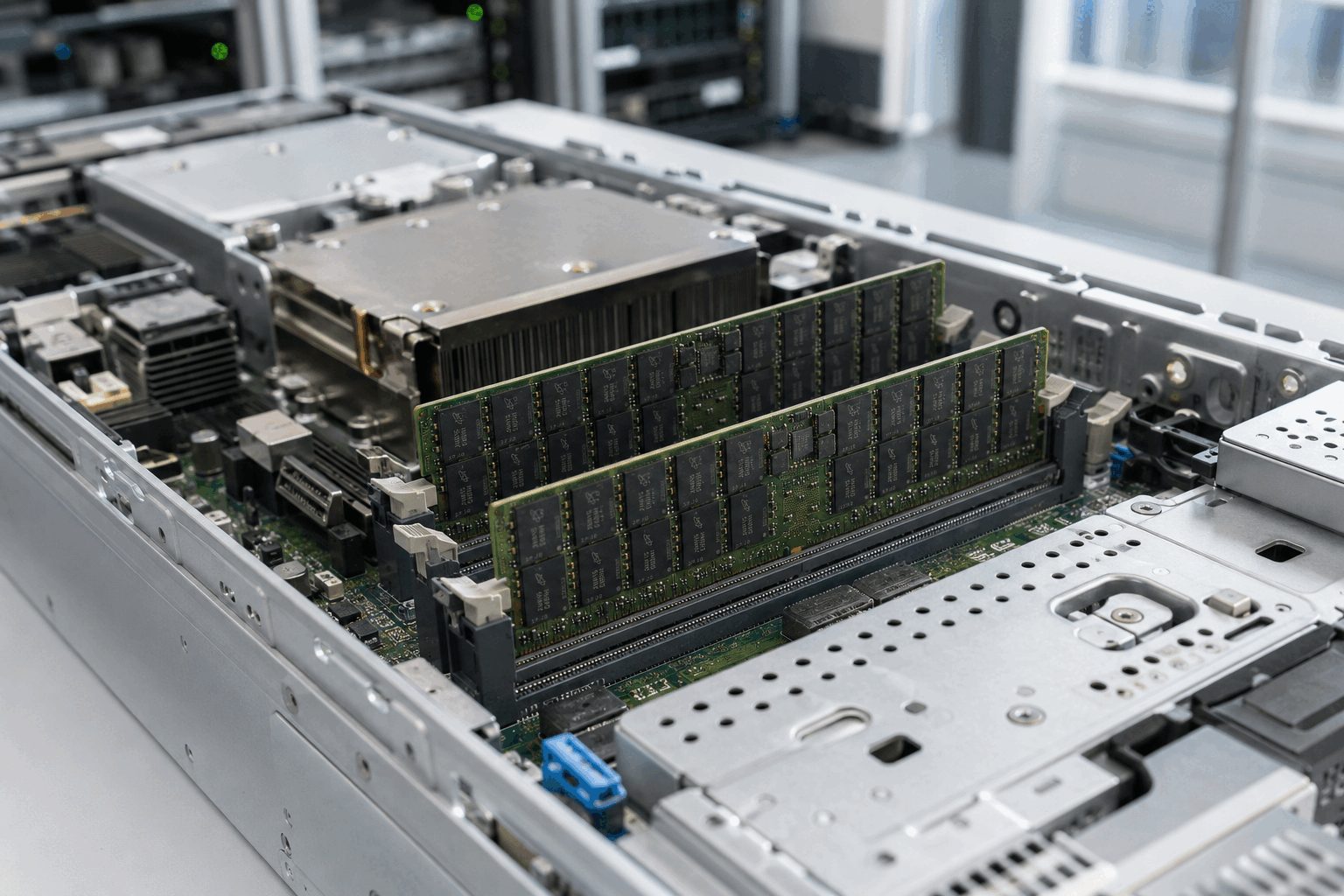
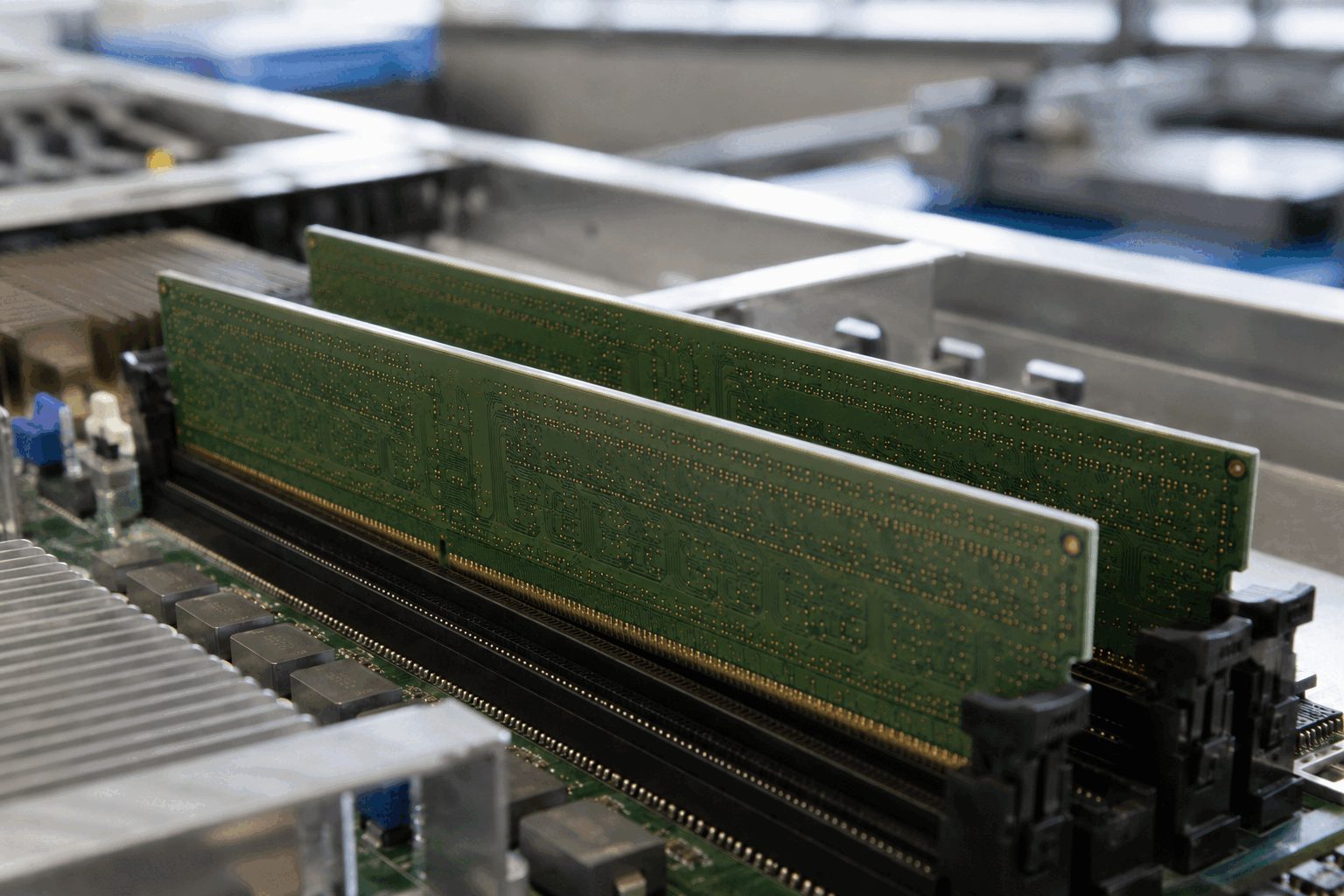
The competitive market is concentrated. SK Hynix NASDAQ:SKHY held 58% of first-quarter revenue from high-bandwidth memory, or HBM — stacked memory placed close to AI processors to move large amounts of data quickly. Micron and Samsung Electronics KRX:005930 each held 21%. SK Hynix’s American depositary receipts, U.S.-traded certificates representing foreign shares, fell 7.9% in early Monday trading, showing that the pressure was not limited to Micron.
SK Hynix and Samsung have each outlined 400 trillion won of chip-plant spending in South Korea. Micron, meanwhile, raised its planned U.S. investment to more than $250 billion through 2035. The programs cover different assets and periods, so the totals are not directly comparable.
| Company | Q1 HBM revenue share | Announced expansion | Supply or output signal |
|---|---|---|---|
| Micron | 21% | More than $250 billion in the U.S. through 2035 | First output from two Idaho plants expected in mid-2027 and late-2028 |
| SK Hynix | 58% | 400 trillion won in South Korea | CEO expects the tightest shortage in 2027 and demand above capacity beyond 2030 |
| Samsung | 21% | 400 trillion won in South Korea | Yongin cluster production has been brought forward to 2029 Barron’s |
Analysts are divided over whether those plants will end the shortage or merely chase demand. Bernstein analyst Mark Newman said memory multiples were “pricing an imminent collapse in profits.” D.A. Davidson analyst Gil Luria took the other side, saying: “We can’t possibly have enough of it.” Axios
But the downside could arrive before the new factories. A slowdown in AI-infrastructure spending, weaker-than-expected HBM adoption or a rise in conventional memory output could pressure prices while Micron is still funding its expansion. The counter-risk is that demand keeps outrunning capacity: in that case, margins stay elevated, long-term contracts reduce the usual memory-cycle swings and Monday’s selloff proves largely a valuation reset rather than the start of an earnings downturn.
For investors, the useful number is no longer Micron’s forward P/E by itself. It is the durability of the roughly 86% margin embedded in the company’s near-term outlook. Every 10-point move is worth about $5 billion of quarterly gross profit at guided revenue — enough to explain why a supply forecast several years away can remove nearly $60 billion of market value in one session.
Related articles: NASDAQ:MU






![US Stock Market Today 08/25/2026 [UPDATE: 01:08 EDT] [Memory Rally Builds as QQQ Reaches $709 Overnight]](https://ts2.tech/wp-content/uploads/2026/08/US-market-dashboard-2026-08-25-0104-480x384.jpg "US Stock Market Today 08/25/2026 [UPDATE: 01:08 EDT] [Memory Rally Builds as QQQ Reaches $709 Overnight]")