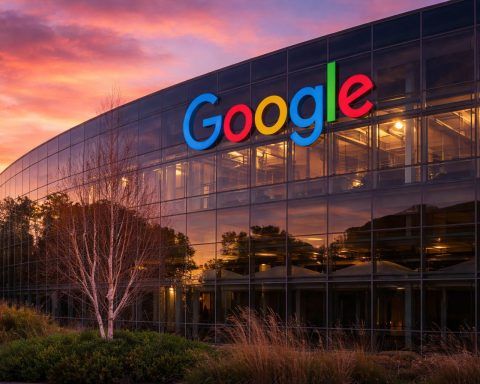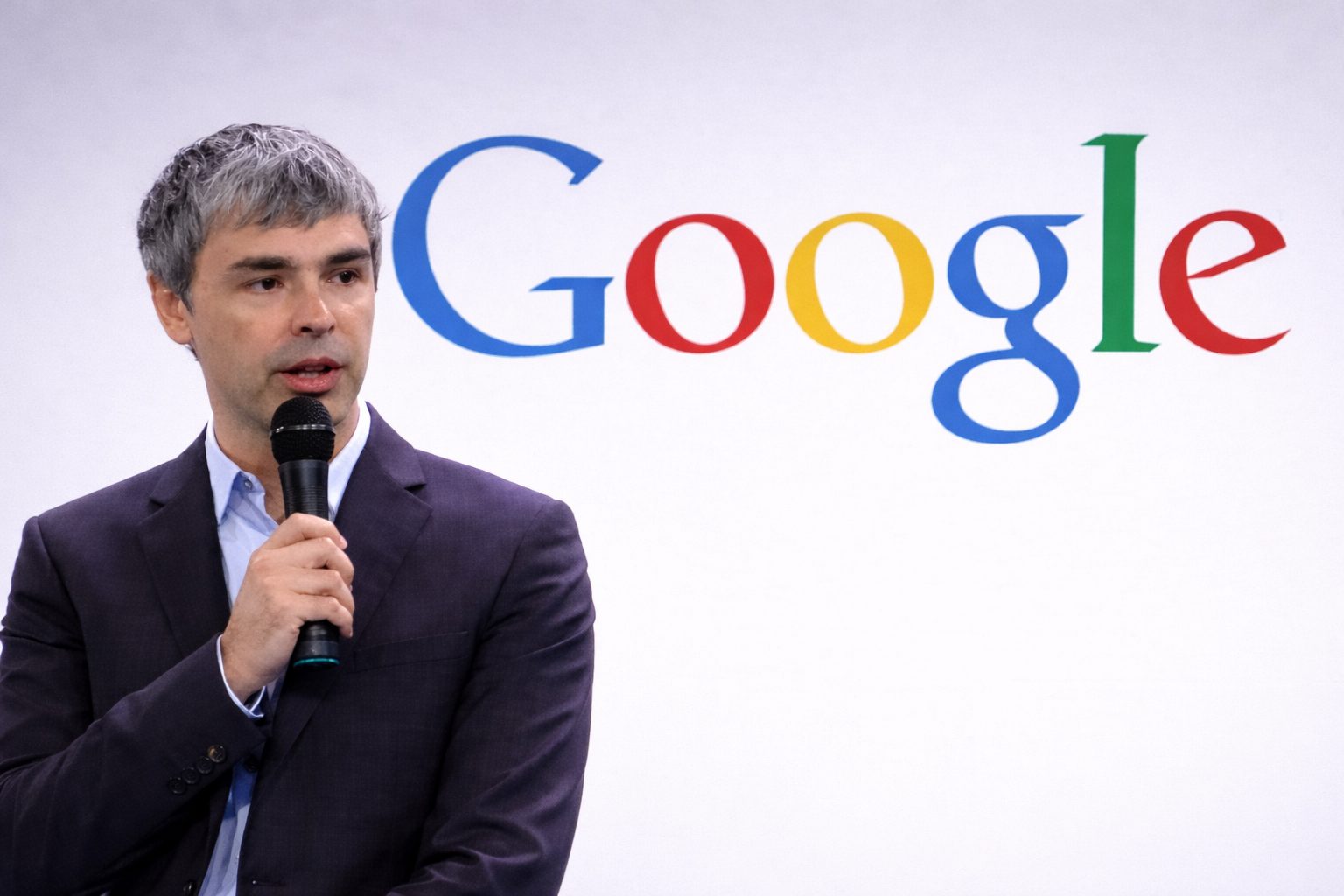

Larry Page has spent most of the past decade doing what he appears to prefer: staying out of the spotlight while the company he co-founded—Google, now the core of Alphabet—reshapes how billions of people find information, buy products, and build software.
But on December 18, 2025, Page is back in the headlines anyway, pulled forward by three forces that don’t require a public appearance: a renewed surge in Alphabet’s market value, a tightening ring of global regulation around Google’s platform power, and an unusually local flashpoint—Palo Alto’s growing backlash against billionaire “compounds,” where Page is singled out alongside other tech titans. Business Insider+2SFist+2
What emerges from today’s coverage is a clear 2025 theme: Larry Page’s influence is less about what he says and more about the systems he built—corporate, technical, and financial—still compounding value and controversy.
Larry Page’s “quiet power” is suddenly loud again
Page is no longer Alphabet’s day-to-day leader, but he remains one of the defining beneficiaries—and, indirectly, one of the defining stakeholders—of Google’s rebound narrative in the generative AI era. As of today, Bloomberg’s billionaire rankings cited in reporting place Page at about $256 billion, with Alphabet co-founder Sergey Brin at about $238 billion, as the tech wealth hierarchy reshuffles yet again.
Those numbers aren’t just lifestyle trivia. They are a signal of how markets currently see Alphabet’s trajectory: not as a legacy search-and-ads giant under siege, but as a company investors increasingly believe can defend (and even expand) its dominance by integrating AI into its core products.
Alphabet stock’s latest move: a small daily bounce that reflects a bigger 2025 story
On Thursday, December 18, 2025, Alphabet’s Class C shares (GOOG) rose 1.91% to $303.75, snapping a five-day losing streak, according to MarketWatch’s session recap.
A single trading day doesn’t explain Page’s 2025 wealth jump—but it underscores the environment making it possible: Alphabet is now a stock traders treat as both a bellwether for AI sentiment and a proxy for the durability of Google’s business model under regulatory and technological pressure.
And that’s why the “Larry Page story” is inseparable from the Alphabet story, even in years when he doesn’t give interviews.
The AI engine behind the rally: Gemini 3, AI Mode, and the “search comeback” narrative
A notable shift in late 2025 coverage is that Alphabet is no longer framed only as the incumbent at risk from AI-first challengers. Instead, a growing share of analysis focuses on how Google is embedding AI into Search rather than being displaced by it.
- Alphabet’s own product messaging describes Gemini 3 as its “most intelligent model,” positioning it as a platform layer across products. blog.google
- Analysts have increasingly argued that Google’s AI features—often referenced as part of the Gemini ecosystem—are driving higher engagement in Search, a key pillar in Alphabet’s valuation. Barron’s highlighted optimism tied to AI-driven search experiences and pointed to a raised price target from TD Cowen amid enthusiasm about renewed Search momentum.
This matters for Page because it echoes the founding idea that made Google Google: take a messy information environment, impose order at massive scale, and monetize the resulting utility. AI, in this framing, is not a replacement for that logic—it’s the next iteration of it.
At the same time, not all data points suggest a smooth transition. Independent SEO and search-industry research has described volatility in AI-generated results formats through 2025—rapid expansion followed by pullbacks and reshaping. Search Engine Land
That kind of volatility is exactly why Alphabet’s AI “win” remains debated—and why Page’s wealth rise sits on top of unresolved questions about how AI changes clicks, publisher economics, and user trust.
Regulation expands the map: Mexico’s Android ruling adds new pressure on Google’s mobile grip
On the same day Page is rising in wealth rankings and being name-checked in Palo Alto politics, Google is also confronting a reminder that regulatory attention is global, persistent, and increasingly specific.
Reuters reported on December 18, 2025 that Mexico’s antitrust commission said it had resolved a case involving competition in the mobile operating system market tied to Android-related business practices. As part of the resolution, the commission accepted commitments from Google to remove contractual restrictions that had prevented device makers from freely producing and distributing devices using operating systems other than Android, and it said it would monitor compliance.
For Larry Page, this is the modern version of a familiar tension: Google’s platforms became ubiquitous precisely because they reduced friction for users and partners—yet that same ubiquity is what regulators now see as leverage that must be constrained.
Even if Page isn’t the executive negotiating compliance, the story is still “about Page” in the sense that it’s about the durability of the structure he helped create: a company whose products became default infrastructure and therefore a default target for antitrust scrutiny.
Waymo’s valuation chatter keeps Page’s “moonshot” DNA in the spotlight
Another thread that continues to shape how investors interpret Alphabet—and, by extension, Page’s fortune—is whether Alphabet’s non-core bets can become standalone giants.
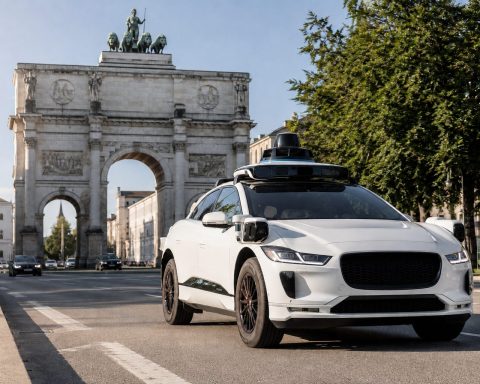
Reuters reported this week that Alphabet unit Waymo has been discussing raising money at a valuation of at least $100 billion, with the financing round potentially exceeding $10 billion and expected to be arranged early next year, citing an Information report and people familiar with the plans.
Waymo matters in the Larry Page narrative because it is almost a caricature of Page’s long-running preference for bold “other bets” with outsized upside: self-driving technology as a category-defining platform, not a feature. Whether Waymo ultimately justifies those valuations or not, it keeps alive the founder-era thesis that Alphabet is not only an ads company—it’s a portfolio of moonshots with a search business funding the experiments.
Palo Alto’s proposed crackdown on billionaire “compounds” puts Page in an unusually personal headline
Not all Page-related news today is global or financial. Some of it is strikingly local—and, in a way, more revealing about the cultural moment around extreme tech wealth.
A Palo Alto city councilmember is introducing proposed legislation aimed at curbing the disruptive effects of multi-property “compounds” built by billionaires—projects associated with years of construction, property vacancy, and intensified private security activity. Reporting notes that the push is fueled by broader anger over housing scarcity and neighborhood disruption, and it explicitly references Page as one of the wealthy homeowners whose property footprint has drawn scrutiny. SFist+1
According to SFist’s description of the proposal, key elements include:
- restricting buying homes simply to leave them empty,
- requiring detailed schedules for construction projects lasting more than six months,
- preventing new major construction from beginning less than three years after a major project finishes, and
- targeting owners who have purchased three or more properties within 500 feet—a design that effectively aims at “compound” behavior rather than ordinary homeowners. SFist
This is not the usual terrain for Larry Page coverage. Yet it speaks to a larger shift: the public conversation is no longer only about what tech billionaires build online. It’s also about what they build—literally—into the physical fabric of communities already strained by affordability and inequality.
Forecasts and forward-looking analysis: what the market thinks comes next for Alphabet (and why Page benefits)
Today’s Page headlines are the output of market expectations, not just yesterday’s performance. And several themes are shaping forecasts going into 2026:
1) The “Search is safe—and maybe stronger” thesis
A core bullish view cited in recent analysis is that AI features inside Google Search may increase engagement and reinforce the moat rather than erode it. That thesis has supported higher analyst targets, including widely reported target increases tied to AI-driven Search improvements.
2) The regulatory overhang is still real—just more fragmented
Mexico’s Android resolution underscores that remedies may come country-by-country, contract-by-contract, and market-by-market. That can be manageable in isolation, but complex in aggregate—especially for a company that operates at Google’s scale.
3) “Other Bets” optionality remains a valuation wild card
Waymo’s fundraising discussions—if they crystallize into a major round at a major valuation—could reinforce the idea that Alphabet’s moonshots are not just expensive R&D but potentially monetizable businesses with outside capital validation.
4) A volatility backdrop that can change sentiment fast
Even in a year when Alphabet has been rewarded for its AI posture, broader market coverage has shown periodic nerves around AI trade crowding and data-center economics—sentiment that can spill into any mega-cap tied to the theme.
For Larry Page, these forecasts don’t just shape paper wealth. They shape how history will interpret his legacy: whether he is remembered primarily as the architect of Google’s first era—or as the founder whose company successfully navigated the most disruptive platform transition since the smartphone.
The bigger picture: why Larry Page remains the “main character” even without speaking
On December 18, 2025, Larry Page is not making news by giving a keynote, launching a product onstage, or returning as CEO. He is making news because the institutions he helped build keep producing outcomes:
- Alphabet’s market value moves his net worth dramatically—enough to reshuffle the global rich list.
- Governments continue to test Google’s power, including through Android-related remedies.
- And communities closest to Silicon Valley wealth are attempting to rewrite local rules for how that wealth manifests physically, with Page named as part of the problem statement.
In short: Larry Page’s 2025 story is not a comeback story. It’s a compounding story—of AI, regulation, and social pushback colliding around one of the most consequential founders of the internet age.
Related articles: NASDAQ:GOOG