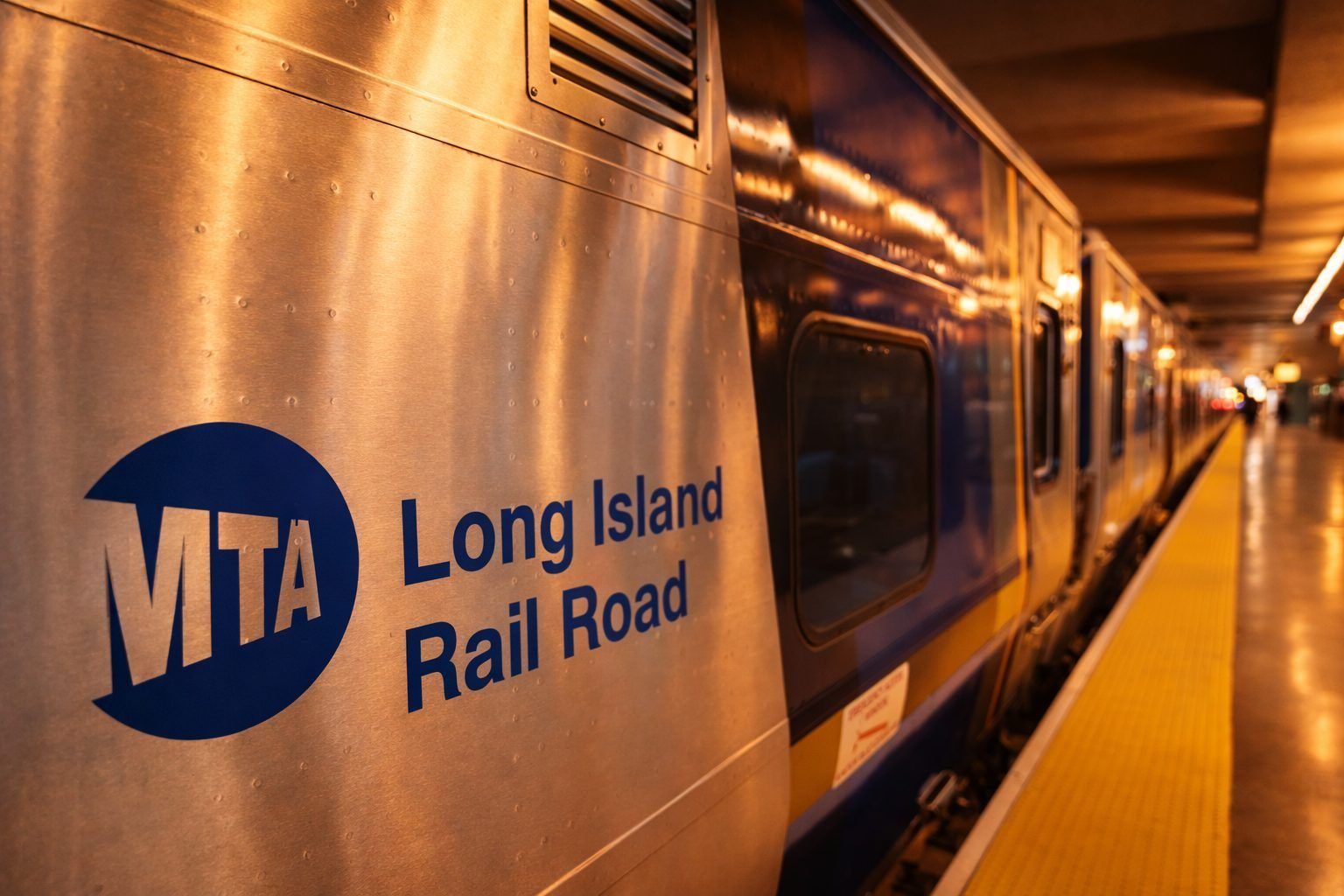

NEW YORK — Thousands of Long Island Rail Road riders faced an unpredictable Tuesday morning commute after a broken rail in an East River tunnel sharply reduced service into New York Penn Station, forcing widespread diversions to alternate terminals and triggering cascading delays across the network. The incident unfolded at the height of the rush hour and was made worse by already-tight track capacity tied to Amtrak’s ongoing tunnel work in and around Penn Station.
While the disruption eased later in the morning as crews completed repairs, transit officials warned that cancellations and delays could linger as train movements returned to normal — a familiar pattern when a single infrastructure failure hits a corridor with limited redundancy.
What happened: A broken rail near Woodside chokes access to Penn Station
According to early updates, Amtrak responded to a broken rail west of Woodside, in the critical rail approach used by LIRR trains heading toward Penn Station. As a result, the majority of LIRR service bound for Penn Station was diverted to alternate terminals, leaving many riders to piece together subway connections to reach Midtown Manhattan.
The MTA said the failure occurred in an East River tunnel, a bottleneck stretch beneath the river that links Queens to Manhattan — and one of the most operationally sensitive segments of the entire regional rail system.
Where trains were diverted: Grand Central, Atlantic Terminal, and Long Island City
With Penn Station access constrained, LIRR trains were diverted to several alternate terminals, including:
- Grand Central (Grand Central Madison)
- Atlantic Terminal in Brooklyn
- Long Island City (as an option for transferring to the subway) Gothamist+1
In practical terms, this meant many Manhattan-bound riders had to shift into “rail-to-subway” mode: taking an LIRR train as far as an available terminal, then finishing their trip by subway.
One of the most disruptive operational changes was that direct Jamaica-to–Penn Station service was suspended, a significant blow because Jamaica is the network’s primary transfer hub for riders coming from nearly every major branch.
Ticket cross-honoring: Subway acceptance aimed to reduce commuter chaos
To help absorb the crowding and keep people moving, officials said LIRR tickets would be cross-honored on the subway during the morning disruption — an emergency measure often used when rail passengers are forced onto the subway system.
For riders, the key takeaway was simple: if your train didn’t reach Penn Station, your LIRR ticket could still help you complete the trip on the subway without paying twice, depending on routing and station connections.
Service update: Repairs completed, but delays lingered
Later updates indicated the rail was repaired and diversions were lifted, though normal operations did not immediately snap back into place.
- News 12 Long Island reported that Penn Station service was no longer being diverted after the earlier broken rail, stating that Amtrak repaired the rail in one of the East River tunnels and warning riders to still expect some cancellations and delays as the schedule stabilized.
- CBS New York reported the rail was fixed just before 8 a.m., allowing service to begin getting back on track.
Timeline: What New Yorkers learned — and when — on Dec. 16
Coverage across local outlets showed how quickly the situation evolved:
- 7:19 a.m. ET — Gothamist reported the MTA said most Manhattan-bound LIRR trains were being diverted due to a broken rail in an East River tunnel, with Jamaica-to–Penn Station direct service suspended.
- Around the early-morning rush — CBS New York reported the rail was fixed just before 8 a.m., kickstarting the recovery.
- 10:59 a.m. — ABC7 reported the majority of Penn Station service was still being diverted while Amtrak responded, with capacity also constrained by tunnel work.
- Later in the morning — News 12 reported diversions had ended, though delays and cancellations could persist.
The differing timestamps underscore a reality commuters know too well: even after the physical track issue is repaired, it can take hours to unwind the backlog, reposition equipment, and restore reliable spacing between trains.
Why a single broken rail caused such widespread disruption
A broken rail is a serious safety issue — trains can’t simply “crawl past it” without inspection and repair. But the scale of Tuesday’s disruption wasn’t just about one defect.
The bigger story is capacity.
Both the MTA and local reports pointed to an operational constraint already in place: Amtrak’s tunnel work has reduced the track capacity feeding Penn Station, meaning there is less room to reroute trains or absorb unexpected problems.
And in this particular corridor, the margin for error is thin. The East River Tunnel complex is a shared asset, used not only by the LIRR but also by Amtrak and NJ TRANSIT operations — so disruptions and construction schedules can have region-wide implications.
The larger context: East River Tunnel rehabilitation is reshaping the commute
Tuesday’s breakdown also landed amid a long-running and high-stakes overhaul of the East River Tunnel infrastructure.
Amtrak says the East River Tunnel consists of four tubes, opened in 1910, carrying trains between New York City and points east, and used daily by Amtrak, the LIRR, and NJ TRANSIT. Amtrak’s rehabilitation project is underway to modernize the tunnel systems and restore two tubes damaged by Superstorm Sandy, including major demolition and reconstruction work inside the tunnels.
Industry coverage has also emphasized that the program takes one of the four tunnels out of service at a time, forcing service changes and reducing operational flexibility between Penn Station and Queens — the exact kind of constraint that can magnify the impact of an unexpected defect like a broken rail.
What riders should do when LIRR Penn Station service is disrupted
If you were caught in Tuesday’s disruption — or want to be ready for the next one — here’s what matters most in real time:
- Check the TrainTime app and official service status updates before leaving home.
- Be ready to route through alternate terminals (Grand Central Madison, Atlantic Terminal, Long Island City) when Penn Station access is limited.
- Use Jamaica strategically: when direct service is suspended, Jamaica becomes the pivot point for switching terminals and subway connections.
- Listen for cross-honoring announcements: when authorized, it can save time and money by allowing subway transfers with your LIRR ticket.
- Plan for crowding even after repairs: the “recovery period” can bring packed platforms, skipped stops, and uneven headways as service normalizes. News 12 – Default+1
Bottom line
The Dec. 16 LIRR disruption is the kind of incident that turns a normal commute into a regional stress test: a single broken rail in the East River tunnel complex quickly forced diversions away from Penn Station, pushed riders onto alternate terminals, and exposed how fragile the system can be when major infrastructure work has already tightened capacity.
Service improved later in the morning after repairs, but the episode served as another reminder that, during an era of large-scale tunnel rehabilitation, small failures can have outsized consequences for Long Island and New York City commuters.
Related articles: Stock Market