
NEW YORK, July 14, 2026, 14:09 (EDT)
- The stock dropped 44.1% to $3.08 at 13:54 EDT. Volume was 71.8 million.
- The drop wiped out nearly $948 million in common-equity value, slashing 90% of Lucid’s April capital package.
- The planned yearly cost saves amount to only 2.7% of first-quarter operating cash outflow and capex, measured as a quarterly run rate.
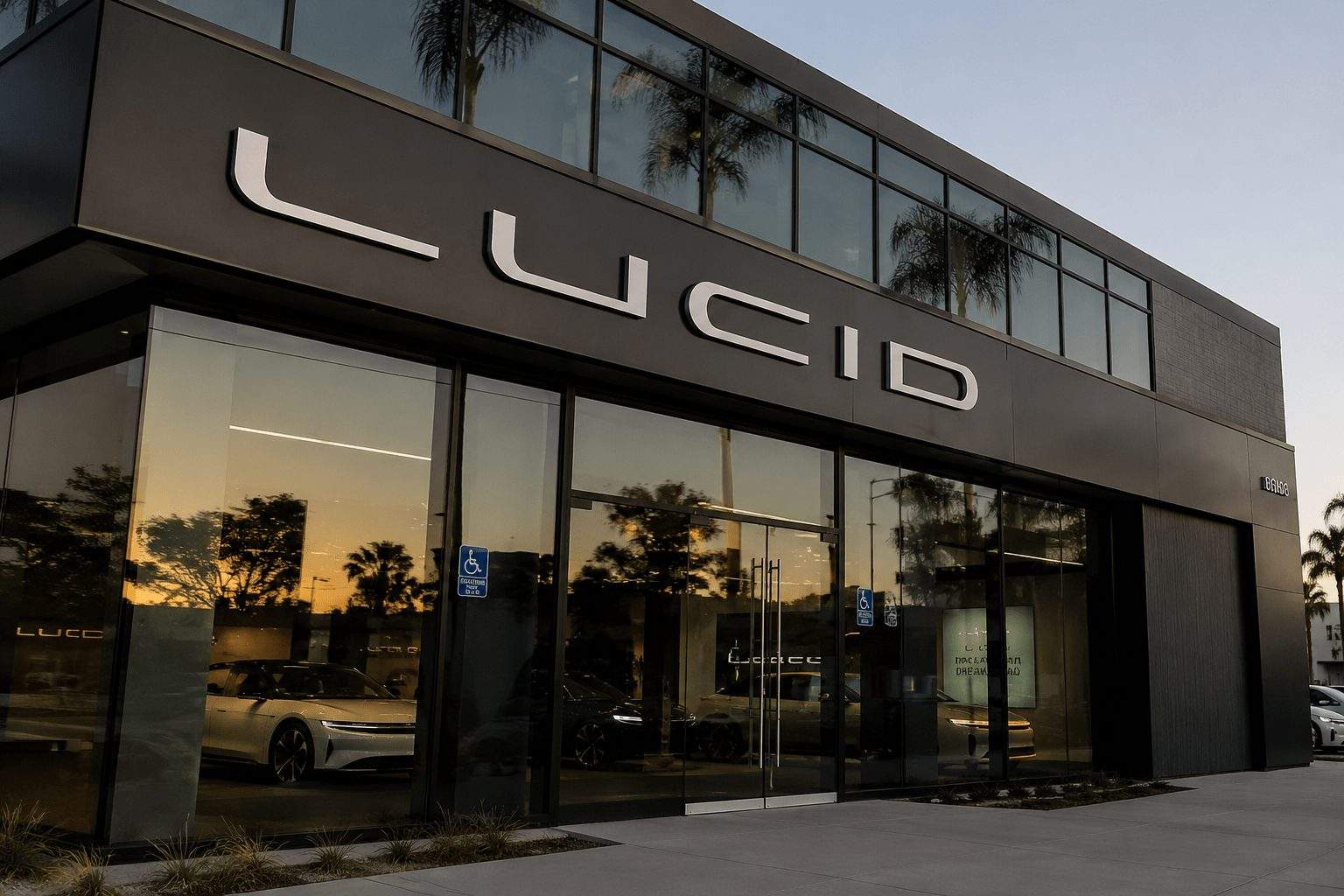
Lucid Group NASDAQ:LCID gave up around $948 million in market cap Tuesday after a report said its restructuring adviser was looking at a sale to private owners or a possible bankruptcy filing. That drop is close to 90% of the $1.05 billion capital package it announced in April, based on its last reported share count. The numbers aren’t a direct match, but they show investors moved fast to slash the value of Lucid’s new funding buffer.
AlixPartners was asked to show its findings to Lucid’s board, according to the first report on the review, and options on the table include a take-private or Chapter 11 bankruptcy, which would be a court-supervised U.S. restructuring. A source told the publication that the board hasn’t signed off on either step. Lucid declined to comment to Barron’s. Markets are pricing for a review, not a bankruptcy filing.
Timing is key here. Lucid tapped $800 million from its delayed-draw term loan on July 6, part of a credit facility with Public Investment Fund affiliate Ayar. The facility stood at about $2.5 billion after an April amendment. With a $500 million draw in April and $800 million in July, that leaves about $1.2 billion still available—if nothing else changed. Lucid burned through $1.19 billion on operations and another $253 million on property and equipment in Q1. That outflow in just one recent quarter topped what was left.
April’s raise included $550 million of PIF-linked convertible preferred stock, a $300 million public share sale, and $200 million from Uber Technologies NYSE:UBER. Then-CFO Taoufiq Boussaid said in May, “We strengthened our balance sheet with over $1 billion in new capital.” Lucid said it had $4.7 billion in pro forma liquidity for the quarter-end after the raise and new facility. Investors on Tuesday sold off, showing they’re looking past headline liquidity to what’s really available. SEC
| Funding and cash marker | Amount | Investor comparison |
|---|---|---|
| Tuesday’s wipeout in common equity | About $948 million | 90% of what the April deal brought in |
| April capital package | $1.05 billion | Preferred plus common shares |
| July 6 delayed-draw loan | $800 million | Most recent debt draw from Saudi group |
| Estimated loan headroom after July 6 | About $1.20 billion | No other moves assumed |
| Q1 operating outflow plus capex | $1.44 billion | Roughly $239 million above what’s left to borrow |
Figure based on Tuesday’s $2.43 drop and 390,256,808 shares out as of April 29. Actual share count could be a bit higher.
Shares started at $5.51, dropped to $2.49 at the session low, and were at $3.08 as of 13:54 EDT. Volume hit 71.8 million shares. Trading was halted more than once as volatility jumped. Shares bounced off the bottom, but the move didn’t change the direction for the day.
RBC Capital Markets’ Tom Narayan cut his price target on Lucid to $7 from $8 on Monday, keeping a Sector Perform rating. Earlier, he said liquidity was his top concern for the company. Shares at $3.08 were already less than half of even the lowered target. The stock blew past the analyst’s scenario in a matter of hours.
Lucid’s June restructuring plan will slash around 18% of its U.S. jobs and drop the second production shift in Arizona. The company is looking at $158 million in annual savings, with about $32 million in cash charges tied to the move. On a full run rate, that’s about $39.5 million saved per quarter, covering 2.7% of Q1 operating cash use and capital spending. The scale gap remains big.
Operations tell a different story. Second-quarter deliveries climbed 28% from the first quarter to 3,953, but production dropped 13% to 4,774. The gap between production and deliveries shrank by 66% to 821, down from 2,407. That’s not proof of cash conversion, but it does mean less inventory buildup.
| Vehicle flow | Q1 2026 | Q2 2026 | Sequential change |
|---|---|---|---|
| Produced | 5,500 | 4,774 | -13.2% |
| Delivered | 3,093 | 3,953 | +27.8% |
| Production minus deliveries | 2,407 | 821 | -65.9% |
The restructuring report uses unnamed sources and says outright a take-private or Chapter 11 aren’t board decisions. PIF had over 50% of Lucid’s voting power as of March 31 and looked set to nominate five out of nine directors after April 15. That kind of control could help get new funding or support a sponsor deal. But another quarter with cash burn near Q1’s pace could make options tighter. There’s still a wide range of outcomes.
Lucid plans to report Q2 numbers and host its earnings call on August 4 at 17:30 EDT. Market watchers want updates on cash at the end of the quarter, inventory moves, what’s left in loan capacity and signs that cost-cutting is starting to hold down outflows. The next filing should show how much money the automaker has left to work with.
Related articles: NASDAQ:LCID





![US Stock Market Today 08/24/2026 [UPDATE: 02:06 EDT] [Memory Rout Accelerates as Micron and Sandisk Losses Double]](https://ts2.tech/wp-content/uploads/2026/08/US-market-dashboard-2026-08-24-0203-480x384.jpg "US Stock Market Today 08/24/2026 [UPDATE: 02:06 EDT] [Memory Rout Accelerates as Micron and Sandisk Losses Double]")