
NEWARK, California, April 28, 2026, 06:03 (PDT)
- Lucid shares hovered around $5.92, while the stock just touched a new 52-week low at $5.83, according to market data.
- The EV maker’s raised roughly $1.05 billion, tapping a stock sale along with backing from Uber and an affiliate of Saudi PIF.
- Dilution concerns, soft preliminary Q1 revenue, and Lucid’s upcoming May 5 earnings call are drawing investors’ attention.
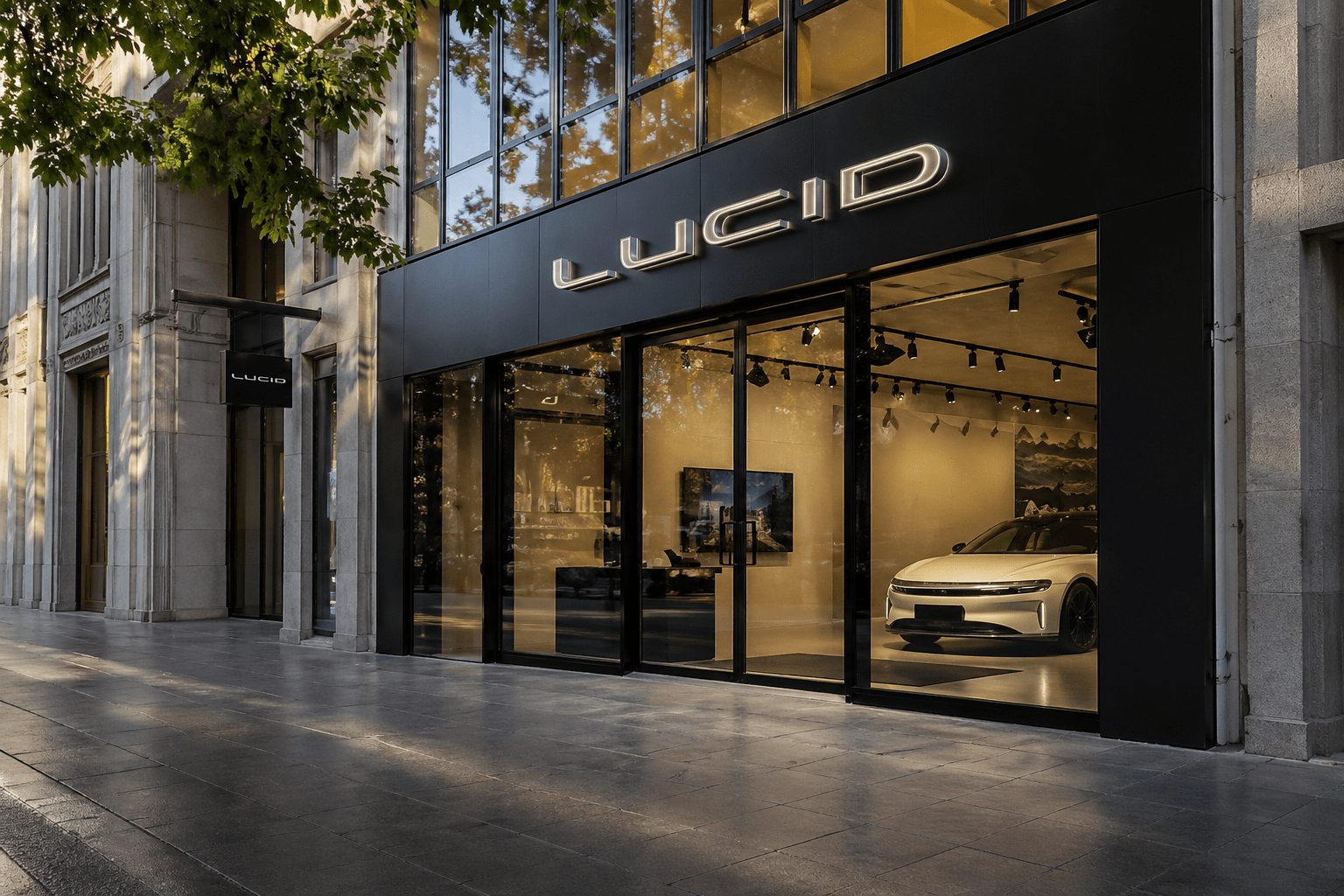
Lucid Group shares slid to fresh lows, shrugging off new funding from Saudi investors and Uber. Traders zeroed in on dilution, shaky first-quarter results, and the expensive pushback in Gravity SUV deliveries. The stock hovered around $5.92 on Robinhood, not far from its $5.83 52-week bottom, putting Lucid’s market cap close to $1.96 billion.
For Lucid, the timing couldn’t be much worse. Over the last two weeks, the company has been touting fresh financing, a broader robotaxi partnership with Uber, and Silvio Napoli stepping in as its incoming chief executive. Yet, shares keep tumbling—investors aren’t convinced just yet that the new funds will actually translate to bigger production.
May 5 is the next big hurdle: Lucid has first-quarter numbers on deck. According to a recent filing, the company is guiding for revenue between $280 million and $284 million, with operating losses landing in the $985 million to $1.005 billion range. As of March 31, liquidity came in around $3.16 billion.
This month, Lucid set the price on a $300 million common stock sale. Uber is pitching in another $200 million, and Ayar Third Investment Company—linked to Saudi Arabia’s Public Investment Fund—agreed to pick up $550 million in convertible preferred shares, which can flip into common stock. Altogether, the moves are slated to bring in roughly $1.05 billion.
Uber’s stake in Lucid is more than a footnote. According to a Schedule 13G filing, a company subsidiary owned 37.75 million Lucid shares—11.52% of that share class—on April 14.
Production numbers dropped off: Lucid rolled out 5,500 vehicles in the first quarter but only managed to deliver 3,093. Deliveries of Gravity models stalled for 29 days thanks to a supplier quality snag with the second-row seats. Still, the company stuck to its 2026 production outlook, holding the line at 25,000 to 27,000 vehicles.
As Lucid shares slid to fresh lows last week, Nick Twork, the company’s vice president of communications, took to X to speak directly to shareholders. “The share price will reflect that when we’ve earned it,” he posted. “Now we go do the work.” EV
Uber CEO Dara Khosrowshahi pointed to a strengthened partnership with Lucid and Nuro, citing their alignment on a joint roadmap. Lucid, for its part, confirmed that Uber has committed to buying at least 35,000 vehicles—including both Gravity SUVs and midsize models—for a planned global robotaxi fleet.
Lucid is tapping Silvio Napoli, who previously led Schindler Group as chairman and CEO, specifically to sharpen manufacturing discipline—not to change up marketing. Once Napoli steps in as CEO, Marc Winterhoff, who’s been serving as interim, will shift back to his COO position, Lucid said. Napoli pointed to “consistent execution” and “financial discipline” as his main priorities. Lucid Group, Inc.
Lucid could still end up seeking more funding before it’s able to operate independently. According to BNP Paribas analysts, the fresh capital injection might just scratch the surface—calling it “tip of the iceberg”—and doesn’t go far in solving Lucid’s liquidity crunch, Reuters said. For current shareholders, dilution is in play: when new shares hit the market, their ownership stake shrinks. Reuters
The numbers tell the story: Tesla handed over 358,023 vehicles in the first quarter. Rivian? 10,365. Lucid lags well behind, with only 3,093 delivered. Unlike its rivals, Lucid faces the same long wait for investor confidence but does so from a much slimmer starting point—and it leans harder on external funding.
Speculation is swirling again over the idea that Saudi Arabia’s PIF might one day take Lucid private, but nothing has been confirmed. The immediate focus cuts closer: Is the Gravity delay just a blip? Can Uber’s robotaxi order actually translate to meaningful numbers? And will Napoli manage to rein in the cash burn ahead of another expected capital raise? 247wallst.com
Related articles: NASDAQ:LCID