
SAN JOSE, California, May 29, 2026, 09:02 PDT
- Lumentum shares fell about 3.6% in Friday morning trade, trimming a sharp AI-linked rally.
- New investor commentary put the stock’s year-to-date gain at 135.4%, about 6.8 times Nvidia’s return over the same stretch.
- The company’s last reported quarter showed revenue up 90.1% from a year earlier, helped by demand for optical components used in AI data centers.
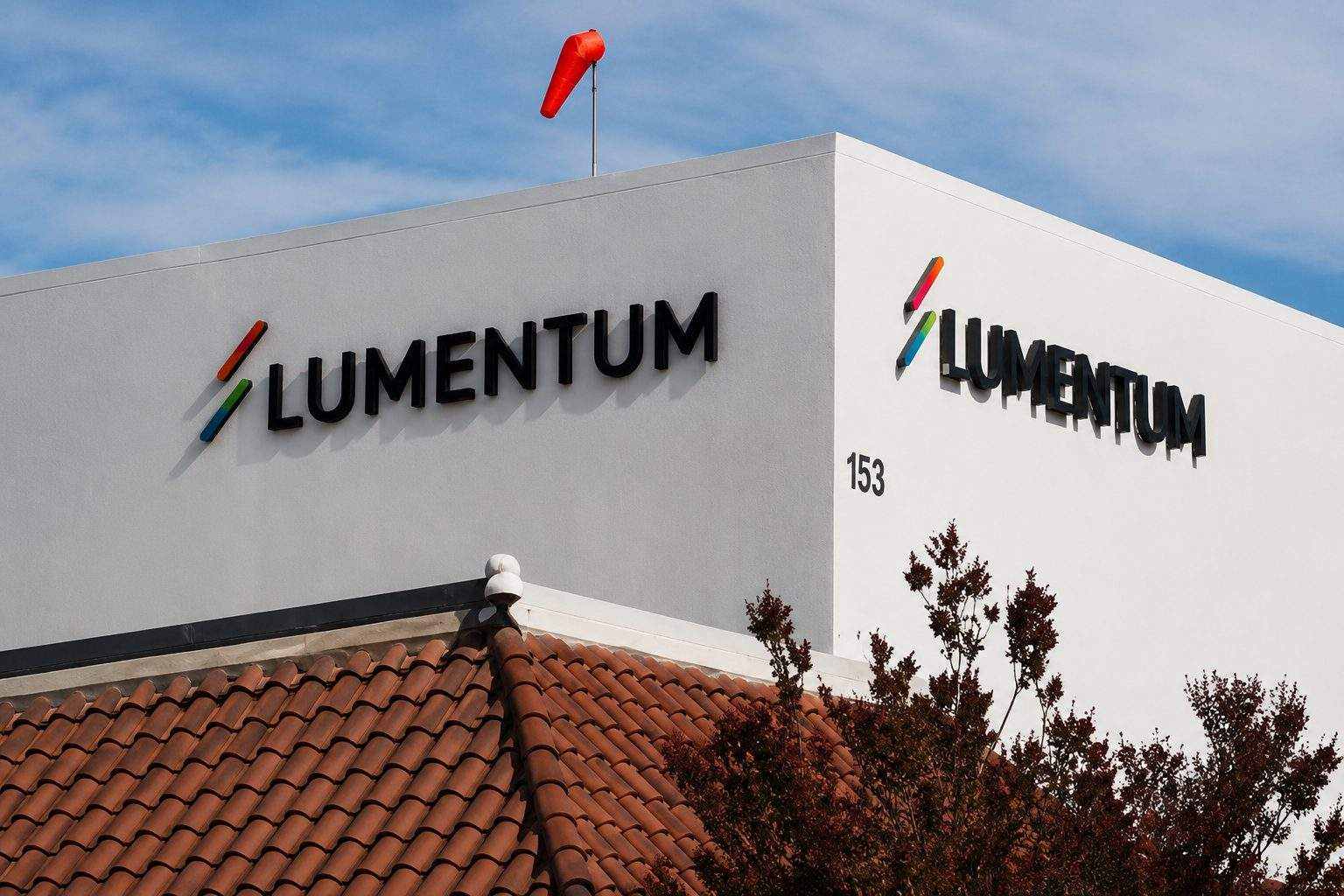
Lumentum Holdings shares fell on Friday, cooling a run that has made the San Jose optical-networking supplier one of the more closely watched AI infrastructure trades outside semiconductors.
The stock was down 3.6% at $829.55, after opening at $860, while Nvidia was up 0.4%. Coherent, another optical components supplier tied to the same AI buildout theme, dropped 6.5%, and Applied Optoelectronics lost 8.6%.
The timing matters because investors are looking beyond graphics processors to the networking gear that links thousands of AI chips inside large data centers. Optical transceivers, which convert electrical signals into light and back again, are now seen as a bottleneck in making those clusters faster and less power-hungry.
Seeking Alpha analyst Beth Kindig wrote on Thursday that Lumentum’s rally had produced a 135.4% year-to-date return for her Tech Insider Network position, compared with 19.9% for Nvidia over the same period. The piece pointed to transceiver demand, shortages in indium phosphide, a chip material used in lasers, and co-packaged optics, or CPO, where optical connections sit closer to chips to cut power loss and latency.
A Let’s Data Science summary of the article framed the same move as a sign of demand for optical transceivers and Nvidia-linked CPO, while noting that the stock’s sharp gain alone does not prove longer-term market share or margin durability.
The company’s own numbers have given the trade some grounding. Lumentum reported fiscal third-quarter revenue of $808.4 million, up 90.1% from a year earlier, with GAAP net income of $144.2 million and non-GAAP earnings of $2.37 a share. It forecast fourth-quarter revenue of $960 million to $1.01 billion and non-GAAP operating margin of 35% to 36%.
“Lumentum delivered an exceptional third quarter,” Chief Executive Michael Hurlston said in the company’s earnings release. He said revenue growth was drawing attention, but added that “the more impressive part” had been margin expansion. Lumentum Investor Relations
The company said components revenue rose 77.3% from a year earlier to $533.3 million, while systems revenue, which includes cloud transceivers, more than doubled to $275.1 million. Its presentation said cloud and AI drove total company revenue up more than 90% and that cloud transceiver shipments grew more than 40% sequentially.
Nvidia gave the story a harder edge in March when it agreed to invest $2 billion in Lumentum and made a multibillion-dollar purchase commitment for advanced laser components. Nvidia said the nonexclusive deal would support R&D, future capacity and U.S.-based manufacturing.
“AI has reinvented computing and is driving the largest computing infrastructure buildout in history,” Nvidia Chief Executive Jensen Huang said when the agreement was announced. Hurlston said then that Lumentum would invest in a new fabrication facility to increase capacity and speed development. NVIDIA Investor Relations
A March securities filing showed Nvidia bought 2,876,415 shares of Lumentum Series A convertible preferred stock at $695.31 a share for $2 billion in cash. The preferred stock can convert one-for-one into common stock, subject to the terms laid out in the filing.
That is why the peer comparison is not incidental. Nvidia made a similar $2 billion commitment to Coherent, Reuters reported in March, as the chipmaker sought photonics technology that uses light rather than electrical signals to move data faster inside AI systems.
The risk is that the rally has pulled forward a lot of good news. Lumentum itself warned that product mix, customer demand changes, order delays, supply constraints, tariffs and export controls could hurt results; the company also said its ability to add manufacturing capacity and meet quality and delivery targets remained a key uncertainty.
For now, the market is treating Lumentum less like an old telecom-components supplier and more like a picks-and-shovels play on AI factories. Friday’s drop did not undo that trade. It did show investors are starting to test how much of the optical boom is already in the price.
Related articles: NASDAQ:NVDA






![US Stock Market Today 08/25/2026 [UPDATE: 00:06 EDT] [Micron and Sandisk Turn Green as QQQ Gains Overnight]](https://ts2.tech/wp-content/uploads/2026/08/US-market-dashboard-2026-08-25-0002-480x384.jpg "US Stock Market Today 08/25/2026 [UPDATE: 00:06 EDT] [Micron and Sandisk Turn Green as QQQ Gains Overnight]")