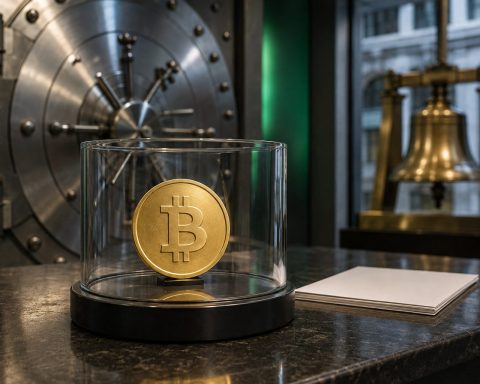

- Luxembourg’s Intergenerational Sovereign Wealth Fund (FSIL) has allocated 1% of its portfolio — around €7 million — to Bitcoin, becoming the first Eurozone sovereign wealth fund with dedicated BTC exposure.
- Finance Minister Gilles Roth says the fund is authorised to buy any crypto — but chose Bitcoin only, echoing Michael Saylor’s line that “there is no second best” and declaring: “Let me be clear: Luxembourg HODLs.” Cryptonews+1
- The allocation is executed primarily via regulated Bitcoin ETFs/ETPs under a revised investment policy that allows up to 15% of FSIL’s assets in alternative investments, including digital assets.
- On the same European news cycle, the Czech National Bank revealed a $1 million test portfolio of Bitcoin and other digital assets, held outside its official reserves to gain hands‑on experience with crypto markets.
- All this arrives amid a sharp Bitcoin price correction: BTC dropped below US$98,000, liquidations topped US$1 billion, and U.S. spot Bitcoin ETFs saw US$869.9 million in net outflows, the second‑largest on record.
Luxembourg’s 1% Bitcoin Bet: Small Slice, Huge Signal
Luxembourg has confirmed that its Intergenerational Sovereign Wealth Fund (FSIL) now holds 1% of its portfolio in Bitcoin, roughly €7 million out of about €700–730 million in assets.
The move stems from a July 2025 policy revision that lets FSIL allocate up to 15% of its holdings to “alternative investments” such as private equity, real estate, and digital assets. Bitcoin is the first crypto asset to make the cut. Luxembourg for Finance+2Goodwin Law Firm+2
According to official and legal briefings:
- FSIL was created in 2014 to build long‑term reserves for future generations.
- Its core portfolio is still dominated by bonds, equities and cash, with digital assets treated as a small, strategic satellite allocation.
- The Bitcoin position is designed as a long‑term holding, not a trade. Luxembourg’s Ministry of Finance and treasury officials have repeatedly called the 1% slice a “balanced experiment” that fits the fund’s risk profile. Bitbo+1
In other words, Luxembourg hasn’t gone “all‑in” on BTC — but it has crossed a psychological line: state money is now explicitly exposed to Bitcoin price risk.
“There Is No Second Best”: Roth’s Bitcoin‑Maxi Moment
At Bitcoin Amsterdam 2025 this week, Finance Minister Gilles Roth did not sound like a reluctant adopter.
In his speech and posts on X, Roth:
- Confirmed that FSIL is allowed to invest in any crypto asset, but chose only Bitcoin.
- Repeated Michael Saylor’s line that “there is no second best”, signalling a Bitcoin‑maximalist tilt at the sovereign level. Cryptonews+1
- Stressed that Luxembourg is “in it for the long haul”, and closed with: “Let me be clear: Luxembourg HODLs. We are still very early. I’m sure others will soon follow our lead.” Cryptonews+2Cryptonews+2
Crypto media and market trackers quickly picked up the comments, framing Luxembourg as the first Eurozone government openly framing itself as a Bitcoin HODLer, not just a cautious ETF buyer.
Roth’s messaging serves several purposes at once:
- Policy signaling: It tells markets that the 1% allocation is not a trial to be quietly unwound at the first sign of volatility.
- Brand positioning: Luxembourg wants to anchor itself as Europe’s digital‑asset hub under the EU’s MiCA regime, building on its status as the continent’s biggest centre for alternative investment funds.
- Narrative control: By quoting Saylor and using terms like “HODL,” the minister is speaking directly to crypto‑native audiences, not just traditional finance.
That’s a very different tone from the country’s 2025 national risk report, which had classified crypto companies as “high‑risk” for money laundering — underscoring how quickly the political narrative has shifted from cautious skepticism to managed embrace of Bitcoin. Cryptonews+1
How Exactly Is Luxembourg Holding Bitcoin?
Not all “sovereign Bitcoin” is created equal. The details matter for risk, regulation and optics.
Across official documents and specialist coverage, a consistent picture has emerged:
- FSIL’s exposure is being implemented via regulated Bitcoin ETFs or ETPs, not by taking custody of raw coins itself.
- This structure is meant to minimise operational and custody risks while staying squarely within EU investment rules and Luxembourg’s own fund legislation.
- The Bitcoin allocation sits within a new “alternatives” bucket that can go up to 15% of FSIL’s assets, leaving room for additional digital‑asset or tokenisation plays later on. Luxembourg for Finance+1
Some industry write‑ups also highlight that Luxembourg is simultaneously preparing blockchain‑based sovereign debt issuance, using distributed ledger technology to issue short‑term treasury instruments under regulatory supervision.
Taken together, Luxembourg isn’t just buying Bitcoin — it’s gradually rebuilding core parts of its public‑finance infrastructure around digital assets and DLT.
From “Prediction” to Reality: Europe’s First Central‑Bank Crypto Test
The headline framing of today’s Yahoo Finance/Benzinga coverage — “Luxembourg Minister’s Bitcoin Prediction Just Came True” — links Roth’s pro‑Bitcoin stance with a second story: the Czech National Bank’s new digital‑asset trial. Benzinga+2Yahoo Finance+2
On November 13, the Czech National Bank (CNB) announced it has:
- Purchased about $1 million worth of Bitcoin, U.S. dollar‑based stablecoins and a tokenised deposit.
- Parked the assets in a separate test portfolio, explicitly outside its official FX reserves.
- Launched a multi‑year experiment to test the full lifecycle of digital assets: key management, multi‑step approvals, crisis procedures, security, and AML compliance.
The CNB stressed that:
- It has no near‑term plan to add Bitcoin to official reserves.
- The project aims to ensure the bank is ready for a future where citizens might buy tokenised Czech bonds and other assets “with a tap”. Reuters
Benzinga’s write‑up links Roth’s assertion that other countries are already preparing similar moves with the CNB pilot, arguing that his view of spreading sovereign and central‑bank experimentation is starting to play out on the ground.
Whether we call it a “prediction” or just political reading of the room, the Luxembourg–Czech one‑two punch marks a clear shift:
- A sovereign wealth fund in the Eurozone now holds Bitcoin exposure as a long‑term allocation.
- A European central bank is live‑testing Bitcoin and tokenised assets in its own systems.
That combination would have seemed unthinkable just a few years ago.
Today’s Market Backdrop: Extreme Fear, Massive ETF Outflows
Luxembourg’s HODL rhetoric is landing on a day when Bitcoin bulls are hurting.
According to multiple market reports for November 14, 2025:
- Bitcoin fell below US$98,000, trading around US$97k at one point, with Ethereum and XRP logging roughly 9% daily drops, and over 235,000 traders liquidated. Total liquidations across the market topped US$1 billion in 24 hours.
- The Crypto Fear & Greed Index slumped to 16 — “Extreme Fear”. Crypto News Australia
- U.S. spot Bitcoin ETFs recorded about US$869.9 million in net outflows yesterday, the second‑largest single‑day withdrawal since launch, led by products from Grayscale and BlackRock.
Analysts quoted in these reports point to:
- A “risk‑off reset” among institutions.
- Long‑term holders taking profits and repositioning for year‑end taxes after Bitcoin failed to deliver the euphoric rally many expected into October–November.
Seen against that backdrop, Luxembourg’s “we’re in it for the long haul” message is deliberately counter‑cyclical: the country is doubling down on a strategic allocation precisely as sentiment flips to fear.
Why Luxembourg’s Move Matters Beyond 1%
On paper, 1% of a €700m fund is a rounding error for global markets. So why is everybody talking about it?
1. Sovereign validation
Luxembourg isn’t just any small state. It’s:
- One of the world’s most important cross‑border fund domiciles, overseeing more than €7.6 trillion in assets.
- The EU’s leading hub for alternative funds and now a magnet for serious crypto firms under MiCA, including Coinbase’s European crypto hub and major bank‑backed tokenisation projects.
When that jurisdiction says Bitcoin is a legitimate asset for a sovereign fund — and frames it as “digital gold” — the signal travels far beyond the €7m ticket size. coinpaprika.com+2Cryptonews+2
2. A playbook other states can copy
Luxembourg has effectively written a how‑to guide for other governments:
- Update investment policy to allow a limited percentage (e.g. up to 15%) into alternatives, including digital assets.
- Implement a small initial allocation (1% or less) via regulated ETFs/ETPs to minimise operational risk.
- Embed the move in a broader digital‑finance strategy (tokenised bonds, MiCA licensing, fintech attraction).
That template is politically digestible: officials can argue they’re innovating without gambling, while still sending a powerful message to markets.
3. Pressure on regional laggards
Luxembourg’s step also highlights growing divergence within Europe:
- The European Central Bank remains publicly skeptical that Bitcoin will become a reserve asset for EU members.
- Yet individual countries are quietly experimenting — via sovereign funds (Luxembourg) and test portfolios (Czech Republic) — in ways that don’t formally violate ECB orthodoxy.
If Bitcoin’s market cap continues to grow and more institutions follow, Eurozone policymakers risk looking reactive rather than proactive unless they articulate clear long‑term rules for how states can, or cannot, use BTC.
What This Means for Investors and the Crypto Industry
For everyday investors and industry builders, Luxembourg’s move isn’t a trading signal so much as a macro signal.
Here’s how it may matter:
- Narrative shift: Bitcoin is increasingly framed as infrastructure (digital gold, collateral, reserves) rather than “just another risk asset.” A sovereign wealth fund allocation — even at 1% — formalises that shift. hubfinance.com+2coinpaprika.com+2
- ETF demand & product design: Sovereign allocations via ETFs/ETPs could encourage more regulators and issuers to build “sovereign‑grade” Bitcoin products with extra governance and risk controls. Luxembourg for Finance+2Bitbo+2
- Fintech & tokenisation boom: Luxembourg’s combination of Bitcoin ETFs, tokenised government debt and MiCA licensing may attract more tokenisation platforms, custodians and blockchain infrastructure providers to set up shop in the country.
- Copycat sovereigns: Analysts already speculate that smaller European and emerging‑market states may test similar 0.5–2% Bitcoin allocations in sovereign funds, especially if BTC continues to behave as both a growth asset and a partial hedge in stress scenarios.
None of this guarantees higher prices — especially in a market currently dominated by ETF outflows, leverage washouts and macro uncertainty. But it does reinforce one crucial point:
Even as short‑term traders panic, Bitcoin is moving deeper into the plumbing of global finance — from ETFs and sovereign funds to central‑bank test labs.
The Bottom Line
November 14, 2025 will likely be remembered as a milestone day in Bitcoin’s European story:
- A Eurozone sovereign wealth fund publicly commits to HODLing Bitcoin as part of its long‑term portfolio.
- A European central bank quietly opens a crypto test lab with real money.
- Markets, meanwhile, are in full risk‑off mode, with prices down, liquidations heavy and ETF investors heading for the exits.
For policymakers, Luxembourg’s example shows how to embrace Bitcoin within strict regulatory lines.
For investors, it’s a reminder that sovereign adoption can advance even on the ugliest red days on the chart.
And for Bitcoin itself, today is one more data point in a decade‑long evolution:
from fringe experiment → institutional bet → sovereign‑level asset.
This article is for informational purposes only and does not constitute financial, investment, or legal advice. Always do your own research and consider speaking with a qualified professional before making investment decisions.