
NEW YORK, July 19, 2026, 13:10 EDT
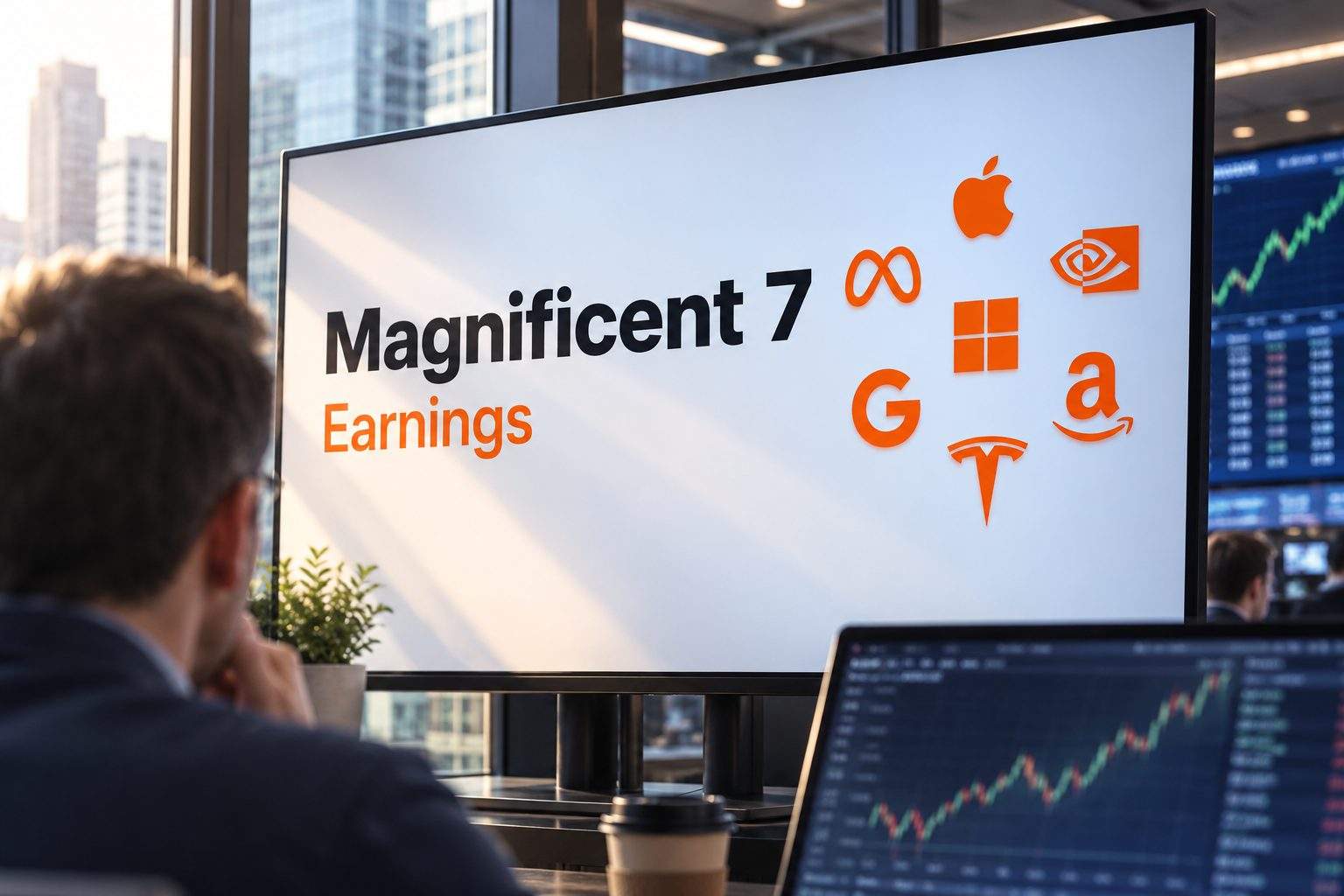
The Magnificent Seven approach earnings season with a much narrower profit-growth advantage, putting their substantial AI investments under greater scrutiny.
FactSet NYSE:FDS data indicates their second-quarter earnings are projected to rise by 31.1%. The remaining 493 companies in the S&P 500 have an estimated growth of 22.8%. These Q2 numbers are preliminary estimates.
The difference is now just 8.3 percentage points. During the first quarter, it was 45.8 points. This marks an 82% narrowing in a single quarter.
This is significant as the seven stocks account for over 30% of the S&P 500’s market capitalization. While the earnings buffer has narrowed, the index’s exposure is still highly concentrated.
The group comprises Apple NASDAQ:AAPL, Microsoft NASDAQ:MSFT, Alphabet NASDAQ:GOOGL and Amazon.com NASDAQ:AMZN, along with Nvidia NASDAQ:NVDA, Meta Platforms NASDAQ:META and Tesla NASDAQ:TSLA.
U.S. cash markets did not open on Sunday. The S&P 500 closed Friday at 7,457.69, losing 1.0%. The Nasdaq Composite dropped 1.4% to finish at 25,520.24. On the week, the indexes declined 1.6% and 2.9%, respectively.
The Philadelphia semiconductor index fell around 10% last week, closing 20.2% lower than its June 22 peak. The decline has drawn sharp attention to demand for AI.
The growth breakdown highlights how rapidly the earnings outlook has shifted.
| Period | Magnificent Seven EPS growth | Other 493 companies | Seven’s growth premium |
|---|---|---|---|
| Q1 2026 actual | 63.2% | 17.4% | +45.8 points |
| Q2 2026 preliminary estimate | 31.1% | 22.8% | +8.3 points |
| Q3 2026 preliminary estimate | 31.8% | 25.5% | +6.3 points |
| Q4 2026 preliminary estimate | 22.8% | 25.3% | -2.5 points |
Analysts project that the remaining 493 companies will take the lead by the fourth quarter, with a forecast advantage of 2.5 percentage points.
Outsiders make up four of the top five drivers for Q2 index profit growth, with Nvidia as the only Magnificent Seven member included.
The latest quotes on Friday put the group’s value at almost $22.7 trillion. Divergent valuations emphasize the role of company-specific guidance.
| Company | Latest Friday quote | Friday move | Trailing P/E | Scheduled report |
|---|---|---|---|---|
| Alphabet | $346.77 | fell 2.2% | 26.5 | July 22 |
| Tesla | $380.84 | declined 2.6% | 349.4 | July 22 |
| Microsoft | $393.82 | dropped 1.8% | 23.4 | July 29 |
| Meta Platforms | $646.01 | slipped 2.8% | 23.5 | July 29 |
| Apple | $333.74 | rose 0.1% | 40.4 | July 30 |
| Amazon.com | $247.23 | lost 1.0% | 29.6 | July 30 |
| Nvidia | $202.81 | fell 2.3% | 30.9 | August 26 |
Prices reflect extended-hours updates when possible. Trailing P/E ratios are shown. Reporting dates are based on official company announcements and confirmed Friday reporting.
Alphabet and Tesla will kick off the group’s reporting cycle on Wednesday, July 22. Their combined market value is roughly $5.55 trillion, accounting for 24.5% of the total for the seven companies. Kevin Mahn of Hennion & Walsh said that a reduction in spending by Alphabet could trigger “ripple effects across the entire AI ecosystem.” Reuters
Tesla trades at the highest earnings multiple in the group. Its trailing P/E stands at nearly nine times that of Apple, and close to 15 times that of Microsoft.
The wider earnings season has raised the standard, with 90% of the 49 S&P 500 firms that reported by Friday surpassing forecasts. Projected Q2 profit growth climbed to 26.0%, up from 19.2% on April 1.
Capital expenditure continues to be the key factor. Hyperscaler investments are forecast to increase by 76% to $673 billion this year. Analysts expect growth of 25% in 2027 and 6% in 2028. Alberto Conca of LFG+ZEST said, “Cash flow is starting to be almost completely drained by capex.” Reuters
Microsoft and Meta are set to report on July 29. Apple and Amazon will release earnings on July 30, while Nvidia is expected to report last, on August 26.
Risks: Another drop in chip stocks may outweigh robust company earnings. Accelerated reductions in spending could negatively impact suppliers. Ongoing growth may add pressure to cloud platform cash flow.
The bar is higher. Investors require not just fast earnings growth but also evidence that AI investments are sustaining cash returns. Earnings outperformance is widening across companies, yet market capitalization remains narrowly focused.
Related articles: NASDAQ:META