
New York (ET) — Friday, December 26, 2025, 2:11 p.m.
MARA Holdings, Inc. (NASDAQ: MARA) is trading lower in Friday’s session as crypto-linked equities remain sensitive to Bitcoin’s day-to-day mood swings—and to a growing list of company-specific catalysts, from power strategy to potential index-rule changes.
As of early afternoon in New York, MARA stock is down about 3.5% at roughly $9.59, after trading between $9.46 and $10.07 with volume above 20 million shares. At the same time, Bitcoin is modestly lower (down about 1%) near $87,268, setting a cautious tone for the sector.
Meanwhile, the broader U.S. equity market looks mixed-to-flat: SPY (S&P 500 proxy) is essentially unchanged and QQQ (Nasdaq-100 proxy) is slightly higher around the same timestamp.
MARA stock today: why the move doesn’t perfectly mirror Bitcoin
Bitcoin miners often trade like leveraged beta on BTC—meaning when Bitcoin slips, miners can fall harder; when Bitcoin rallies, miners can rise faster. But this relationship is rarely clean because miner equities also reflect:
- Network competition and mining difficulty (how hard it is to win blocks)
- Power costs and uptime
- Balance sheet strategy (how much BTC the company holds vs. sells vs. finances)
- Dilution and financing (equity issuance, convertibles, debt)
That last point matters a lot right now. In 2025, several analysts explicitly pointed to stubborn network competition and the pressure it creates on miner economics, even when miners pursue higher-margin AI/HPC hosting as a diversification path.
The macro backdrop: “risk-on” isn’t a constant in crypto
Crypto is still in its “can rip your face off in either direction” era, and late 2025 has offered plenty of reminders.
Reuters reported this month that after a sharp crypto drawdown, investors have increasingly focused on how they express crypto exposure (spot, ETFs, derivatives, miners, treasury companies), because “the nuances matter” when it comes to leverage and hedging. Reuters In the same report, well-known macro investor Lyn Alden described the prior premium investors paid for some crypto-heavy equities as “a localized bubble,” and noted investors have grown more cautious about overpaying. Reuters
Investopedia also highlighted recent Bitcoin volatility—after pushing toward record territory earlier in the cycle, BTC swung sharply lower, and crypto-related stocks (including miners) fell with it when risk appetite faded.
Bottom line: even a “small” Bitcoin down day can be enough to push miners lower—especially when the market is already primed to worry about profitability, competition, and financing.
Company fundamentals: what MARA reported most recently
MARA’s most recent quarterly package (Q3 2025, quarter ended Sept. 30, 2025) emphasized scale, treasury growth, and profitability metrics that can swing dramatically with Bitcoin price and accounting treatment.
From its Q3 2025 shareholder letter, MARA reported (among other highlights):
- Revenue of $252.4 million (up 92% year over year)
- Net income of $123.1 million (versus a loss in the prior-year quarter)
- Adjusted EBITDA of $395.6 million
- Energized hashrate of 60.4 EH/s
- Bitcoin holdings of 52,850 BTC, including BTC that was loaned/actively managed/pledged as collateral SEC+1
That BTC figure is central to the stock’s narrative: investors increasingly evaluate MARA not just as an operating miner, but as an operator plus a large Bitcoin holder.
Operational update: September 2025 production, hashrate, and uptime
In its September 2025 production update, MARA said it produced:
- 218 blocks in September (up 5% month over month)
- 736 BTC (up 4% month over month)
- Energized hashrate of 60.4 EH/s (up versus August) MARA
CEO Fred Thiel also pointed to rising network competition, noting global hashrate increased to an average of 1,031 EH/s in September.
Operational execution has become a key differentiator for miners, and MARA highlighted high uptime (including a specific update on its Hannibal, Ohio site’s capacity and uptime).
The strategy shift: from “Bitcoin miner” to energy + AI/HPC compute platform
One of the most important themes shaping valuation across public miners is the attempt to evolve into power-and-data-center operators that can serve both Bitcoin and AI/HPC demand.
1) West Texas power + data center campuses (MPLX collaboration)
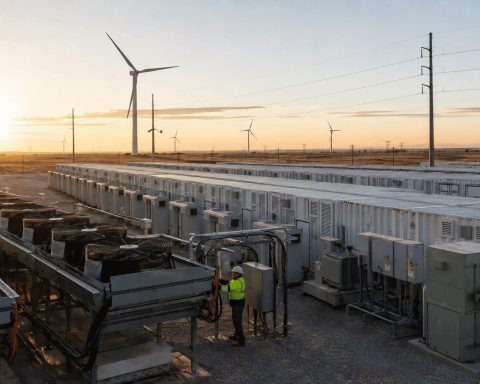
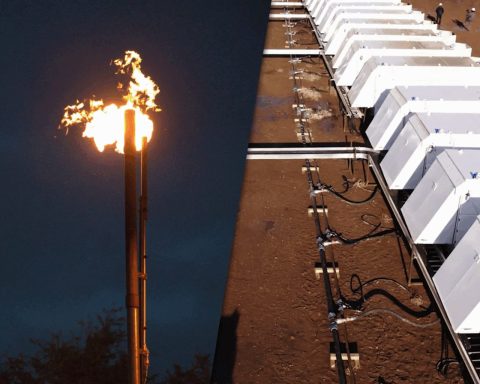
MARA and MPLX announced a non-binding letter of intent to collaborate on integrated power generation and data center campuses in West Texas, targeting up to 400 MW initially and a potential path toward 1.5 GW.
This matters because the market increasingly treats access to reliable, scalable power as the moat—whether the compute is mining ASICs today or AI servers tomorrow.
2) AI/HPC expansion via Exaion (EDF subsidiary)
MARA also signed an investment agreement to acquire a 64% stake in Exaion, EDF’s HPC/data-center subsidiary, with an option to increase ownership up to 75% by 2027. The company cited demand for secure cloud and AI infrastructure, and the deal size was outlined at roughly $168 million upfront (with an additional potential investment tied to milestones).
Notably, the press release framed the move around security, data protection, and energy efficiency—themes that are becoming increasingly important in “sovereign AI” and regulated-industry compute. MARA
3) Vertical integration via renewable generation (Texas wind farm)
MARA previously closed a Texas wind farm acquisition (Hansford County) with 240 MW interconnection capacity and 114 MW nameplate wind capacity, describing it as part of a shift from a more asset-light to a more asset-heavy model.
Financing and dilution: the lever that can move MARA even when BTC is flat
In crypto-miner land, capital structure is destiny.
In July 2025, MARA announced and then closed an offering of 0.00% convertible senior notes due 2032 (with initial principal amount $950 million). In its closing release, MARA described using proceeds for items including repurchasing prior converts, a capped call, and acquiring additional Bitcoin.
For investors, this is the tradeoff in one sentence: financing can increase BTC exposure and scale, but it can also raise concerns about future dilution and the “per share” economics of whatever the company builds next.
A new headline risk: MSCI index rule debate and what it could mean for crypto-heavy equities
One of the most market-moving late-2025 policy debates isn’t about Bitcoin itself—it’s about index inclusion.
Reuters reported that MSCI is considering excluding publicly traded companies whose digital asset holdings exceed 50% of total assets from its global stock indexes, arguing those firms may resemble investment funds. The proposal is under consultation until January 15, 2026, and strategists warned this could create meaningful passive-flow impacts for affected stocks.
MARA has become part of this conversation. MARA’s investor relations site links to the company’s response letter to MSCI (dated December 15, 2025), objecting to the proposed “Digital Asset Treasury” framing and pushing back on how such classifications might treat operating companies. Cloudfront+1
Why this matters for MARA shareholders: index inclusion/exclusion can influence passive ownership, liquidity, and—at the margin—the cost of capital. In a business where funding terms can shape strategy, that’s not a small issue.
Analyst forecasts: upside targets remain high, but revisions are getting more cautious
Even after MARA’s selloff, many consensus price targets remain far above the current quote—partly because the stock has fallen faster than some estimates have been updated.
- MarketBeat shows a consensus view (12 analysts) with an average 12-month target around $23.56 (with a reported range roughly $13 to $30) and a “Moderate Buy” consensus. MarketBeat
- TipRanks similarly lists an average target in the low-20s with a comparable high/low range.
- Nasdaq/Fintel coverage noted JP Morgan maintained an Overweight stance (per the report) and summarized an average price-target set around the mid‑$20s as of mid‑November.
But the trend inside the details is mixed. For example, Rosenblatt’s analyst note (via TheFly) lowered its price target to $15 from $22, explicitly citing high network competition and the impact of a weaker BTC tape—while also suggesting HPC hosting opportunities may be less correlated and more profitable than pure mining.
Takeaway: the Street still sees optionality in MARA’s scale and pivot narrative, but analysts are increasingly treating mining economics vs. AI/HPC economics as two different stories that deserve two different valuation lenses.
Is the U.S. stock market open right now? Yes—and here’s what to know into the close
Because it’s 2:11 p.m. ET in New York, the U.S. stock market is open (regular session), and MARA is actively trading.
What investors typically watch into the close for MARA
- Bitcoin’s direction into the 4:00 p.m. ET bell
BTC trades 24/7, but equities don’t—so late-day BTC moves can influence positioning into the close. - Equity risk appetite (SPY/QQQ)
When the broad market is flat-to-mixed, high-beta crypto stocks can still swing sharply on sector sentiment. - Any update tied to the MSCI consultation window
With the consultation deadline set for mid‑January 2026, headlines (and rebuttals from companies) can pop up and move stocks quickly.
If you’re thinking beyond today: the next session after Friday
Today is Friday, so the next regular U.S. stock session is Monday (barring any special exchange notices). The practical implication: Bitcoin will trade all weekend, but MARA won’t—so Monday’s open can reflect two days of crypto price discovery.
The “so what?” for MARA investors right now
MARA is no longer just a “hashrate chart.” It’s a bundle of exposures:
- Bitcoin spot exposure (via treasury holdings) SEC+1
- Bitcoin mining execution (hashrate, uptime, cost of power, network competition) MARA
- Energy strategy (generation + integrated campuses) MPLX.com+1
- AI/HPC pivot optionality (Exaion and broader repositioning) MARA+1
- Financing/dilution dynamics (convertibles and capital deployment) SEC+1
- Index/rules and passive-flow risk (MSCI consultation and responses) Reuters+1
That complexity is exactly why the stock can drop on a day when Bitcoin is only modestly lower—and why it can also surge when the market decides the pivot narrative is back in fashion.
Calendar check: what’s the next potential catalyst?
MARA’s IR calendar currently lists no upcoming events scheduled. MARA
However, earnings-date trackers commonly estimate the next report around late February 2026 based on historical patterns (not a company-confirmed date).
Related articles: NASDAQ:MARA