
NEW YORK, July 15, 2026, 13:11 EDT
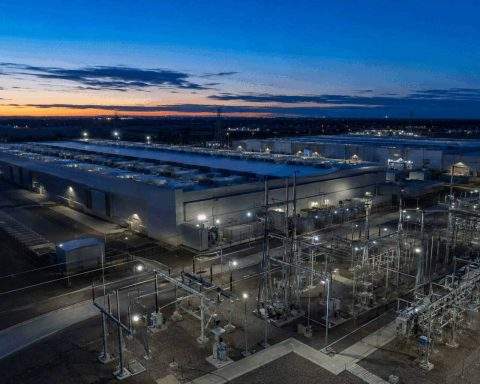
Meta Platforms needs to ramp up its quarterly capex by at least 77% over what it spent in Q1 to hit its 2026 target. The company’s expanded Hyperion AI campus in Louisiana is now on track for 5 gigawatts and over $50 billion, giving a sign of where all that money has to go.
At the midpoint of guidance of $135 billion, Meta has to spend an average of $38.4 billion for each of the next three quarters. That’s up 94% versus the $19.84 billion it spent in the first quarter. If operating cash flow stays at the first quarter’s $32.23 billion, free cash flow would swing negative by about $6.2 billion per quarter after capex. This is just a stress test, not a prediction, since ad revenues and working capital fluctuate in the year, and financing can also affect cash needs.
| 2026 capex outcome | Average Q2-Q4 capex required | Change from Q1 | Free cash flow if Q1 operating cash repeats |
|---|---|---|---|
| $125 billion at the low end | $35.1 billion | up 77% | negative $2.8 billion |
| $135 billion at midpoint | $38.4 billion | up 94% | negative $6.2 billion |
| $145 billion at the high end | $41.7 billion | up 110% | negative $9.5 billion |
This uses Meta’s Q1 capex of $19.84 billion and operating cash flow at $32.23 billion. The capex figure factors in principal payments on finance leases.
The midpoint is 87% higher than Meta’s $72.22 billion in capex in 2025, a year it posted $43.59 billion in free cash flow. Shares gained about 2.2% to around $676 by early afternoon Wednesday. Investors now look to Meta’s next scheduled update with its July 29 second-quarter results.
Hyperion’s massive scale ups the ante. Once finished, the Louisiana project would account for 35.7% of the 14 gigawatts Meta targets for total computing power by 2027, an internal Meta memo seen by Reuters showed. The posted price breaks down to more than $10 billion per gigawatt.
| Meta AI campus | Planned capacity | Announced investment | Approximate investment per GW |
|---|---|---|---|
| Hyperion, Louisiana | 5 GW | Over $50 billion | Above $10 billion |
| Lebanon, Indiana | 1 GW | $10 billion | $10 billion |
| Sturgeon County, Alberta | 1 GW | Above C$13 billion, or around US$9.3 billion | Over US$9.3 billion |
Alberta numbers are based on an exchange rate of about C$1.4053 for every U.S. dollar as of July 15. Project stats are from Meta and Reuters.
The three announced projects each land in the $9 billion to $10 billion per gigawatt range, no matter the site or who runs them. Using that estimate for the next 7 gigawatts planned for 2026 and 2027 comes out to about $65 billion to $70 billion in likely spending. This is just a rough estimate, not formal guidance, and the final figures will depend on timing, equipment, ownership and accounting.
The headline project cost doesn’t match Meta’s cash capex for the year. In the $27 billion Hyperion joint venture, Blue Owl Capital Inc. NYSE:OWL funds got about 80% of the stake and put in around $7 billion cash while Meta took a one-time $3 billion payout. The most recent expansion didn’t specify how that phase would be funded. Forrester Research Inc. NASDAQ:FORR analyst Alvin Nguyen said the structure “helps them mitigate risks at the expense of its ownership stake.” Reuters
Wall Street isn’t just questioning Meta’s ability to finance its early AI bets anymore. JPMorgan Chase & Co. NYSE:JPM analyst Doug Anmuth kept his Neutral rating and $725 price target on Monday, saying in a note that a lot still “will depend on traction” for Meta’s latest AI models and whether the company can convince developers and corporate clients. Barron’s
Brian Nowak at Morgan Stanley NYSE:MS boosted Meta capex estimates for the week. The bank now sees AI data-center spending from the big cloud players reaching $1.4 trillion by 2028. That figure doesn’t guarantee a solid return. It does show how fast the bar is moving higher.
The cash pressure may ease if ad sales pick up later in the year or if Hyperion’s outside backers put in more money. But things could get tighter if parts stay expensive or regulation hits engagement. On Tuesday, Britain said it will put a default curfew on social-media for 16- and 17-year-olds from midnight to 6 a.m. starting spring 2027, with autoplay and endless scroll also off by default. Meta did not comment.
Management already matched the infrastructure ramp-up with job cuts. CFO Susan Li said back in April, “We don’t really know what the optimal size of a company will be in the future,” after Meta held its full-year 2026 expense outlook steady while boosting capex guidance. Now the July 29 report will need to show whether operating cash is keeping up with the spend. The $50 billion campus means that’s now a quarter-by-quarter figure. Reuters
Related articles: NASDAQ:META