
New York, May 20, 2026, 05:10 (EDT)
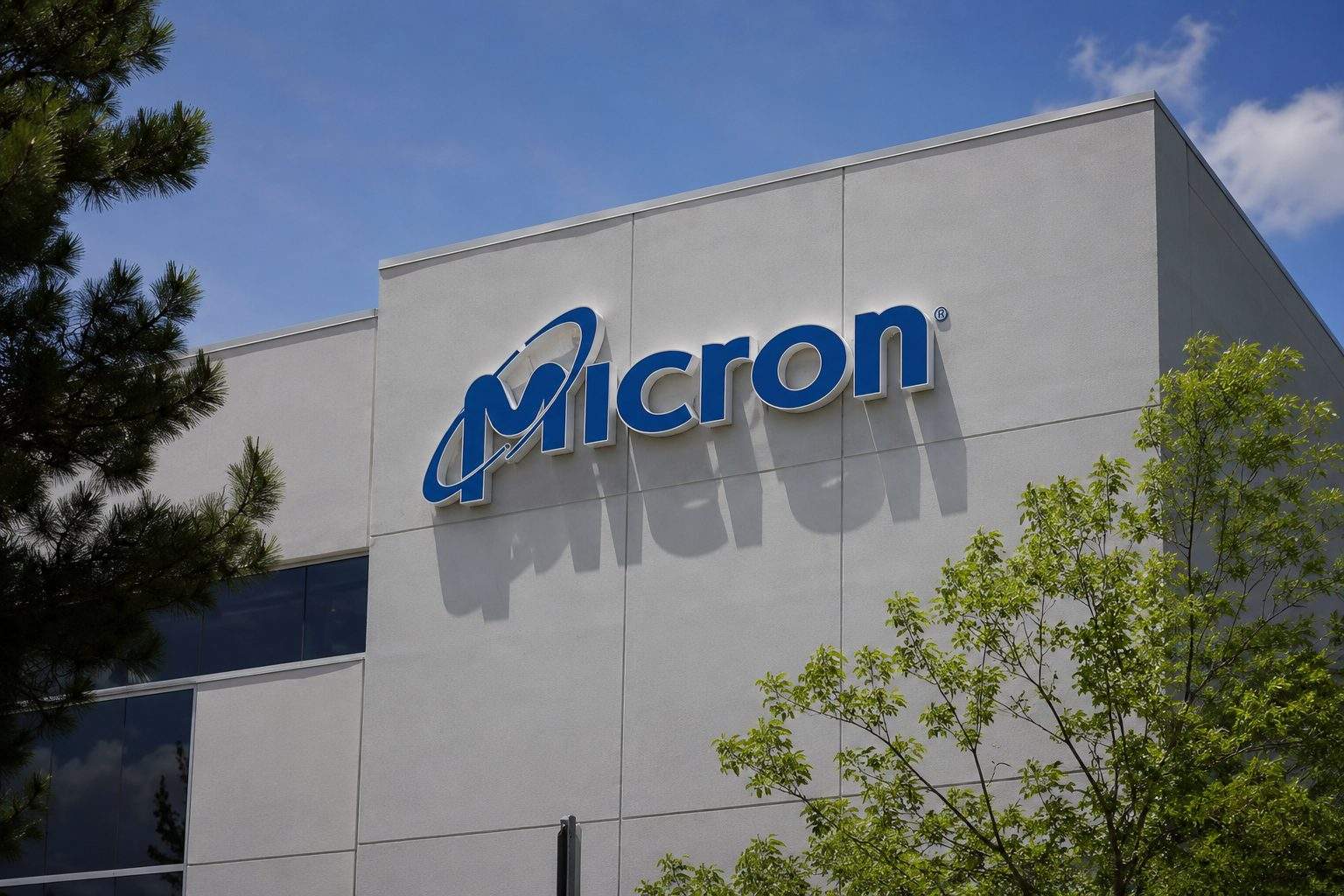
Micron Technology shares go into Wednesday’s U.S. session as a rare winner in a weaker tech tape, last quoted at $698.74 after a 2.5% Tuesday gain. The move put the memory-chip maker’s market value near $798 billion and came as Wall Street’s main indexes fell, with the Nasdaq Composite down 0.84%.
The reason it matters now: investors are treating Micron less like a broad chip trade and more like a direct bet on tight memory supply. Mizuho analyst Vijay Rakesh raised his price target on Micron to $800 from $740, citing firm DRAM and NAND pricing, while Citi’s Atif Malik pointed to tight supply in high-bandwidth memory, or HBM, a premium memory used with AI processors.
DRAM, short for dynamic random-access memory, helps run active workloads. NAND flash stores data when power is off. HBM stacks memory close to processors so AI systems can move data faster and with less delay.
The U.S. cash market, the main stock-trading session, is due to open later Wednesday; Nasdaq’s 2026 holiday calendar lists Memorial Day on May 25 as the next closure, not May 20. The backdrop is still uneasy: Reuters said 10-year Treasury yields, or returns on U.S. government bonds, hit their highest level since January 2025 on Tuesday, pressuring growth shares, and investors were waiting for Nvidia’s earnings after Wednesday’s close for another read on AI demand.
Samsung Electronics is the other live issue. Reuters reported that about 48,000 Samsung workers are set to walk off the job Thursday after bonus talks broke down, with the dispute centered on profit-sharing and pay gaps with SK Hynix. Samsung said the union’s demands were “unacceptable,” while union leader Choi Seung-ho said, “We will not cease our efforts to reach a deal even during the strike.” Reuters
That is directly relevant to Micron because Samsung, SK Hynix and Micron dominate the global memory market. KB Securities analyst Jeff Kim estimated that an 18-day Samsung strike could disrupt global DRAM supply by 3% to 4% and NAND supply by 2% to 3%, a hit that could feed more price increases.
Not every investor sees the supply impact as catastrophic. Gary Tan, a portfolio manager at Allspring Global Investments, told Reuters the supply-chain hit should stay limited unless the strike runs longer than planned, adding that “the bigger effect is on market sentiment and longer-term memory industry pricing structure.” Reuters
Micron has also been giving investors a product story to trade. On May 12, the company said it had sampled 256GB DDR5 server memory modules to key server ecosystem partners; Raj Narasimhan, senior vice president and general manager of Micron’s Cloud Memory Business Unit, said “capacity, bandwidth, and power” are the key drivers of AI efficiency. Micron Technology
The essential background is unusually strong. Micron reported fiscal second-quarter revenue of $23.86 billion, up from $8.05 billion a year earlier, and non-GAAP earnings of $12.20 a share. It guided fiscal third-quarter revenue to $33.5 billion, plus or minus $750 million, and CEO Sanjay Mehrotra said “memory has become a strategic asset” in the AI era. Micron Technology
But the trade has risks. If Samsung’s strike is contained, if Nvidia’s results cool the AI tape, or if bond yields keep climbing, the stock could lose some of its recent support. Micron itself warned in its latest risk factors that memory prices have been volatile, that competitors can add supply, and that oversupply could push average selling prices lower.
Micron is scheduled to appear at the J.P. Morgan Global Technology, Media and Communications Conference at 8:40 a.m. EDT. Investors will be listening for anything fresh on pricing, HBM demand, customer commitments and capital spending. For now, the stock’s next move is tied to a simple question: whether the memory shortage looks tighter, or merely crowded.