
LONDON, July 25, 2026, 15:08 BST
- Rio ended Friday’s session at 6,869 pence, rising 2.13% across five trading days. London markets did not open on Saturday.
- To meet the midpoint of its guidance, global iron ore sales are required to grow by 15.5% during the second half. Copper production may decline by 11.1%.
- Half-year earnings are expected on Wednesday. Citigroup’s price target indicates a 3.4% potential gain from the close on Friday.
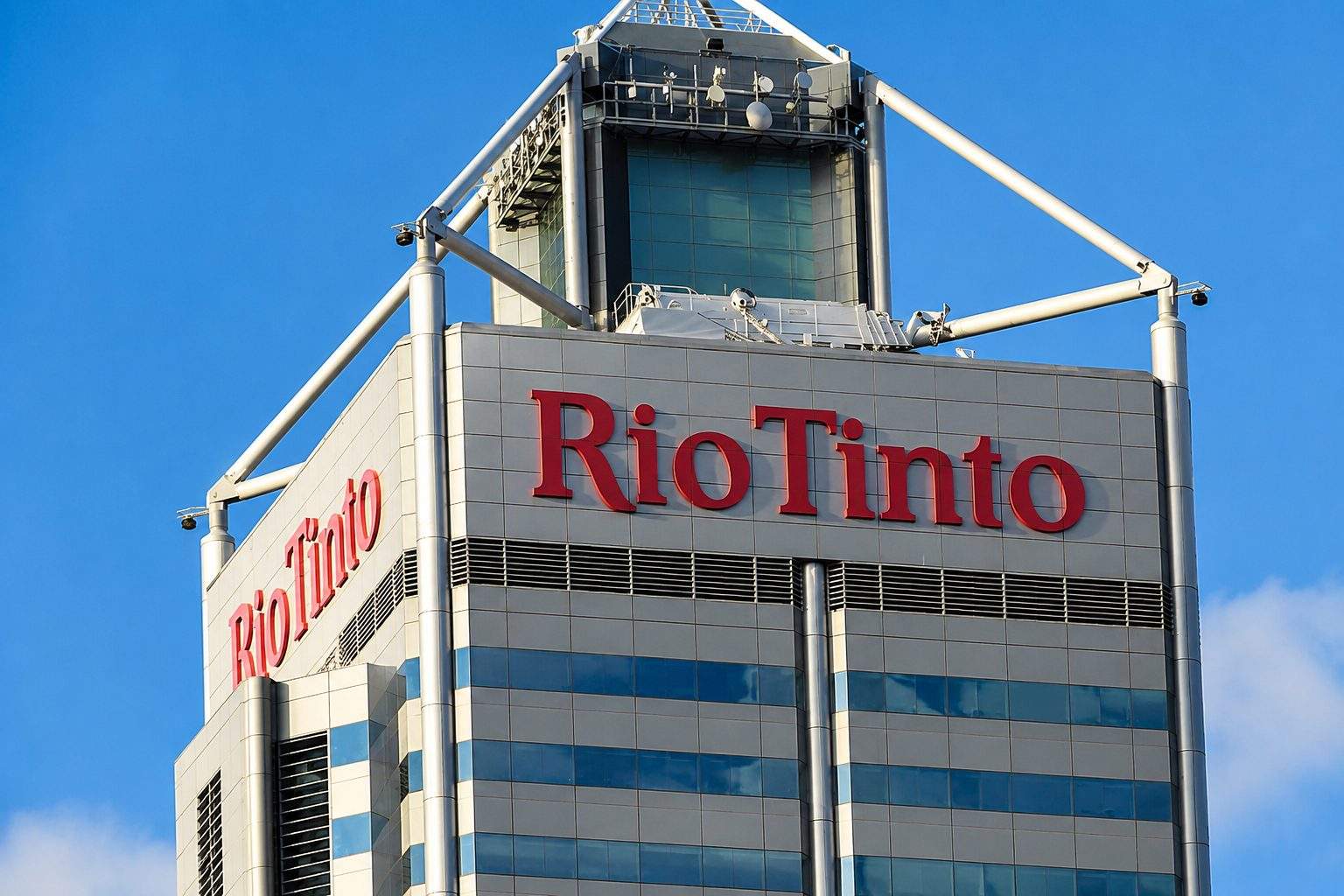
Rio Tinto’s London-listed shares have gained 2.13% in the past five sessions as the miner heads into Wednesday’s half-year results. Over the same period, Dalian iron ore recorded its steepest weekly decline in six weeks.
The difference is significant. It indicates investors are relying on reduced copper costs rather than anticipating a renewed rally in iron ore.
Rio’s underlying earnings for 2025 remained largely reliant on iron ore, which accounted for close to 60% of the total. Copper made up approximately 30%, with its share having doubled.
Production responsibilities are not distributed evenly.
| Operating measure | H1 2026 | FY guidance midpoint | H2 required | H2 versus H1 |
|---|---|---|---|---|
| Global iron ore sales, Mt | 164.5 | 354.5 | 190.0 | +15.5% |
| Pilbara iron ore sales, Mt | 157.7 | 330.5 | 172.8 | +9.6% |
| Copper production, kt | 442.0 | 835.0 | 393.0 | -11.1% |
| Lithium production, kt LCE | 27.3 | 62.5 | 35.2 | +28.9% |
| Aluminium production, Mt | 1.68 | 3.35 | 1.67 | -0.6% |
Midpoint and second-half comparisons are based on calculations using Rio’s official guidance. All figures have been rounded.
Worldwide iron ore shipments need to total 190 million tonnes in the second half, representing an increase of 15.5% compared to the first half’s volume.
Pilbara sales demand a more modest 9.6% rise. Maintaining this still depends on continued strong operations across mines, railways and ports.
Rio’s iron ore shipments from the Pilbara reached 85.3 million tonnes in the second quarter, surpassing the 83.6 million-tonne consensus by Visible Alpha. Prices realised in the first half rose to $85.20 per wet tonne, compared with $83.20 previously.
Copper output could still rise. Rio may achieve production of 393,000 tonnes in the second half, hitting the midpoint of its guidance.
The company lowered its copper C1 cost guidance to a range of 30–50 cents per pound, down from its previous forecast of 65–75 cents. The decrease was driven by increased gold credits and improved productivity.
Chief Executive Simon Trott said, “We are delivering growth as we drive performance across the group.” Copper-equivalent output rose 3% in the first half. Rio Tinto
Copper carries risks. Second-quarter production came in below expectations due to disruptions at Kennecott and lower ore grades at Escondida. A furnace outage at Kennecott is projected to impact output in the second half.
Lithium has the sharpest increase to achieve, with production needing to climb 28.9% to meet the midpoint of the guidance.
That comes after a 53% increase in the first half. Rio additionally began production earlier than planned at Sal de Vida and Fénix 1B.
Aluminium is close to meeting its yearly objective. Yet, the London Metal Exchange price has fallen back to about $3,170 per tonne. This is the same as before the recent Iran conflict, even with supply disruptions from the Gulf.
Citigroup NYSE:C analyst Ephrem Ravi on Friday lowered his price target for Rio to £71 from £77, maintaining a Neutral rating. The revised target is just 3.4% higher than Rio’s £68.69 closing price.
The stock is still down 24.7% from its May high but is up 14.6% so far this year.
BHP Group ASX:BHP, a competitor, has just posted record iron ore production in Western Australia. The company achieved a 3% increase in its realised iron ore price, with costs approaching the lower end of its guidance range. Rio will now encounter a comparable challenge in managing costs.
Risks are still centered on diesel prices, logistical issues in the Middle East and operational delivery in the Pilbara. Uncertainty is further heightened by disruptions at Kennecott and reduced steel demand in China.
Wednesday’s results need to demonstrate that copper cost reductions are contributing to cash flow. Investors are also looking for proof that boosting iron ore volumes does not lead to increased unit costs. After a five-day gain, expectations are high and any disappointment could weigh heavily.