
VANDENBERG SPACE FORCE BASE, California, May 6, 2026, 01:43 PDT
- Late Tuesday, SpaceX sent 24 Starlink satellites up from Vandenberg, bringing the Falcon 9 booster back down for a landing on its Pacific droneship.
- With Amazon’s Leo network ramping up its own satellite launches, the flight gives Starlink an extra boost in capacity.
- SpaceX isn’t slowing down in May: there’s another Starlink launch out of Vandenberg scheduled for May 10, and on May 12, NASA’s CRS-34 cargo mission heads to orbit from Florida.
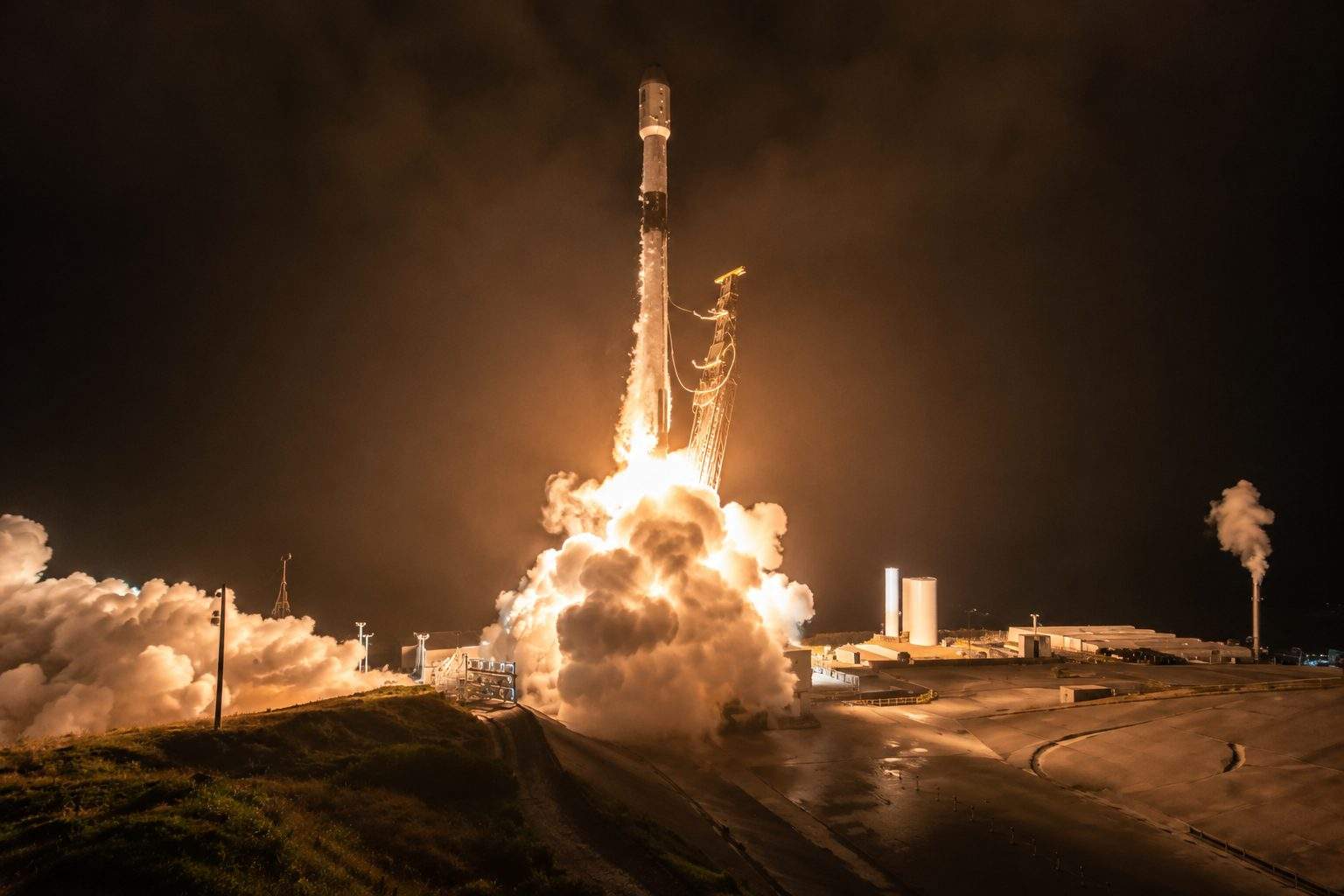
Late Tuesday, SpaceX sent up another 24 Starlink internet satellites from California, pushing its Falcon 9 launch tempo higher as the company continues expanding a broadband constellation that’s already topped 10,000 satellites. The rocket lifted off at 8:59:19 p.m. PDT from Vandenberg Space Force Base’s Space Launch Complex 4 East, according to Spaceflight Now.
Starlink’s latest launch isn’t just another notch in SpaceX’s belt—it signals a shift. The project has moved from high-growth ambitions to a business that’s now generating steady revenue, as SpaceX keeps ramping up capacity in low Earth orbit. That means more routine Falcon 9 launches, pushing up the number of satellites a few hundred miles overhead and providing internet with lower latency than what’s possible from older, distant systems.
The U.S. Space Force cleared a Tuesday evening launch slot out of Vandenberg for the Starlink 17-29 mission, sending the rocket up from SLC-4E. Vandenberg’s location on the coast allows launches to head south across the Pacific—ideal for polar and sun-synchronous orbits.
SpaceX put Falcon 9 booster B1081 to work for the 24th time on this mission. Roughly eight minutes post-launch, the first stage was back down, landing on the droneship “Of Course I Still Love You” out in the Pacific. RocketLaunch.org
Next Spaceflight called the launch a success at 03:59:19 GMT on Wednesday, with the payload—24 Starlink satellites—headed for a sun-synchronous orbit. That path keeps the spacecraft passing over regions at nearly identical local solar times. The mission, according to Next Spaceflight, marked SpaceX’s 55th flight of 2026.
The Vandenberg mission came after SpaceX kicked off May’s Starlink launches with its May 1 liftoff from Cape Canaveral. Attention on the Florida coast now shifts to NASA’s SpaceX CRS-34 cargo flight. NASA says CRS-34 is set to run supplies and scientific gear up to the International Space Station for its Commercial Resupply Services effort.
The Florida launch is set for May 12 out of Space Launch Complex 40 at Cape Canaveral Space Force Station, Spaceflight Now’s launch schedule shows. After about 38 hours in transit, the Dragon spacecraft is slated to dock with the station on May 14.
Competition in the sector is getting fierce. On April 27, United Launch Alliance sent 29 satellites up for Amazon Leo—the broadband constellation previously called Project Kuiper—Spaceflight Now reported. That launch boosts Amazon’s total to 270 satellites in orbit. The company plans to expand its initial network past 3,200 satellites.
Amazon’s plan: over 3,000 low-Earth-orbit satellites, strung together by optical links and supported by a ground network of gateway stations and fiber. The service stands out as one of the rare near-term contenders with both capital and launch deals in place to take on Starlink, even if it lags well behind on actual spacecraft in orbit.
The next battleground could shift from satellite dishes in the yard to the smartphones in everyone’s pocket. Analyst David Barden at New Street Research figures the smartest move for satellite outfits like Starlink or Amazon Leo is landing a “durable wholesale agreement” with the big wireless carriers, per Broadband Breakfast. Viasat’s Robert Brown, who heads up business development and strategic partnerships, put it this way: he called it “inevitable” that both Starlink and Leo end up cutting an MVNO deal—letting them sell wireless service on a major carrier’s network—within the next five years. Broadband Breakfast
But the pace of launches doesn’t take much to slip. Spaceflight Now’s schedule shows Starlink 17-37, the next Vandenberg Starlink flight, pushed back from May 9 to a window on May 10. Another launch, Starlink 17-42, moved from May 16 to May 17. Dates are still at the mercy of weather, range slots, and technical sign-offs, even with high activity on the rockets and pads.
Related articles: NASDAQ:AMZN