
New York, May 28, 2026, 18:11 EDT
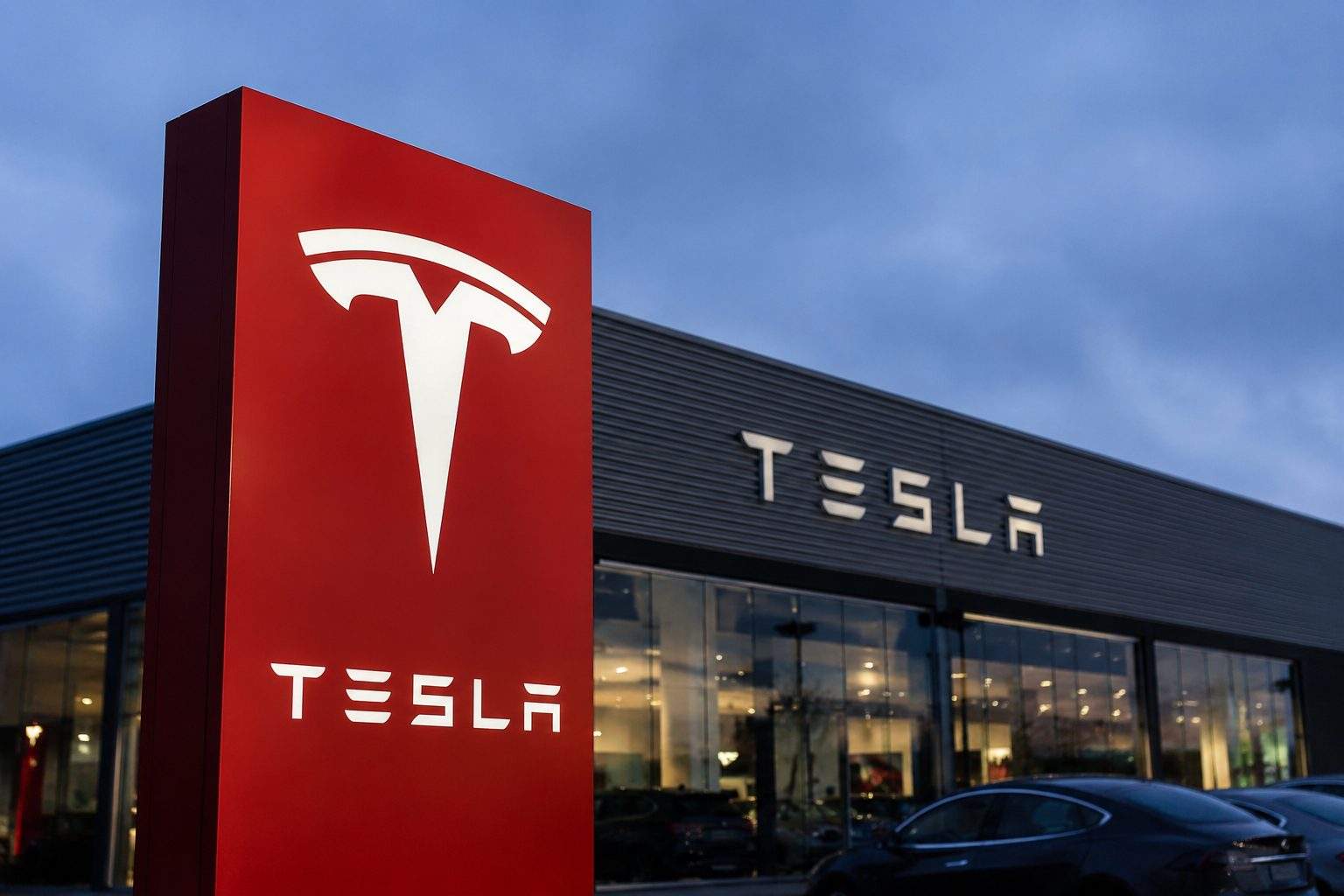
Tesla shares ended Thursday up 0.4% at $442.10, notching a sixth straight gain as buyers looked past questions on self-driving features and focused on a rebound in Europe sales and tech strength. The stock moved between $432.66 and $443.95, with Tesla’s market cap around $1.56 trillion.
Why this matters: Tesla stays an automaker for now, but the shares are priced on hopes for driver-assist tech, robotaxi, and robotics businesses with higher margins. Stronger numbers in Europe help the car side; fresh doubts about self-driving go straight to the stock’s value case.
S&P 500 and Nasdaq ended at record highs after investors shrugged off inflation numbers and seemed encouraged by talk of a potential U.S.-Iran ceasefire extension. “Traders are on a hair trigger with the back-and-forth on deal news,” said Jamie Cox, managing partner at Harris Financial Group. Reuters
Tesla registrations jumped 46.5% in April across the European Union, UK and EFTA to 10,654 vehicles, according to Reuters. That EU gain hands bulls new momentum and snaps a long soft run for the brand in the region. CEO Elon Musk’s politics and more competition have been weighing on Tesla in Europe.
BYD more than doubled its European registrations in the month to 27,008 vehicles, keeping it ahead of Tesla. The overall competitive landscape stayed messy. Battery-electric vehicles kept taking share, ACEA said, accounting for 19.7% of new EU registrations in the first four months of 2026, up from 15.3% in the same period last year.
Tesla bounced back in April after a weak opening to the year. Last month, the company said it made over 408,000 vehicles in Q1 but delivered about 358,000. That leaves a gap, with production outpacing customer deliveries and inventory stacking up.
Full Self-Driving is still the harder question for Tesla. The company calls FSD (Supervised) a system that drives “under your supervision,” but it isn’t autonomous and needs an alert driver at all times. The subscription in the United States costs $99 a month. Tesla
Reuters reported Thursday that former Tesla employees and safety experts have voiced doubts about FSD’s readiness and Tesla’s reporting of safety data. Phil Koopman, an engineering professor at Carnegie Mellon, said comparing new Teslas to older cars is misleading. “Any new car is dramatically safer than a 12-year-old car,” Koopman told Reuters. Reuters
Waymo, the autonomous vehicle arm of Alphabet, also showed up in the report as a clearer comparison, since it pits driverless cars against regular cars with human drivers under similar scenarios. “You need very specific research questions and very specific conclusions,” John Scanlon, a Waymo safety researcher, told Reuters.
Musk has put the autonomy issue in focus. Reuters pointed to his November statement to shareholders that Tesla would look at safety data before letting drivers “text and drive, essentially.” The company hasn’t approved that yet. Tesla didn’t answer Reuters’ detailed questions for Thursday’s story.
Tesla shares didn’t swing on the report. The market didn’t trade it as a classic earnings catalyst. Trading on the day pointed to buyers still watching for signs of sales to steady, talk of FSD reaching beyond the U.S., and the ongoing hunger for anything tied to AI.
Risk is clear. If regulators, new safety data or FSD’s track record drag down adoption, it gets harder for Tesla to argue its case for a premium on self-driving. A recovery in Europe may help delivery numbers, but that alone doesn’t support the autonomy story if BYD grabs more share and Waymo keeps leading on driverless safety comparisons.
Tesla’s sales got a bounce, but it’s still not clear if it lasts past one month. The stock has momentum for now, but the jury’s out on the underlying business.
Related articles: NASDAQ:TSLA