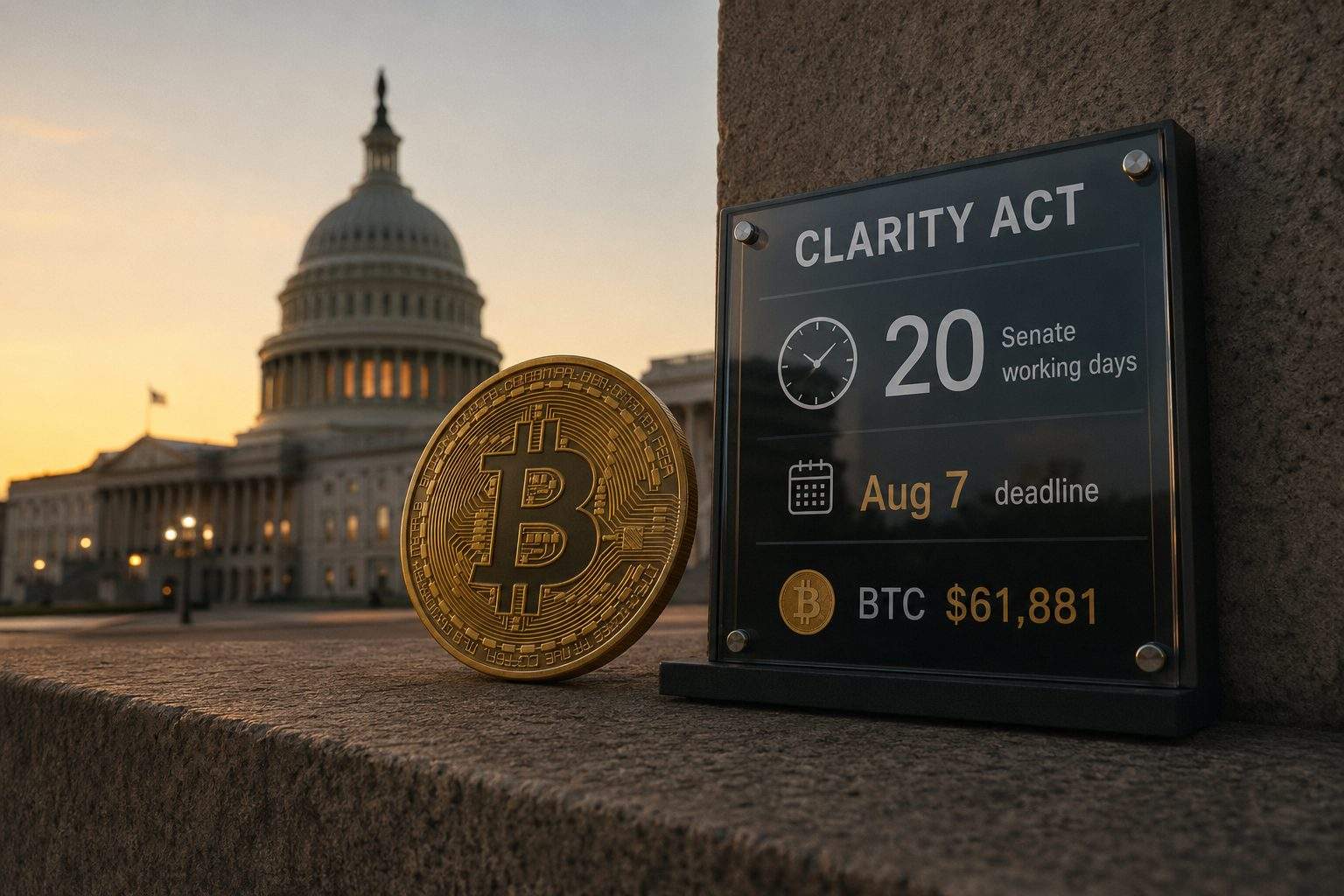

NEW YORK, July 31, 2026, 19:11 EDT. The CLARITY Act frames the potential for increased bank cryptocurrency fee income in contrast to the risk posed by stablecoin deposits, highlighting regulatory attention on the evolving digital asset landscape.
- Core equity trading in the U.S. ended at 16:00 EDT, with late trading extending to 20:00.
- The Senate is back in session on Monday, August 3. Its scheduled vote does not pertain to CLARITY.
- The draft explains how banks can access crypto services. Debate continues over stablecoin reward caps.
The Senate CLARITY draft may expand how banks generate revenue from crypto. It could also alter the landscape for deposit competition.
This results in a dual investment scenario. Major banks stand to benefit from custody, staking, and lending services. Meanwhile, smaller banks worry about the potential loss of inexpensive funding sources.
Rebeca Romero Rainey, head of the Independent Community Bankers of America, pointed to a critical situation for the sector. As much as $1.3 trillion could exit community banks, with potential declines in lending ability reaching $850 billion. The figures are advocacy projections and not formal predictions.
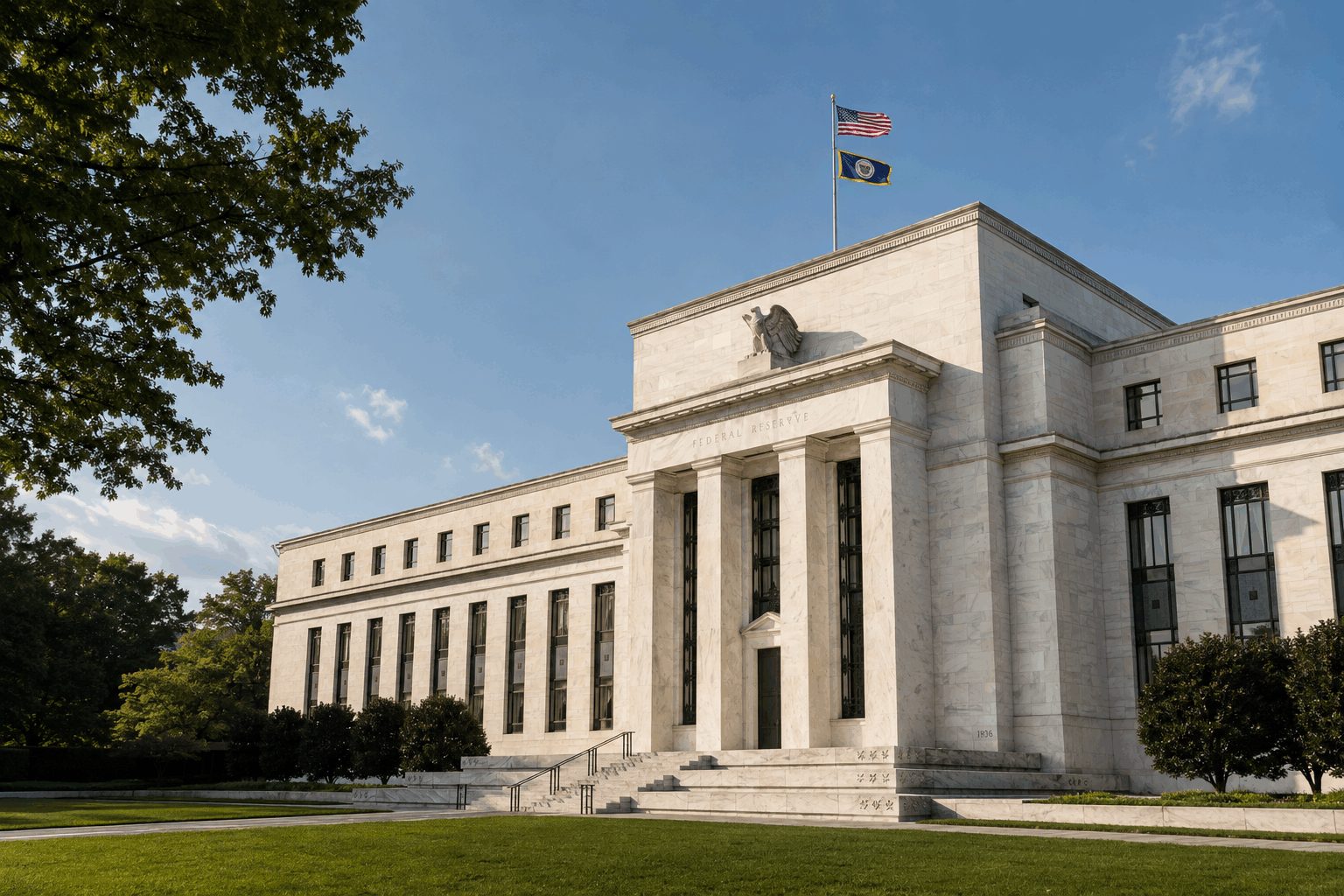
Figures from the Federal Reserve provide scope for those assertions. Deposits account for 6.7% of total deposits at commercial banks, while credit represents 6.1% of all outstanding bank loans.
Based on the Fed’s definition for small banks, the ratios increase to 23.0% and 18.1%. This classification leaves out the top 25 U.S. banks. It serves as an indicator, but not a direct stand-in for the ICBA’s member banks.
Deposit risk outlook
| Source and case | Estimated deposit effect | Estimated credit effect | Main assumption |
|---|---|---|---|
| ICBA industry scenario | Deposit outflows could reach $1.3 trillion | Lending could decline by as much as $850 billion | Community-bank deposits are drawn by stablecoin rewards Dailymotion |
| Nigrinis working paper | Deposits shrink by 25.9% | Lending potentially drops $1.5 trillion | Stablecoins offering yields on par with the federal-funds rate; model has not undergone peer review SSRN |
| Charles River Associates NASDAQ:CRAI, commissioned by Coinbase Global NASDAQ:COIN | Likely impact below 1%, with up to 6.8% in extreme scenario | No central estimate available | High-end impact based on extreme growth and complete substitution Charles River Associates |
The estimates vary widely. As a result, Section 10404 serves as the bill’s key valuation pivot.
Romero Rainey called for a single regulatory framework. “If we’re going to be doing the business of banking, let’s apply the rules and regulations of banking,” she said. She advocates restricting payment stablecoins to payment purposes. Dailymotion
Rob Nichols, head of the American Bankers Association, proposes a more limited remedy. According to him, just two paragraphs require what he calls “tiny, surgical edits.” Nichols is pushing for stricter regulations around issuer affiliates, exchanges, and various intermediaries. ABA Banking Journal
Senate draft proposal: Key changes
| Provision | Draft treatment | Investor read-through |
|---|---|---|
| Section 10401 | Authorizes lawful bank custody, staking as part of custody, crypto lending, payments, brokerage, and node services | Introduces fee flexibility for larger banks with strong compliance systems Senator Cynthia Lummis |
| Section 10404 | Bans rewards given only for holding stablecoins, covering any yield similar to deposit interest | Shields deposits from unsupervised yield offerings, subject to regulator action Senator Cynthia Lummis |
| Activity-based rewards | Permits incentives tied to transactions, liquidity, governance, staking, or loyalty programs | Keeps crypto platforms’ incentives for acquiring users Senator Cynthia Lummis |
| Joint rulemaking | Orders SEC, CFTC, and Treasury to establish rules within one year | Postpones clarity over business models, disclosures, and allowed rewards Senator Cynthia Lummis |
Aave founder Stani Kulechov interpreted the banking provisions as a widening of scope. “This is a big TAM expansion for crypto,” he stated, referring to total addressable market. The document points in that direction, but regulators would impose limits on operations. CCN.com
Prices on Friday indicated risk appetite but not a conclusive policy outcome. Shares and tokens tied to crypto fell. Leading bank stocks saw mixed performance.
Market positioning as of 18:52 EDT
| Asset | Last price | Friday move | Main CLARITY exposure |
|---|---|---|---|
| Coinbase Global NASDAQ:COIN | $146.26 | -10.6% | Revenue from stablecoin rewards, custody fees and increasing banking sector competition |
| Circle Internet Group NYSE:CRCL | $62.61 | -2.6% | USDC usage, reserve yield dynamics and user distribution rewards |
| AAVE token | $93.41 | -6.1% | Possible bank involvement in lending activities and staking |
| Bitcoin | $62,924 | -3.0% | General regulatory landscape and crypto market trends |
| JPMorgan Chase NYSE:JPM | $351.79 | +0.3% | Exposure to deposits and institutional service expansion options |
| Goldman Sachs Group NYSE:GS | $1,018.38 | -0.7% | Institutional-level custody, trading and derivatives expansion |
Coinbase’s drop did not provide an unambiguous CLARITY indication. The stock fell on Friday after the company reported a quarterly loss for a third straight time and reported lower trading volumes. Wider crypto markets also slipped.
Circle faces more direct exposure to reward policies, as a significant portion of its revenue comes from USDC reserve earnings. Coinbase’s stablecoin business is similarly tied to USDC balances, interest rates, and its partnership with Circle.
Lobbying over the 616-page merged text, published on July 22, intensified throughout the past week. The Senate Banking Committee previously approved its section by a 15-9 vote in May. In market news, the S&P 500 climbed 1.05% over the week, while the Nasdaq Composite increased by 1.59%.
The upcoming legislative window is limited. Senators are back on Monday, though the scheduled vote is for H.R. 6500. A state work period starts August 10. As of Friday evening, there was no CLARITY floor vote scheduled.
Risks: Models predicting deposit outflows are based on widely varying assumptions. The ultimate wording may restrict incentives, expand banks’ authorities or delay progress. Subsequent agency regulations could significantly alter the current economics.
The immediate focus is not just banks against crypto. It is about fee growth for large-scale banks compared to funding challenges for lenders reliant on deposits. The outcome depends on Section 10404.
Related articles: NASDAQ:COIN