
BOSTON, August 21, 2026, 05:23 EDT — With U.S. cash markets shut, premarket activity persisted.
- Fidelity Digital Assets reports that AI agents could prefer closed payment networks rather than public blockchains.
- Crypto-related funds and equities surged on Thursday, though control of the financial infrastructure is still unresolved.
- Circle’s broad analyst target range highlights continued uncertainty over how that value will be divided.
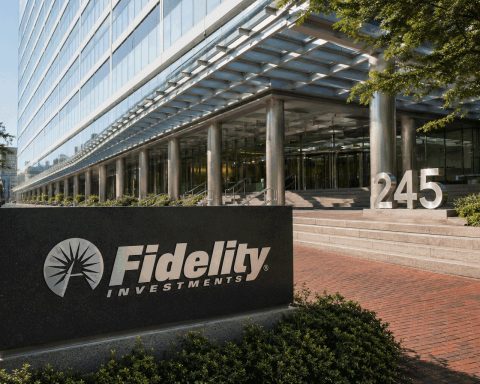
Fidelity Investments’ private digital-assets division has questioned a widely held crypto thesis. In a recent warning, it stated that autonomous AI agents could drive up transaction activity while public-token values may not see corresponding gains.
The difference became significant following Thursday’s widespread rally in cryptocurrencies. Investors initially boosted asset prices. According to Fidelity’s framework, stablecoin providers, custodians and closed payment systems may be positioned to secure more lasting economic benefits.
Fidelity Digital Assets’ Max Wadington highlighted six potential risks to the AI-agent thesis in a report released on August 19. The main concern: agents may opt for the most cost-effective, fastest, and regulation-friendly option, which does not have to be a public blockchain.
| Asset | August 20 move | What it priced |
|---|---|---|
| Fidelity Ethereum Fund (BATS:FETH) | +10.65% | Ethereum beta |
| Coinbase Global Inc. NASDAQ:COIN | +7.58% | Trading and custody |
| Circle Internet Group Inc. NYSE:CRCL | +6.45% | Stablecoin platform |
| iShares Bitcoin Trust ETF NASDAQ:IBIT | +6.24% | Bitcoin allocation |
| Fidelity Wise Origin Bitcoin Fund BATS:FBTC | +6.16% | Bitcoin reflection |
| Robinhood Markets Inc. NASDAQ:HOOD | -0.70% | Retail platform blend |
The divergence had become apparent. On Thursday, FETH outperformed FBTC by 4.49 percentage points. FETH also surpassed Circle by 4.20 points, despite Fidelity’s analysis indicating that service providers may capture more value than native tokens.
| Fidelity risk | Investor implication | Possible beneficiary |
|---|---|---|
| Agents select closed ecosystems | Lower-than-expected activity on public chains | Fintech platforms and bank payment networks |
| Transactions fail to increase token price | Token holders miss out on fee revenue | Stablecoin providers |
| Additional code offers no added value | Developer engagement sends a false signal | Established use cases |
| Software development loses uniqueness | Liquidity and trust become key competitive factors | Custodial services and trading platforms |
| AI detects security flaws more quickly | Expenses for maintaining security increase | Security auditors and trusted custodians |
| Regulation promotes permissioned payment rails | Open networks encounter regulatory barriers | Verified, regulated networks |
Fidelity has made its presence known in the infrastructure competition. On February 4, Fidelity Digital Assets NA introduced the Fidelity Digital Dollar (FIDD), matching the dollar on a one-to-one basis. The company offers custody and trading services for the token.
At the launch, Mike O’Reilly, president of Fidelity Digital Assets, stated, “Fidelity is uniquely positioned to provide investors with on-chain utility via a digital dollar.” This positions Fidelity not only as a critic of the sweeping AI thesis but also as a company that could benefit from infrastructure growth.
| Circle measure | Latest value | Investor read-through |
|---|---|---|
| Thursday close | $83.66, +6.45% | Took part in crypto rally |
| Friday premarket | $88.70, +6.02% | Momentum carried forward |
| Market value | $21.24 billion | Significant valuation for pure-play |
| Price/earnings | 47.74 | Anticipated strong growth |
| Q2 net margin | 6.88% | Profitability remains positive but limited |
| Average price target | $98.61, +17.87% | Further upside seen; opinions vary widely |
Circle offers the most straightforward listed test. Its shares climbed higher than FBTC’s on Thursday and increased by 6.02% before the market opened. However, the stock continues to trade at a 47.74 price-to-earnings ratio.
| Analyst | Firm | Rating | Target | Date |
|---|---|---|---|---|
| Jeff Cantwell | Seaport Global | Buy | $100 | Aug. 17 |
| Bryan Bergin | TD Cowen | Buy | $87 | Aug. 12 |
| Gautam Chhugani | Bernstein | Buy | $140 | Aug. 6 |
| Brian Bedell | Deutsche Bank | Hold | $58 | Aug. 6 |
| James Faucette | Morgan Stanley | Sell | $37 | Aug. 6 |
Analyst ratings for Circle are highly varied. The company has received 13 Buy ratings, five Hold ratings, and three Sell ratings. Price targets range widely from $37 to $175—a near fivefold spread—highlighting significant uncertainty tied to interest rates, regulatory conditions, and stablecoin market dynamics.
Bitcoin finished close to $73,026 on August 20, later moving to approximately $73,647 in early trading Friday. The change boosts short-term volumes. The question of who controls the long-term margin remains unresolved.
Fidelity’s wider 2026 study issues a fresh alert. Artificial intelligence and high-performance computing are increasingly vying with bitcoin mining for both electricity and data-center investment. In its midyear assessment, Fidelity pointed to the network’s average hash rate over 30 days falling by 8.8% ahead of a rebound.
Risks: The AI-agent concept is still in its early stages and difficult to quantify. Crypto markets are prone to swift price changes. Regulatory actions, cybersecurity incidents and declining interest income may also determine which rails retain value.
For investors, the immediate takeaway is not “tokens versus infrastructure.” Instead, it’s about price beta compared to economic ownership. Both were favored on Thursday. Fidelity’s caution indicates that this alignment might be temporary.
Related articles: NASDAQ:COIN