
Tesla stock is holding up near $459 as robotaxi ambitions fuel optimism—but fresh U.S., Europe, and China sales data point to softer demand. Here’s the latest news and analyst outlook as of Dec. 14, 2025.
Tesla, Inc. NASDAQ:TSLA is closing out 2025 with a split-screen narrative that investors can’t ignore. On one side: a steady drumbeat of data suggesting Tesla’s core EV business is under pressure in key markets—especially after the U.S. ended its $7,500 EV tax credit in late September. On the other: a still-powerful bull case tied to autonomy, robotaxis, and humanoid robotics—areas Elon Musk has positioned as central to Tesla’s long-term valuation.
As of the most recent market close (Friday, Dec. 12), Tesla shares ended at $458.96.
What follows is the essential Tesla stock news, forecasts, and analysis as of Sunday, Dec. 14, 2025, pulling together the most relevant developments from the past two weeks—plus the specific items making headlines this weekend.
TSLA stock price check: where Tesla shares stand heading into the new week
U.S. markets were closed Sunday, but Tesla stock finished Friday at $458.96, up about 2.7% on the day.
That price level matters because it highlights the biggest question hanging over TSLA right now:
Why is the stock staying resilient while the latest sales signals look soft?
The answer is that Tesla is increasingly being priced less like a traditional automaker—and more like an “AI + autonomy” platform, where vehicle deliveries are important, but not always the only thing the market wants to talk about. Reuters underscored that dynamic directly, noting that Tesla’s cheaper U.S. “Standard” trims are a test of how the company keeps car revenue flowing while it transitions toward robotaxis and humanoid robots—key reasons cited for Tesla’s valuation. Reuters
The biggest Tesla stock news right now: demand concerns return to center stage
1) U.S. sales fell to the lowest level since January 2022, despite cheaper “Standard” models
The most market-moving headline in recent days came from Reuters, citing Cox Automotive estimates: Tesla’s U.S. sales fell nearly 23% year-over-year in November 2025 to about 39,800 vehicles, the lowest monthly total since January 2022—even after Tesla rolled out cheaper “Standard” versions of the Model Y and Model 3. Reuters
The report tied the drop to a major policy shift: the Trump administration ended $7,500 federal EV tax credits at the end of September, after which the broader U.S. EV market saw a sharp falloff. Tesla’s response—lower-priced trims and financing deals—didn’t deliver the immediate rebound many expected.
There’s also a nuance investors are debating: Tesla’s market share rose even as volumes fell. Cox estimated overall U.S. EV sales dropped more than 41% in November, lifting Tesla’s market share to 56.7% from 43.1% a year earlier.
Investor takeaway: Tesla may be “winning” share in a shrinking near-term pool—but the pool itself looks weaker without incentives, and pricing actions can pressure margins.
2) Europe remains a headache: steep registration drops in multiple countries
Tesla’s softness isn’t limited to the U.S. Reuters data from early December showed Tesla registrations (a proxy for sales) plunged across several major European markets in November:
- France: -58%
- Sweden: -59%
- Denmark: -49%
- Netherlands: -44%
- Portugal: -47%
…with some offsets (notably Norway and Italy), but overall market share trends moving in the wrong direction.
Additional country-level signals reinforced that picture:
- In Germany, Tesla sold 1,763 cars in November, down 20.2% year-over-year; January–November sales were down 48.4% to 17,358 units, while BYD registrations surged.
- In the UK, Tesla registrations fell 19% year-over-year in November to 3,784, amid intensified competition and an “aging lineup” narrative. Reuters
Reuters also noted the European slowdown began late last year and has been linked—at least in part—to political controversy and protests, though the company’s weak recovery suggests product-cycle and competition issues are also at play.
Investor takeaway: Europe is becoming a tougher competitive arena, with more models available to consumers and Chinese brands gaining traction—pressuring Tesla’s volume story outside North America.
3) China is mixed: “China-made” sales rose, but the broader market is volatile
China headlines are more complicated—and investors should pay attention to the definitions used in each dataset.
- Reuters reported Tesla’s China-made EV sales rose 9.9% year-over-year in November, with Shanghai output (including exports) up 41% from October, after Tesla introduced new variants such as a longer-range rear-wheel-drive Model Y and the six-seat Model Y L.
- In a separate Reuters report on the broader market, China’s overall car sales fell 8.5% year-over-year in November, amid waning subsidy-driven demand. That same report said Tesla’s China sales rose to 73,145 units in November after October’s slump.
Investor takeaway: Tesla can still put up strong months in China—especially with product tweaks—but the world’s biggest auto market is getting more price-competitive and policy-sensitive, which raises questions about sustainable growth and margins.
The robotaxi factor: why autonomy headlines still move TSLA
Even as sales data cools, Tesla’s autonomy story continues to dominate investor psychology—especially heading into 2026.
Musk’s “about three weeks” comment raises the stakes again
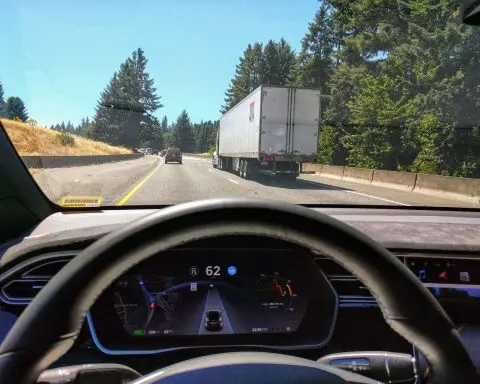
One of the most discussed Tesla headlines this weekend traces back to a Dec. 9 report: Musk said Tesla plans to remove “safety monitors” from robotaxis in Austin in “about three weeks,” implying a push toward truly driverless operation. Electrek
This matters because Reuters has previously described Tesla’s robotaxi service as operating with safety monitors still required—most notably noting that Tesla’s robotaxi program operates in Austin and the San Francisco Bay Area, and that the company had also received a permit to operate a ride-hailing service in Arizona.
The scaling challenge: progress is real, but scrutiny is also real
Tesla’s robotaxi narrative comes with two realities the market tends to weigh differently depending on risk appetite:
- Tesla has launched and expanded pilot operations. Reuters reported Tesla began carrying paying riders in a limited Austin test in June 2025, with about 10 vehicles and carefully controlled operating conditions.
- Safety and reliability remain under a microscope. Reuters also reported that early public tests in Austin were “peppered” with driving mistakes in videos from riders, drawing attention from safety experts and regulators. Reuters
Investor takeaway: If Tesla demonstrates meaningful, regulator-tolerated progress toward unsupervised rides, TSLA could get a powerful narrative boost. If timelines slip or incidents rise, the same story can become a valuation pressure point.
Sales and delivery forecasts: can Tesla avoid another down year?
This is where forecasts and expectations become crucial—because the market is trying to handicap whether 2025 represents a temporary digestion period or something more structural.
Wall Street is bracing for a weaker Q4 delivery print
A recent round-up of delivery forecasts captured how quickly sentiment can shift after incentive-driven demand fades. One widely circulated summary referenced multiple sources:
- FactSet: ~450,000 Q4 deliveries (about a 9% decline)
- Bloomberg: ~448,000 Q4 deliveries (about a 10% decline)
- Independent tracker Troy Teslike: ~406,000 Q4 deliveries (about an 18% decline) tipranks.com
Meanwhile, Reuters cited Visible Alpha in late November saying Tesla’s global vehicle deliveries are expected to decline 7% in 2025, after a 1% drop in 2024.
Tesla is leaning on incentives to finish 2025 stronger
Business Insider reported Tesla has been “piling on” end-of-year incentives—0% APR offers, leasing promotions, and inventory perks—while facing a steep math problem to avoid another annual sales decline. In that report, Tesla would need to sell about 555,000 EVs in Q4 just to match last year’s sales figure. Business Insider
Investor takeaway: The delivery debate is no longer about whether Tesla is growing (as it did in earlier years). It’s about whether demand, pricing, and product cadence can stabilize enough to re-accelerate—without sacrificing profitability.
Analyst forecasts and price targets: why expectations are so widely split
If Tesla feels “hard to value,” the price target dispersion tells you why.
The consensus target is below the current stock price
Aggregated analyst data shows the Street’s average 12‑month target sits meaningfully below TSLA’s latest close:
- Investing.com’s consensus estimates (40 analysts): average target ~$391, high $600, low $120.
With TSLA near $459, that implies the typical analyst expects downside over the next year—despite Tesla’s headline-making autonomy ambitions.
Morgan Stanley’s downgrade captured the “priced in” argument
A major catalyst earlier this month was Morgan Stanley’s downgrade to “equal-weight” (from “overweight”), paired with a higher price target of $425. Investopedia summarized the call as essentially: Tesla deserves a premium, but expectations around AI/innovation have pulled the stock closer to fair value, raising the odds of a “choppy” year ahead. Investopedia
Importantly for forecasting, that same note (as summarized by Investopedia) breaks down how Morgan Stanley thinks value could come from multiple “Tesla businesses,” including:
- Mobility/robotaxi expansion (with an estimate of 30,000 robotaxis by 2030)
- Humanoid robots (Optimus)
- Network services (software + charging + service ecosystem) Investopedia
Investor takeaway: The market’s debate isn’t only “How many cars will Tesla sell?” It’s “How fast can Tesla turn autonomy and robotics into repeatable, regulated, high-margin revenue?”
The 2026 question: will Tesla have a “make-or-break” year?
One of the most shared weekend reads came from Tesla investor Ross Gerber, who told Business Insider he sees 2026 as a pivotal year for Tesla—arguing that investors will demand tangible progress on autonomy and other big initiatives. He also pointed to Waymo as a leading competitor in robotaxis, and suggested Tesla’s approach (not using LiDAR) is a key strategic difference.
Whether investors agree or not, this highlights a core truth about TSLA:
Tesla stock is no longer just trading on quarterly deliveries. It is trading on belief—belief that autonomy and robotics will become commercially meaningful at scale.
What TSLA investors are watching next
Heading into the final weeks of 2025 and early 2026, these are the near-term catalysts most likely to move Tesla stock:
- Q4 2025 deliveries (and the “beat vs. miss” narrative versus consensus expectations) tipranks.com
- Demand signals in the U.S. post-tax-credit (and how much discounting is needed) Reuters
- Europe’s trajectory—whether refreshed Model Y variants stabilize registrations Reuters
- Robotaxi operational updates—especially any credible movement toward unsupervised rides, and regulatory responses Reuters+1
- China monthly momentum—where product variants can help, but competition is relentless Reuters+1
Bottom line: Tesla stock remains an AI/autonomy bet—just with louder delivery alarms
As of Dec. 14, 2025, Tesla stock sits near $459, buoyed by investors who see autonomy and robotics as the long-term prize. But the latest hard data—U.S. sales at a multi-year low, sharp drops in key European markets, and a volatile global demand backdrop—raises the pressure on Tesla to prove it can protect its core car business while scaling its next act.
In other words: 2026 is shaping up to be the year Tesla must turn big promises into measurable, repeatable progress—both on roads and on financial statements.
Related articles: NASDAQ:TSLA