
Beijing, July 12, 2026, 02:07 (GMT+8)
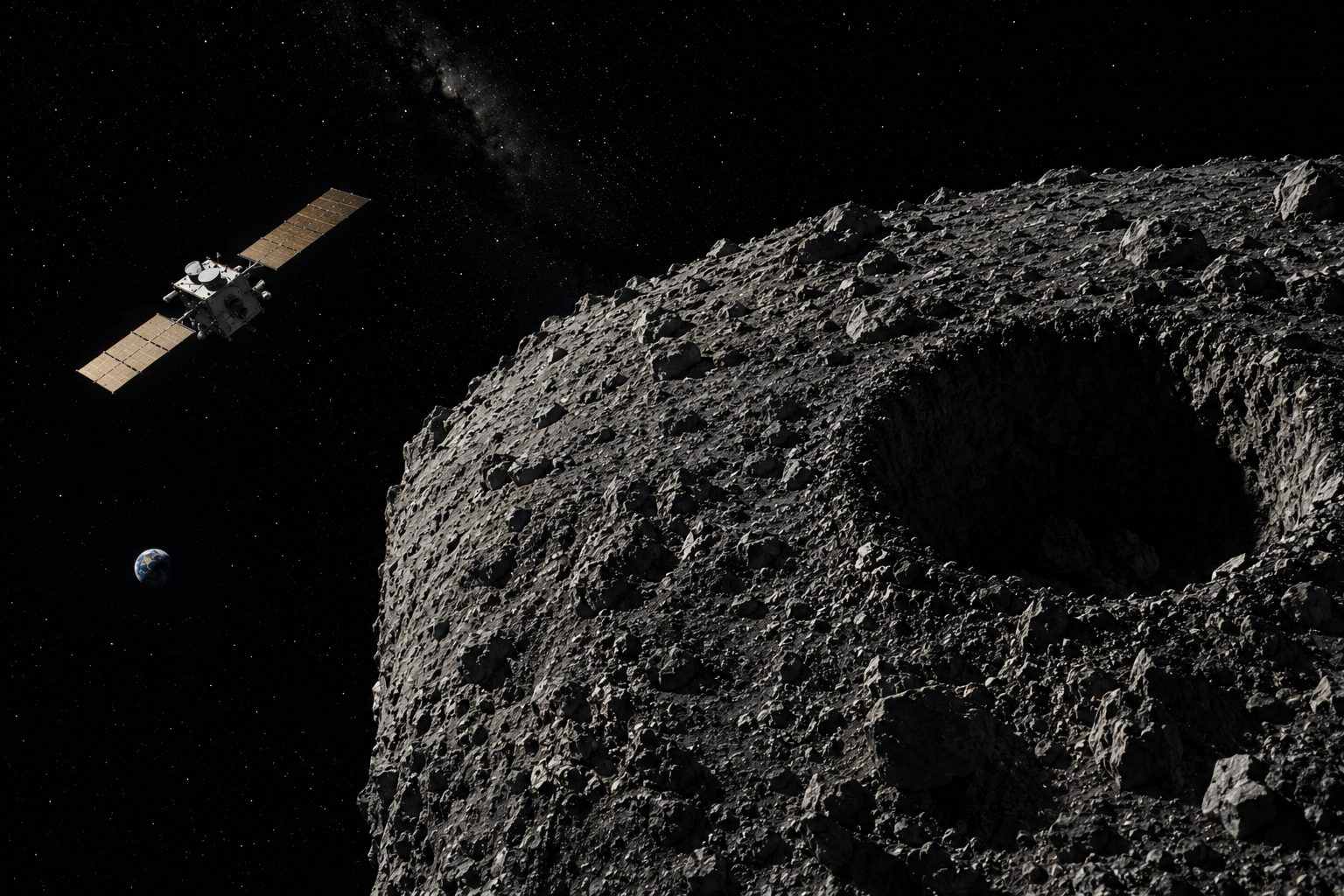
The first image of Kamo’oalewa looked plain. But the optical navigation data was more striking — cameras on the Tianwen-2 probe cut the margin of error in tracking the asteroid’s position from over 100 kilometres down to about a kilometre, with the spacecraft now just 20 km out, the China National Space Administration said.
The timing is key, as the navigation result came in the same trading week that China managed its first recovery of an orbital-class rocket booster. These two milestones showed steps forward at different parts of the space sector: navigating a craft in deep space and reusing the expensive first stage of a rocket. Three Shanghai-listed space stocks gained a combined 29.3 billion yuan in market value on Friday before mainland markets closed for the weekend.
Kamo’oalewa is what’s called a quasi-moon. It tracks the Sun near Earth’s path but isn’t locked to the planet the way the Moon is. China’s Tianwen-2 probe logged about 1 billion km over 400 days to snap its July 2 photo. The mission brings 10 science instruments and an experimental payload. It’s slated to observe the spinning quasi-moon into next spring before trying to bring back material in 2027. That sample may help scientists figure out if Kamo’oalewa is a chunk blown off the Moon or something more ancient from the asteroid belt.
| Mission | Operator | Target | Sample collected | Earth return |
|---|---|---|---|---|
| Tianwen-2 | CNSA | Kamo’oalewa | No | Set for 2027 |
| Hayabusa2 | JAXA | Ryugu | 5.4 grams | December 2020 |
| OSIRIS-REx | NASA | Bennu | 121.6 grams | September 2023 |
The comparison is based on the published Tianwen-2 mission plan, Hayabusa2 data from JAXA and NASA’s OSIRIS-REx sample mass. If Tianwen-2 succeeds, China would become the third country to bring asteroid material to Earth.
The engineering review covers more ground than the geology. In its mission paper, Tianwen-2 lists autonomous navigation and control tech meant to support future Chinese missions, like Mars sample return and work at Jupiter. The probe can shift from a 20-km orbit to closer spots at 3 km, 600 meters, and 300 meters. It will build a 3D model before engineers pick a spot to sample.
“Every new image of an asteroid has been a surprise,” said Patrick Michel, a French planetary scientist who leads ESA’s Hera mission, in comments to Scientific American. “We have everything to learn.” Han Siyuan, a Tianwen-2 spokesman, also told the outlet that Kamo’oalewa is “highly likely to contain primordial information” from the early Solar System. Scientific American
The market moved Friday after a Long March-10B put a satellite in orbit. Its booster landed in a net on an offshore barge about six minutes after stage separation. Reusable boosters are designed for repeated flights, which spreads out manufacturing costs. SpaceX NASDAQ:SPCX has been flying Falcon 9 rockets around 150 times a year and reusing stages dozens of times. Chen Mu, an expert from the Chinese rocket developer, told Reuters that the net recovery method “reduces vehicle mass and increases payload capacity.” Reuters
Reuters said Friday’s jump in shares was tied to the booster recovery news. China Spacesat Co Ltd SHA:600118, China Aerospace Times Electronics Co Ltd (SHA:600879) and China Satellite Communications Co Ltd SHA:601698 all closed up roughly 10%. Their total market cap hit 322.2 billion yuan.
| Company | Friday close | Daily move | Market value, bln yuan | Estimated one-day value gain, bln yuan | Trailing P/E |
|---|---|---|---|---|---|
| China Spacesat | 90.02 yuan | up 10.00% | 106.45 | 9.7 | 6,273× |
| Aerospace Times Electronics | 23.29 yuan | up 10.01% | 76.84 | 7.0 | 336× |
| China Satellite Communications | 32.88 yuan | up 10.00% | 138.90 | 12.6 | 350× |
Value gains use Friday’s market cap and daily moves from Google Finance for China Spacesat, Aerospace Times Electronics and China Satellite Communications. Trailing P/E, or price to earnings, is a company’s market value versus its last 12 months of profit.
Li Kunlun, analyst at UBS Securities, told CGTN that China’s commercial-space sector is close to a “commercialization inflection point.” Even so, Friday’s 29.3-billion-yuan move prices in a big sector story and not actual Tianwen-2 cash flows. The mission paper doesn’t provide a budget or list contract figures for public companies. CGTN News
But there are clear risks. Kamo’oalewa spins about every 27 to 30.5 minutes and could be a solid piece or just a loose “rubble pile,” so landing and taking samples is uncertain. Catching one booster isn’t proof of cheap reuse; that will need checks, fixes, and another safe flight. The proxies named here trade around 336 times to over 6,000 times trailing earnings, so there’s little margin for a slow start to commercial work. Springer
Traders will watch Monday, July 13, when Shanghai reopens, to see if Friday’s limit-up stocks keep their gains. CNSA hasn’t given a date for the next photo release, so the next major sign for the mission is the lower-altitude mapping. On costs, China still plans to re-fly the recovered Long March-10B by year-end, but firmer proof will come later.