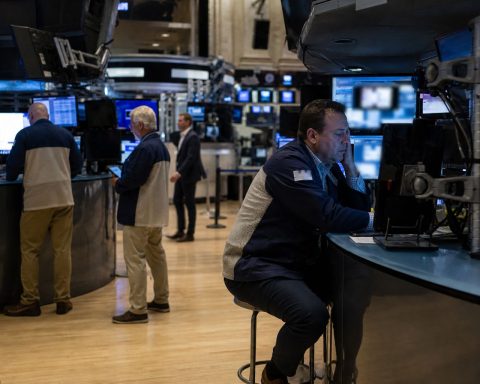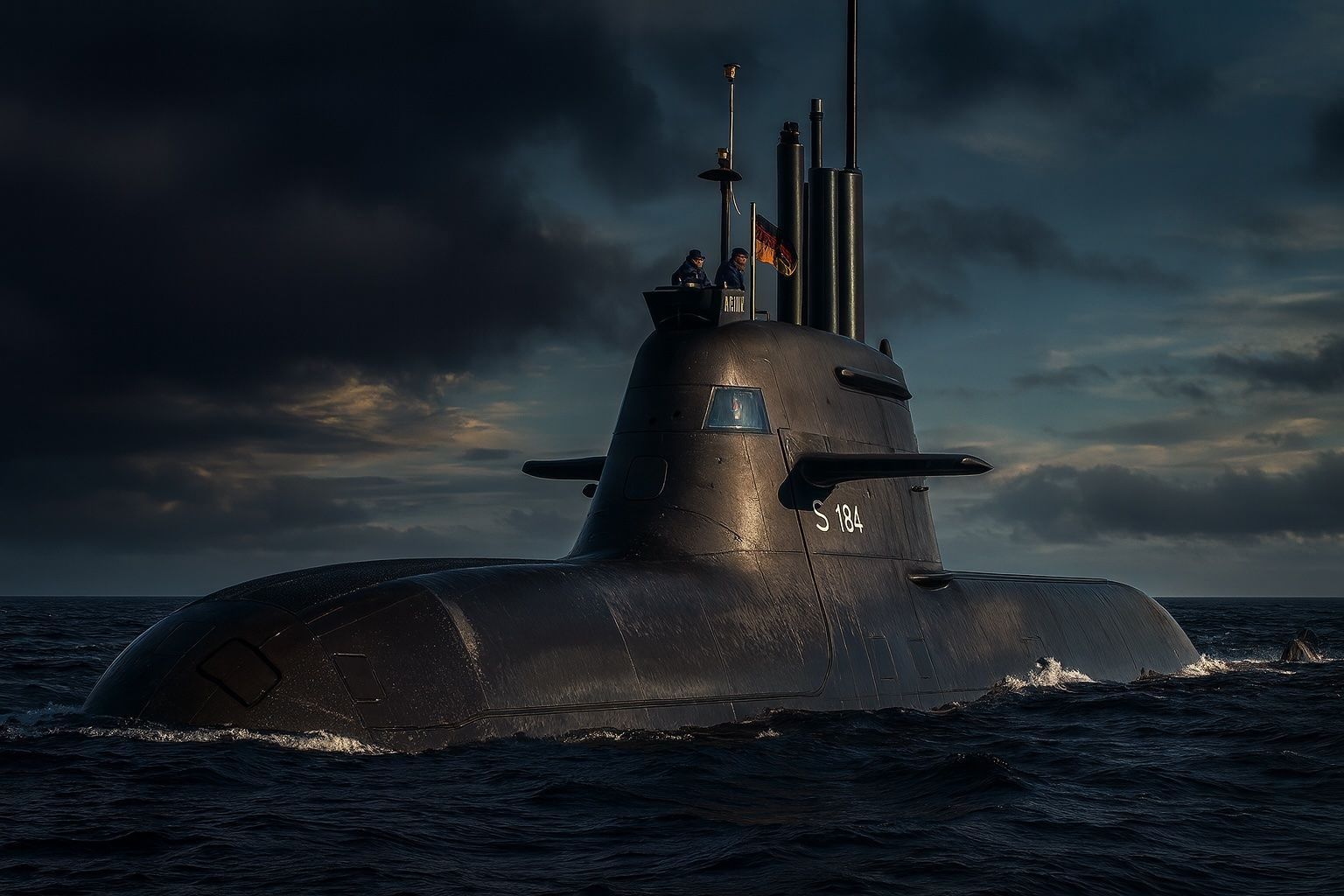

Frankfurt, Oct. 20, 2025 – Shares of Thyssenkrupp Marine Systems (TKMS) – the warship-building arm of Thyssenkrupp – made a splashy entrance on the Frankfurt Stock Exchange today. The newly listed stock surged far above initial expectations as investors clamored for a piece of Europe’s booming defense sectorreuters.comdailysabah.com.
Key Facts:
- Blockbuster Debut: TKMS stock opened at €60 and spiked to as high as €107 before settling around €81.10 by market closereuters.comdailysabah.com. The warship builder’s market capitalization topped €5.15 billion (≈$6 billion) – about double pre-listing analyst valuations for the companyreuters.com.
- Spin-Off Structure: The listing occurred via a spin-off from Thyssenkrupp AG. Existing Thyssenkrupp shareholders received 1 TKMS share per 20 Thyssenkrupp shares heldts2.tech, with the parent company retaining a 51% stake in TKMS post-listingts2.tech. Thyssenkrupp’s own stock price dropped ~20% today (due to the TKMS shares being carved out), but shareholders’ combined holdings of TKMS + Thyssenkrupp are worth ~14% more than before the spin-offreuters.com.
- Defense Boom Backdrop: TKMS’s debut comes amid a surging European defense boom. The company holds an order backlog of €18.6 billion – enough work to keep its shipyards busy into the 2040sts2.tech – after orders tripled in the past five years following Russia’s invasion of Ukraine. Governments are ramping up military budgets (Germany plans to lift its annual defense budget beyond €160 billion by 2029ca.investing.com), and defense stocks are rallying broadly (a European aerospace & defense index is up 77% this yearca.investing.com).
- Expert Optimism: Analysts say investor enthusiasm is justified by TKMS’s strengths. “The full order books and the excellent market position resulted in a high level of investor confidence regarding future growth and profitability,” noted Christof Muerb of Deutsche Bank, an adviser on the listingreuters.com. Another research note observed that “with defence budgets in core markets expected to more than double, TKMS is well positioned for growth,” given unprecedented military spending plansreuters.com. TKMS management is targeting ~10% annual revenue growth and an operating profit margin >7% in coming years (up from ~4% last year)ts2.tech, tapping the robust demand for naval systems.
- Outlook and Ambitions: Company leaders see TKMS’s independence as a springboard for expansion. “With our own shares we now have our own currency,” CFO Paul Glaser said, referring to using stock to fund growthdailysabah.com. TKMS is already vying for major new contracts – it’s short-listed for a Canadian submarine deal and in talks on a submarine project with Indiareuters.com, and will help build Germany’s next-generation F127 warshipsreuters.com. Some experts have dubbed TKMS a potential “marine Rheinmetall”, seeing it as a future naval defense champion if it capitalizes on booming demand like tank-maker Rheinmetall didts2.tech.
TKMS Stock Soars in Market Debut
Investors sent TKMS’s share price skyrocketing in its first trading session. The stock launched at €60 per share on Monday morning and quickly surged amid heavy buying interestdailysabah.com. Within hours it nearly doubled, hitting an intraday high of €107, before pulling back to close at €81.10 in Frankfurt tradingreuters.com. At the closing price, TKMS – which builds submarines, frigates and naval systems – commands a market value of roughly €5.1 billionreuters.com. This far exceeded pre-listing predictions: analysts had pegged TKMS’s standalone value in the €2.3–2.7 billion rangereuters.comdailysabah.com, implying a share price in the mid-€30s. The blockbuster debut reflects outsized investor demand for defense assets, with TKMS’s valuation about twice what many expectedreuters.com.
Thyssenkrupp AG, the parent conglomerate, spun off TKMS to unlock value and sharpen its focus. The listing was structured as a pure spin-off (no new capital was raised). For every 20 Thyssenkrupp shares owned, investors automatically received 1 TKMS share in the new companyts2.tech. This move floated 49% of TKMS’s ~63.5 million shares on the market, while Thyssenkrupp retained a 51% majority stake to maintain controlts2.tech. As expected, Thyssenkrupp’s own stock price dropped about 18–20% today to around €9–10ca.investing.com, since a portion of the conglomerate’s value was carved out into TKMS. However, shareholders cheered the overall result – the combined value of Thyssenkrupp plus the newly listed TKMS left investors about 14% richer compared to before the spin-offreuters.com. (At one point during the day, TKMS’s surging market cap even eclipsed that of its parentdailysabah.com.) The spin-off is part of CEO Miguel López’s broader restructuring of Thyssenkrupp, which also includes exploring a sale of its steel divisionreuters.com. By shedding the volatile steel unit and listing its naval arm, Thyssenkrupp is pivoting toward a leaner portfolio centered on higher-growth businesses like defensets2.tech.
Defense Boom Lifts Naval Sector
The timing of TKMS’s market debut could not be more fortuitous. Europe is in the midst of an unprecedented defense spending boom, reversing decades of post-Cold War decline in military budgetsreuters.com. Russia’s full-scale invasion of Ukraine in 2022 served as a wake-up call across the continent, prompting governments to pour funding into defense modernization. Germany, for instance, created a special €100 billion defense fund in 2022 and is now preparing to boost its annual defense budget beyond €160 billion by 2029 – roughly double pre-war levelsca.investing.com. NATO allies collectively are racing to enhance their armed forces, from tanks and artillery to fighter jets and warships.
This surge in military investment has turned defense contractors into stock market darlings. Across Europe, defense equities have soared: the STOXX Europe Aerospace & Defense index has climbed over 70% this year aloneca.investing.com. Industry leaders like Germany’s Rheinmetall (maker of tanks and munitions) and Italy’s Leonardo have seen their share prices more than double since early 2025 amid record order intakets2.tech. Rheinmetall, which joined Germany’s blue-chip DAX index in 2023, has skyrocketed nearly 17× in value since the Ukraine war begants2.tech. Even smaller players like sensor-maker Hensoldt (IPO in 2020) enjoyed a meteoric rise with strong investor backingts2.tech. In this environment, a pure-play naval builder like TKMS offers investors a rare “direct play on naval defense”, a segment that previously had few investable optionsts2.tech. “Peers like Rheinmetall and others have already hit record highs,” noted one report as TKMS’s debut approacheddailysabah.com – underlining the appetite for defense stocks.
Crucially for TKMS, the naval sector is set to be a big beneficiary of Europe’s military revival. Naval programs are drawing massive funding as countries bolster their fleets for a new era of geopolitical tensions at sea. Germany, for example, is modernizing its navy with over €10 billion in new warships and submarines in the pipeline – including at least four advanced Type-212CD submarines co-developed with Norwayts2.tech. Other European nations are similarly investing in submarines, frigates, and coastal defense to secure Baltic, Mediterranean, and North Sea waters. This has translated into a windfall of orders for TKMS. Over the past five years, TKMS’s order backlog more than tripled, reaching €18.6 billion as of June 2025reuters.com. To put that in perspective, the company now has two decades’ worth of work lined up, stretching into the 2040sts2.tech. Recent contract wins – from new U212CD submarines for Germany/Norway to surface combatants and even a polar research vessel – have filled TKMS’s production schedulets2.tech. “We’re seeing strong demand for all our products,” CFO Paul Glaser observed, noting that navies are ordering more submarines, frigates and mine-hunting systems than everdailysabah.com.
With defense budgets still rising, TKMS’s leadership and investors see a long runway ahead. “Defence spending is bouncing back after a post-Cold War lull,” CEO Oliver Burkhard said recentlyreuters.com, adding that TKMS is ideally positioned to meet this “once-unimaginable” surge in demandts2.tech. Many European governments have committed to multi-year military expansion, which suggests a sustained upswing in naval procurement for the rest of this decadets2.tech. This macro environment has undoubtedly supercharged the enthusiasm for TKMS’s stock debut.
Analysts See Bright Prospects for TKMS
Market experts are largely bullish on TKMS’s prospects, citing its strong fundamentals and the favorable industry cycle. Prior to the listing, several analysts attempted to price the naval division – but actual trading blew those forecasts out of the water. For instance, Jefferies had valued TKMS at roughly €2.3 billion (implying a share price around €35–€36)ts2.tech. Citi analysts were more optimistic, estimating over €3.4 billion (~€50+ per share)ts2.tech. Yet investors bid TKMS above €5 billion on day one, signaling they believe the company is worth far more. “The full order books and the excellent market position resulted in a high level of investor confidence regarding future growth and profitability,” observed Christof Muerb, a managing director at Deutsche Bank who advised on the spin-offreuters.com. In other words, buyers see TKMS’s hefty backlog and niche expertise (e.g. air-independent propulsion submarines) as indicators of robust earnings potential ahead.
Indeed, growth projections for TKMS are upbeat. A note by mwb Research highlighted that “with defence budgets in core markets expected to more than double, TKMS is well positioned for growth.” The firm pointed out that NATO and EU countries are projected to increase procurement spending by over 170% by 2030, creating a much larger addressable market for contractorsreuters.com. TKMS itself laid out ambitious goals at its recent investor day: management is targeting roughly 10% compound annual revenue growth in coming years, fueled by new orders and possibly acquisitionsts2.tech. More importantly, TKMS aims to boost its profitability. Last year, the marine division’s operating profit margins were only around 4%ts2.tech, reflecting the heavy costs and long project cycles in shipbuilding. Executives now aim for 7%+ margins in the medium termts2.tech, which would put TKMS on par with other top-tier naval shipbuilders (for comparison, BAE Systems’ ship division and France’s Naval Group have margins around 7–8%ts2.tech). Hitting that 7% target would significantly lift earnings – and with annual revenue currently about €1.6 billionts2.tech, even modest margin gains translate to big profit jumps.
Some analysts note that these targets, while solid, may be conservative given the red-hot defense climate. “TKMS’s margin goals struck some investors as lacking ambition relative to peers like BAE,” one market commentary notedca.investing.com, suggesting the company could potentially aim even higher if efficiency improves. Still, others counter that TKMS historically operated as part of a conglomerate, and as a standalone firm it might find new cost discipline and focus. Notably, management has indicated plans to invest in modernizing its shipyards, automation, and R&D in autonomous systems to drive productivityts2.tech. The firm also signaled it intends to resume dividends by 2027, targeting a 30–50% payout of net income once stable profits are achievedts2.tech – a move likely to attract income-oriented investors in the long run.
It’s also worth remembering how dramatically market sentiment has swung in TKMS’s favor. Only a few years ago, Thyssenkrupp’s marine unit was an underappreciated part of a struggling conglomerate. Now, after Russia’s war spurred an arms buildup, that same unit has become Thyssenkrupp’s “crown jewel” and a stock market star. In fact, Thyssenkrupp AG’s own stock tripled in value over the past year largely on excitement around the TKMS spin-off and defense narrativets2.tech. The successful listing appears to validate Thyssenkrupp’s strategy of unlocking value: as CEO Miguel López predicted, the combined market value of Thyssenkrupp plus TKMS is now higher than Thyssenkrupp alone ever wasts2.techts2.tech. For analysts, the key question going forward is whether TKMS can execute on its growth plans and justify the lofty investor expectations that are now baked into its €80+ share price.
Strategic Outlook: “New Champion” in Naval Defense?
With its independence secured, TKMS is charting an ambitious course for the future. Company executives stress that being a standalone entity gives TKMS greater agility and access to capital for expansion. “We need more flexibility … in light of rising geopolitical tensions,” TKMS CEO Oliver Burkhard said before trading began, underscoring the need to respond quickly to defense demandsreuters.com. CFO Paul Glaser put it more bluntly: with its own stock now publicly traded, TKMS has “its own currency” for deal-makingdailysabah.com. Freed from the confines of a conglomerate, TKMS can use equity or debt financing to invest in new projects, upgrade facilities, or acquire niche players in the defense industry – options that were more limited under Thyssenkrupp’s umbrellats2.techreuters.com. “Before we were part of a conglomerate; now we can really focus on defense,” Glaser noted, emphasizing that management’s priorities are squarely on the naval sectordailysabah.com.
TKMS is wasting no time in pursuing growth opportunities. In fact, on the very day of the stock debut, TKMS’s team was already on the road drumming up business. CEO Burkhard traveled to Canada on Monday alongside Germany’s defense minister, aiming to secure a major submarine contract for the Royal Canadian Navyreuters.com. (TKMS has been short-listed in Canada’s competition to supply new submarines.) The company is also in advanced talks with India about a potential submarine projectreuters.com – a huge opportunity as India seeks to modernize its fleet. At home in Germany, TKMS is set to play a key role in the Navy’s upcoming F127 frigate program for next-generation warshipsreuters.com. These prospects, if won, could add significantly to TKMS’s order books and keep its shipyards humming well beyond the current backlog.
Another strategic dimension for TKMS is the potential consolidation of Europe’s naval industry. For years, experts have speculated about mergers among naval shipbuilders – envisioning something akin to an “Airbus of the Seas” to unify Europe’s fragmented warship manufacturersts2.tech. Now, with TKMS separately listed, that consolidation might accelerate. Thyssenkrupp’s CEO López has hinted that TKMS stock could be used as acquisition currency for future dealsts2.tech. A publicly traded share price provides a transparent valuation and liquid equity that could facilitate mergers or partnerships. Sector analysts note that TKMS, Fincantieri (Italy), Naval Group (France), and others might explore alliances or combinations in coming years to better compete globallyts2.tech. In this context, TKMS’s “blockbuster” debut gives it a strong platform – a solid market capitalization and investor base – from which to engage in any industry shake-up.
At the same time, safeguards are in place to ensure TKMS’s newfound independence doesn’t compromise national security interests. The German government pointedly did not take an equity stake in TKMS (unlike its 25.1% stake in radar firm Hensoldt) but instead secured a special “golden share” veto rightts2.tech. This golden share gives Berlin the power to block any takeover of more than 25% of TKMS’s shares and first-refusal rights on any large share salests2.tech. In practice, it means no foreign defense giant or investor can seize control of TKMS without government approval. The state will even hold a seat on TKMS’s supervisory board to monitor strategic decisionsts2.tech. These measures reassure policymakers that critical submarine technologies and military shipbuilding capabilities will remain under German oversight, even as TKMS operates as a commercial enterprisets2.tech. For investors, the arrangement balances freedom and security – TKMS can access capital markets and pursue deals freely, but any existential changes will get a second look from Berlints2.tech.
Looking ahead, TKMS is being hailed as a new national champion in the making. Some commentators have dubbed it the “maritime Rheinmetall” – suggesting TKMS could mirror the stunning success of Rheinmetall, which rode the defense upcycle to become a heavyweight in land systemsts2.tech. TKMS certainly has a unique global position: it is the world’s largest builder of conventional (non-nuclear) submarines and a key supplier of advanced naval vessels and undersea technologydailysabah.com. Its products (like stealthy fuel-cell submarines capable of weeks-long submersion) are in high demand, with few competitors outside of nuclear sub makers. If geopolitical tensions continue to drive naval rearmament, TKMS’s niche expertise could translate into outsized growth and market stature.
Of course, TKMS will need to prove it can deliver – both in the shipyard and in financial results – to sustain its rich valuation. Investors will be watching execution on its big order backlog, progress toward margin improvement, and how effectively management leverages its new strategic “freedom” for expansion. But after one day on the stock market, one thing is clear: TKMS has arrived with a bang, and defense investors have a major new player to watch in Europe’s arsenal of public companiests2.tech.
Sources: Reutersreuters.comreuters.comreuters.com; TS² (TechStock²)ts2.techts2.techts2.techts2.tech; Investing.comca.investing.comca.investing.com; Daily Sabah/AFPdailysabah.comdailysabah.com; Reuters (Thyssenkrupp CEO)reuters.com.
Related articles: Defense Industry