
NEW YORK, June 18, 2026, 16:06 (EDT)
- Transocean shares dropped 5.9% to $5.25 just before the NYSE close. Valaris, Noble, and Seadrill were also trading lower.
- Transocean Ltd. said this week it secured $185 million in firm contract backlog for two harsh-environment rigs, locking in future contracted revenue.
- Oil prices dropped after the U.S. and Iran reached an interim deal, with the market seeing possible supply relief from a move to reopen the Strait of Hormuz.
Transocean Ltd shares dropped in late trading in New York on Thursday. Oil prices tumbled, and that hit the stock more than news of $185 million in new contracts for the offshore driller.
The stock was recently down 5.9% at $5.25 in the NYSE’s closing imbalance period, the run-up before the 4 p.m. close when orders stack up for the auction price. The Energy Select Sector SPDR ETF, which follows big U.S. energy names, traded lower. The broader SPDR S&P 500 ETF ticked higher.
Transocean’s new contracts bring revenue locked in for later, but most of the work only starts in 2027 or 2028. The stock is down now as oil prices move.
Brent and U.S. crude prices dropped after news of a U.S.-Iran interim deal aimed at stopping fighting, reopening the Strait of Hormuz and lifting some sanctions on Tehran, reported Reuters. The move is expected to boost global supply. “It removes the big risk premium,” said Phil Flynn, senior analyst at Price Futures Group. Reuters
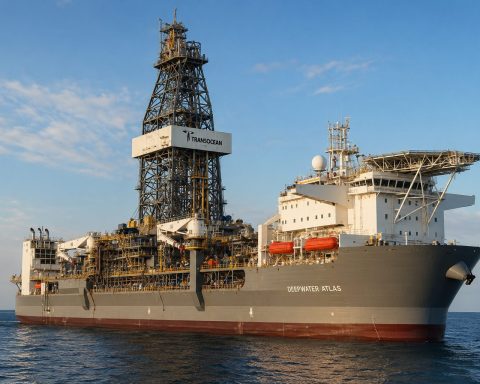
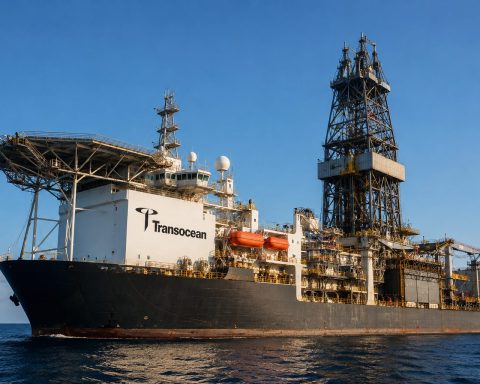
Transocean said its Transocean Norge is set to start a five-well job with Harbour Energy in Norway early 2028, adding around $149 million to its backlog. The Transocean Equinox picked up a two-well deal with Santos in Australia, starting in the second quarter of 2027 and expected to bring in about $36 million.
This is steady business, just not a quick fix when things turn. Investors see offshore drillers as plays on future oil company budgets, which can shift quickly if crude prices drop without help from geopolitics.
Selling hit more than just Transocean. Valaris slid 6.4%, Noble was down 4.7%, and Seadrill lost 5.1%. The losses weren’t isolated—offshore drillers were under pressure across the board, not just one name.
Valaris is still in a separate spot after Transocean said in February it would acquire the company in an all-stock transaction worth $5.8 billion. Transocean CEO Keelan Adamson said on the conference call at the time that high debt “negatively impacts our equity value.” He said the planned deal could lower leverage if it closes in the second half of 2026. Reuters
Thursday closes out the week for regular U.S. trading. The NYSE has Juneteenth National Independence Day, Friday, June 19, as a market holiday in 2026. Trading picks up again after a three-day pause.
The trade isn’t one-way. If the Hormuz agreement stumbles, crude could bounce back, and then both Transocean’s backlog and the pending Valaris scale might weigh more in the share price. The risks: crude drops again, customers pull back, or the Valaris deal stalls. Any of those would push down a stock that’s already trading like a leveraged offshore play.
The $185 million award is getting a lukewarm response from the market so far—seen as positive, but not a game changer. Transocean picked up the job. The question investors have is where oil prices and Transocean’s balance sheet will stand once operations begin.
Related articles: NYSE:RIG