NEW YORK, April 3, 2026, 08:00 EDT.
Wall Street clawed back from a sharp oil-led selloff on Thursday, leaving the S&P 500 and Nasdaq with small gains even as U.S. West Texas Intermediate crude posted its biggest daily jump since 2020 after President Donald Trump said the United States would intensify attacks on Iran. Brent settled at $109.03 a barrel and U.S. crude at $111.54. Reuters
That matters because investors have spent the week trading almost entirely on one issue: when the Strait of Hormuz reopens. The waterway handles about a fifth of the world’s traded oil in normal times, and with U.S. gasoline already above $4 a gallon, next week’s U.S. inflation report is shaping up as the first hard read on how fast the war is feeding into consumer prices. Reuters
The bounce was no clean turn. It came after an early slide that followed Trump’s Wednesday address, which promised tougher action but offered no timetable for ending hostilities or clearing the strait. A two-day relief move that traders dubbed the “Hormuz Hope” rally lost steam, even if the Dow ended down just 61 points while the S&P 500 rose 0.1% and the Nasdaq added 0.2%; all three major indexes still finished the shortened week higher. The Wall Street Journal
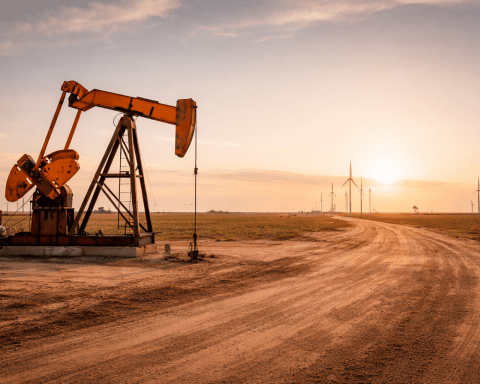
Oil told the sharper story. The market moved deeper into backwardation — where barrels for immediate delivery cost more than later ones — a sign traders were scrambling for prompt supply, and Reuters reported May WTI traded as much as $16.70 above June, a record premium. Reuters
That left traders chasing headlines. Doug Huber of Wealth Enhancement Group said “the market is pricing off oil.” TD Securities strategist Prashant Newnaha said the key question was whether Hormuz opens soon, while BCA Research’s Felix-Antoine Vezina-Poirier urged investors to “stick to the facts” as Tehran and Washington sent mixed signals. Reuters
The pain was uneven. United Airlines fell 3% and Carnival shed 3.5% as fuel-sensitive travel shares sold off, while Tesla dropped 5.4% after quarterly deliveries missed expectations. AP News
Now the focus shifts from rhetoric to data. Reuters polling shows economists expect the March consumer price index, due April 10, to rise 0.9% from the prior month, while core CPI — which strips out food and energy — is seen up 0.3%. BNP Paribas said the first pass-through from oil should show up in motor fuel, and Madison Investments’ Patrick Ryan warned a hotter reading would likely hit stocks. Reuters
Consumers are already feeling it. Patrick De Haan said the U.S. average gasoline price, which crossed $4 a gallon this week for the first time since 2022, could climb to $4.25 to $4.45 by next week and top $5 within a month if there is no workable plan to reopen Hormuz. Diesel, which feeds straight into freight and goods costs, could break its 2022 record within two weeks, he said. Reuters
But the downside case is still large. J.P. Morgan said oil could jump to $120-$130 in the near term and rise above $150 if flows through Hormuz stay disrupted into mid-May, a path the bank said could hit demand and raise recession risk. Dallas Fed President Lorie Logan said a quick end to the war could keep the economic hit moderate, but called the outlook uncertain. Reuters
With U.S. and most European markets shut Friday for Good Friday, the next moves are coming from oil, futures and Asia. Japan’s Nikkei rose 1.3% and South Korea’s Kospi gained 2.7%, while S&P 500 futures slipped about 0.3%, a reminder that investors are still willing to buy dips, but not yet ready to bet the oil shock has passed. AP News