
NEW YORK, May 13, 2026, 17:29 EDT
- Investors get April retail sales numbers Thursday morning—a key check on U.S. consumer spending in the wake of the latest inflation surprise.
- Investors shrugged off higher inflation numbers, pushing the S&P 500 and Nasdaq to fresh record closes Wednesday, with AI-focused tech shares driving gains.
- Odds in the prediction markets have barely budged—Kalshi and Polymarket are both signaling that the Fed is almost certain to keep rates steady in June.
Thursday brings April retail sales data, offering investors a clearer read on U.S. consumer spending, right after two inflation prints effectively erased hopes for a quick Fed rate cut. The Census Bureau drops the advance report for April at 8:30 a.m. EDT.
Why does that matter? Investors stepped in to buy the dip amid renewed inflation concerns. The S&P 500 climbed 0.58%, with the Nasdaq up 1.20%—record closes for both benchmarks on Wednesday—even though producer prices just notched their steepest monthly increase in four years.
If sales come in soft, it points to pressure from higher prices at the pump, grocery store, and bank. A hot number—especially with strength beyond gas and autos—would give the Fed more headaches, signaling enough demand for firms to keep hiking prices.
Economists are calling for headline retail sales to increase by 0.5%, with the ex-auto number expected to climb 0.7%. Projections put initial jobless claims at 205,000. Import and export price indexes from the Labor Department, which track inflation on traded goods, are also scheduled for release at 8:30 a.m.
Stacking up the numbers isn’t simple. In March, retail sales shot up 1.7%, but that was turbocharged by an unprecedented 15.5% jump in gasoline station revenues as the Iran war sent fuel costs soaring. Back then, Edward Jones’ James McCann called households “resilient for now”—though he pointed out they were dipping into refunds and savings. Reuters
Inflation’s outlook has dimmed further. The producer price index climbed 1.4% in April, putting it 6.0% higher versus last year’s level. “The jump in input prices portends further increases for consumer prices in May,” said Ben Ayers, senior economist at Nationwide, in comments to Reuters. Reuters
The latest consumer price index dropped another weight on markets Tuesday. April CPI climbed 0.6%, up 3.8% compared to a year ago. Strip out food and energy, and core CPI still logged a 0.4% gain. “Significant damage” is how Scott Anderson, chief U.S. economist at BMO Capital Markets, described the Fed’s battle with inflation as the Strait of Hormuz closure drags on. Reuters
Prediction markets are echoing the rates story. Over at Kalshi, odds for the Fed holding rates steady in June hit 96%. Polymarket’s “no change” contract was even firmer, sitting at 98%. Looking out to 2026, Polymarket traders put the probability of no Fed rate cuts near 70%. Kalshi’s top 2026 outcome—“exactly 0 cuts”—came in at 68%. Kalshi
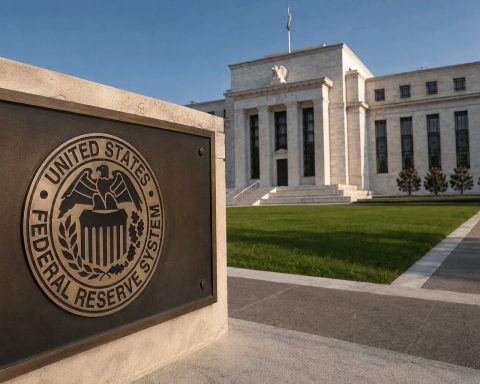
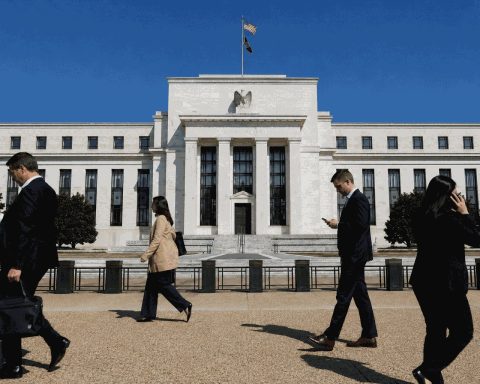
The Fed’s leadership baton just passed. On Wednesday, the Senate signed off on Kevin Warsh as chair, replacing Jerome Powell, whose term finishes Friday. The central bank’s target remains 3.50%-3.75%. Ryan Swift, chief U.S. bond strategist at BCA Research, warned that if Warsh pushes for swift rate cuts, “a big problem” could hit the bond market. Reuters
Fed officials could push that point further after the numbers come out. Governor Michael Barr is set for a 7:00 p.m. slot Thursday, focusing on the balance sheet, and then Governor Christopher Waller joins a 7:30 p.m. panel covering Reserve Bank operations.
Beyond the usual data docket, eyes are on the Trump-Xi summit in Beijing, where talks are scheduled for May 14-15. Nvidia’s Jensen Huang and Elon Musk are both expected among the visiting executives, as Washington leans on efforts to maintain a shaky trade truce and carve out more access for U.S. firms in China.
The AI trade isn’t fading from focus. Nvidia and Tesla both gained Wednesday, lifted by anticipation around the summit. Cisco, meanwhile, soared 15% after hours, buoyed by a higher full-year revenue outlook and a spike in AI infrastructure orders from hyperscalers—those heavyweight cloud customers. Now, Cisco’s rally could show whether investors keep favoring AI-driven growth outside dominant chipmakers like Nvidia or cloud upstarts like Nebius.
Thursday could easily bring trouble. If sales come in hot on price hikes, not more goods sold, yields may jump and hit rate-sensitive shares. But if shoppers pull back on anything beyond essentials, it smells like fatigue. Both ways, the market’s record highs could start looking a lot less certain.
Morgan Stanley bumped its S&P 500 year-end call to 8,000 on Wednesday, emphasizing that the optimism is “an earnings story, not a multiple expansion one.” That’s the pivot Wall Street faces this week: robust corporate results, the Fed staying on the sidelines, and consumers still hanging in there. Reuters
Related articles: Federal Reserve