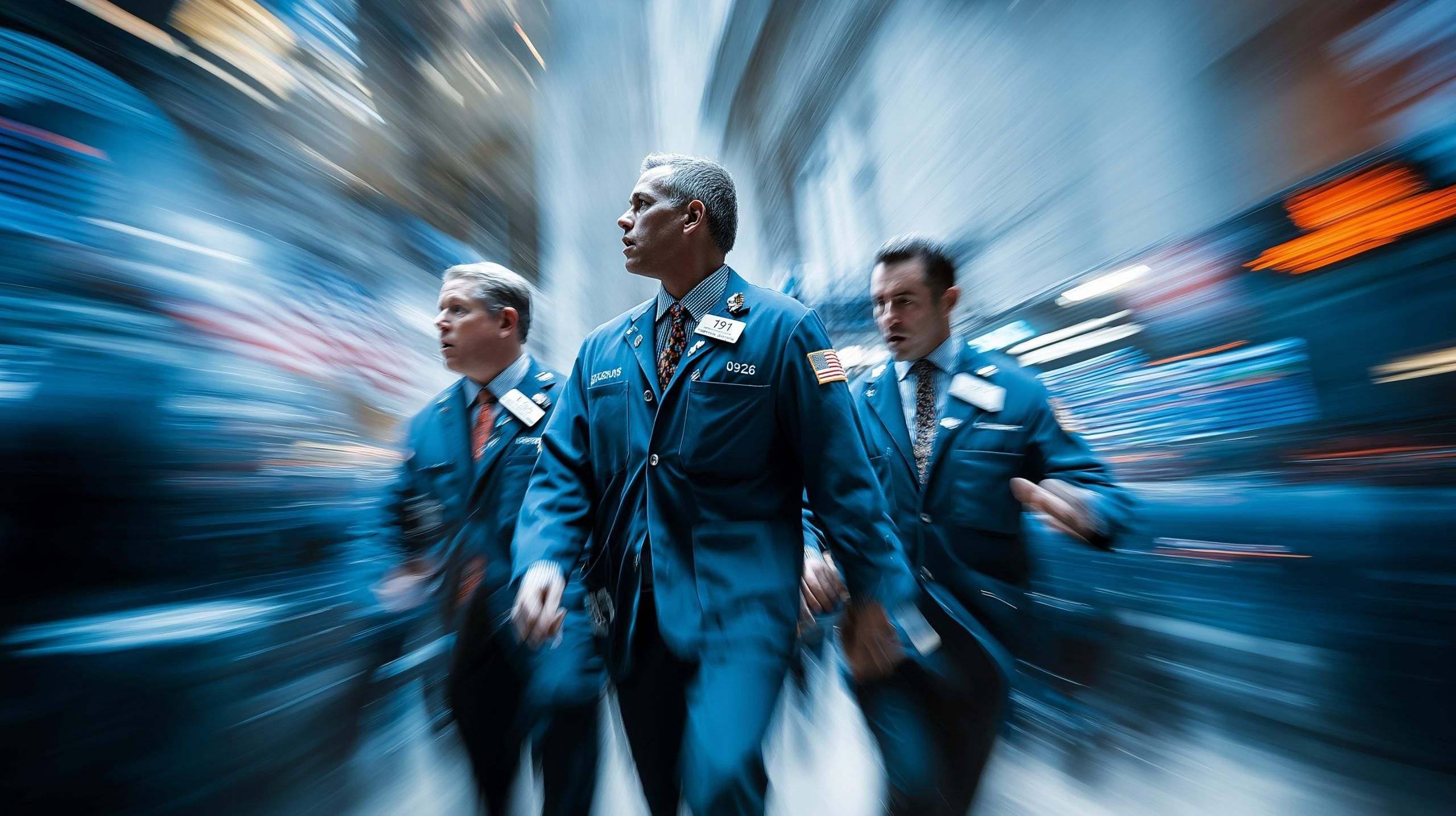

Big Tech stocks are setting the tone for U.S. markets on Wednesday, December 17, 2025, with the “Magnificent Seven” trade showing fresh signs of stress even as the sector’s long-term AI narrative keeps expanding. The day’s action is being driven by two competing forces: (1) renewed investor anxiety about the cost and financing of AI infrastructure after a key data-center funding setback tied to Oracle and OpenAI, and (2) a steady stream of “next-wave AI” headlines—from a reported Amazon–OpenAI mega-investment discussion to Alphabet’s push to make its AI chips a real alternative to Nvidia’s ecosystem. Reuters+2Reuters+2
Big Tech stock prices today: Magnificent Seven snapshot
As of 17:01 UTC (about 12:01 p.m. ET) on Dec. 17, mega-cap tech is broadly lower, with semiconductors and AI-linked names lagging.
- Apple (AAPL): $272.60 (-0.73%)
- Microsoft (MSFT): $476.03 (-0.08%)
- Amazon (AMZN): $223.74 (+0.53%)
- Alphabet (GOOGL): $299.31 (-2.37%)
- Meta (META): $657.10 (-0.01%)
- Nvidia (NVDA): $171.32 (-3.60%)
- Tesla (TSLA): $476.72 (-2.69%)
For a broader read-through, Invesco QQQ (QQQ) is down about 1.24%, while the VanEck Semiconductor ETF (SMH) is down roughly 3.01%, highlighting how today’s pressure is concentrated in chip and AI-infrastructure exposures.
The big theme moving Big Tech today: AI infrastructure nerves are back
A major driver of today’s weakness in AI-linked tech is a fresh flare-up in concerns about how AI buildouts are financed—and whether returns arrive fast enough to justify the spending.
Reuters reported that Oracle’s planned $10 billion data center project in Michigan—a project tied to supporting OpenAI workloads—hit a major hurdle after Blue Owl Capital withdrew from the deal, leaving Oracle needing to find replacement backing.
That headline quickly rippled through the market because it touches a sensitive fault line for mega-cap tech: AI is no longer just a software story; it is increasingly an industrial-scale capital expenditure story—power, land, chips, networking, and long-dated contracts.
Reuters also described choppy trading as investors weighed the rate outlook while staying cautious after the Oracle funding headline.
Why Big Tech investors care: If financing conditions tighten—or if private capital starts demanding stricter terms—AI infrastructure timelines can slip, costs can rise, and the “AI premium” embedded in chip and cloud valuations can deflate quickly. Reuters+1
Amazon and OpenAI: the $10 billion talks with big implications for Amazon, Microsoft, and Nvidia
One of the most market-relevant Big Tech headlines dated Dec. 17 is the report (via Reuters) that Amazon is in talks to invest around $10 billion in OpenAI, potentially valuing the AI company at more than $500 billion.
What makes this especially important for Big Tech stocks today isn’t only the headline number—it’s the strategic structure:
- The talks reportedly include OpenAI using Amazon’s Trainium AI chips, which positions AWS not just as a cloud vendor, but as a credible alternative compute stack for frontier-model training and deployment.
- The story also lands in a market already fixated on who “wins” the next phase of AI: GPU suppliers, custom silicon, and cloud capacity. Reuters+1
This is also where the Microsoft angle matters. Reuters notes Microsoft has a major stake in OpenAI and cloud commercialization rights, and the broader market is watching how OpenAI’s infrastructure diversification affects the Microsoft–OpenAI relationship over time.
Investopedia framed the potential Amazon–OpenAI arrangement as the kind of “circular” Big Tech deal that simultaneously finances AI growth and locks in massive infrastructure demand—an idea that helps explain why markets can swing between enthusiasm and skepticism depending on the day’s funding headlines. Investopedia
Nvidia’s pressure point: alternatives to the “CUDA moat” are getting louder
Nvidia is one of today’s biggest decliners among Big Tech bellwethers, and the backdrop goes beyond “risk-off.”
A particularly consequential Dec. 17 Reuters report says Google is working to make its Tensor Processing Units (TPUs) more compatible with PyTorch, the dominant framework used by many AI developers—an effort designed to reduce friction for customers who might otherwise default to Nvidia GPUs running on CUDA.
Two details stand out:
- The project is described as internal work aimed at improving TPU support for PyTorch, addressing a historical barrier to broader TPU adoption.
- Reuters says Google is collaborating with Meta, the main backer of PyTorch—meaning two Big Tech players have aligned incentives to reduce dependency on Nvidia’s full-stack advantage (hardware + software).
Layer that onto today’s broader “AI spending reality check” triggered by the Oracle funding setback, and it’s easier to see why Nvidia is taking the hit: investors are simultaneously questioning AI capex payback and tracking credible alternatives to Nvidia’s platform. Reuters+1
Alphabet in focus: Waymo funding talks and a TPU push aimed at the AI compute stack
Alphabet is moving on multiple AI-adjacent fronts today.
First, Reuters reported that Waymo—Alphabet’s self-driving unit—is in talks to raise billions of dollars at a valuation of at least $100 billion, with Alphabet expected to lead the round. That’s a major data point for investors trying to value Alphabet’s “beyond Search” optionality, particularly as autonomous driving and robotaxis attract renewed capital. Reuters
Second, Alphabet’s AI infrastructure strategy is grabbing headlines through the TPU/PyTorch effort aimed at making Google’s AI silicon easier to adopt outside Google.
On the “forecast” side, Investing.com summarized fresh analyst commentary dated Dec. 17, including BMO raising its price target on Alphabet to $343 and commentary pointing to growth expectations for Google Cloud into early 2026, while noting other firms’ differing views (e.g., neutral ratings with lower targets). Investing.com
Meta: Zuckerberg’s AI reset—and why the market still debates the price tag
Meta’s stock is relatively steady today compared with semis, but the company is at the center of one of the most widely discussed Big Tech strategic questions: How much spending is too much to stay in the AI race?
The Financial Times published a detailed Dec. 17 analysis describing how Mark Zuckerberg has pursued an aggressive push to reposition Meta as an AI leader—complete with infrastructure buildouts, high-profile hiring, and internal reshuffling—while facing internal friction and questions about execution.
Meta also appears in the TPU/PyTorch story because of its role as PyTorch’s primary backer—highlighting how Big Tech AI competition increasingly happens at the platform level (frameworks, developer workflows, and inference costs), not just at the chatbot level.
Apple: bullish 2026 AI expectations drive fresh Wall Street targets
Apple’s move today is modest compared with Alphabet and Nvidia, but the Apple AI narrative is heating up again—not via splashy product reveals, but via analyst forecasts looking into 2026.
Investing.com reported Morgan Stanley raised its Apple price target to $315 from $305, keeping an Overweight stance and positioning Apple as a high-conviction idea in its 2026 IT hardware outlook.
Investor’s Business Daily added context around the same call, reporting Morgan Stanley’s view that Apple could move from an AI laggard to a leader in 2026, with attention on a Siri relaunch expected in spring 2026 and the broader Apple Intelligence rollout potentially influencing upgrade cycles.
From a valuation lens, Apple’s trading multiple remains in focus for macro-sensitive investors: the data snapshot shows Apple at roughly 30x earnings (based on the tool’s P/E figure).
Tesla: California Autopilot marketing ruling becomes a new near-term overhang
Tesla is under pressure today, with a major news catalyst centered on regulation and marketing claims around autonomy.
Reuters reported that California’s DMV is delaying enforcement of a sales suspension order, giving Tesla more time to address concerns tied to how it markets “Autopilot” and “Full Self-Driving.” Reuters also noted the DMV laid out potential paths forward, including changes to terminology and an appeal timeline (with an appeal date referenced as Feb. 14). Reuters
Tech and auto-focused outlets emphasized the core issue: regulators say the branding overstates capability, while Tesla maintains drivers are told to remain attentive.
For Big Tech watchers, Tesla increasingly trades like an “AI and autonomy” platform bet rather than a traditional automaker—so autonomy-related regulatory risk can hit sentiment quickly, especially on a day when the market is already sensitive to AI narratives. Reuters
Macro overlay: rate-cut expectations are supportive, but they’re not the only story today
Today’s Big Tech action is also happening against a shifting rate backdrop.
Reuters reported Federal Reserve Governor Christopher Waller said policy remains restrictive and suggested there is still room to cut rates, pointing to softening in the labor market and noting the Fed’s benchmark range after recent cuts is 3.50%–3.75%.
In “classic” market logic, lower-rate expectations can support long-duration growth assets like Big Tech. But today is a reminder that rates are only one piece of the valuation puzzle: when investors get nervous about AI spending, funding structures, and the durability of moats, even rate relief can take a back seat.
Investopedia also highlighted a higher 10-year Treasury yield level (around 4.16%) in its Dec. 17 market coverage, a detail many tech traders watch because long-end yields can influence how aggressively the market values future growth.
What investors are watching next in Big Tech
With the day’s headlines clustered around AI infrastructure, chip/platform competition, and regulatory risk, here are the key watchpoints shaping near-term sentiment:
- AI capex confidence: Will markets treat the Oracle data-center funding snag as a one-off, or as a sign that private capital is reassessing AI projects and lease economics? Reuters
- Cloud + silicon strategy: If OpenAI tilts more workloads toward Trainium or other alternatives, it could validate AWS silicon—but also intensify competitive pressure on Nvidia and other AI hardware suppliers.
- Alphabet’s TPU adoption curve: PyTorch compatibility is a direct attack on switching costs—and therefore a direct challenge to Nvidia’s ecosystem advantage.
- Waymo valuation signal: A $100B+ valuation discussion would be a meaningful “market check” for Alphabet’s non-core bets and could influence how investors price optionality across Big Tech portfolios. Reuters
- Tesla autonomy regulation: California’s posture on naming/marketing could echo into other jurisdictions and shape the narrative around robotaxi timelines.
- Apple’s AI product cadence into 2026: Analyst upgrades tied to Siri and Apple Intelligence suggest Wall Street is trying to front-run a potential upgrade cycle—but execution and user adoption remain the swing factors.
This article is for informational purposes only and is not financial advice. Markets move quickly; always verify prices and filings before making investment decisions.
Related articles: NASDAQ:META