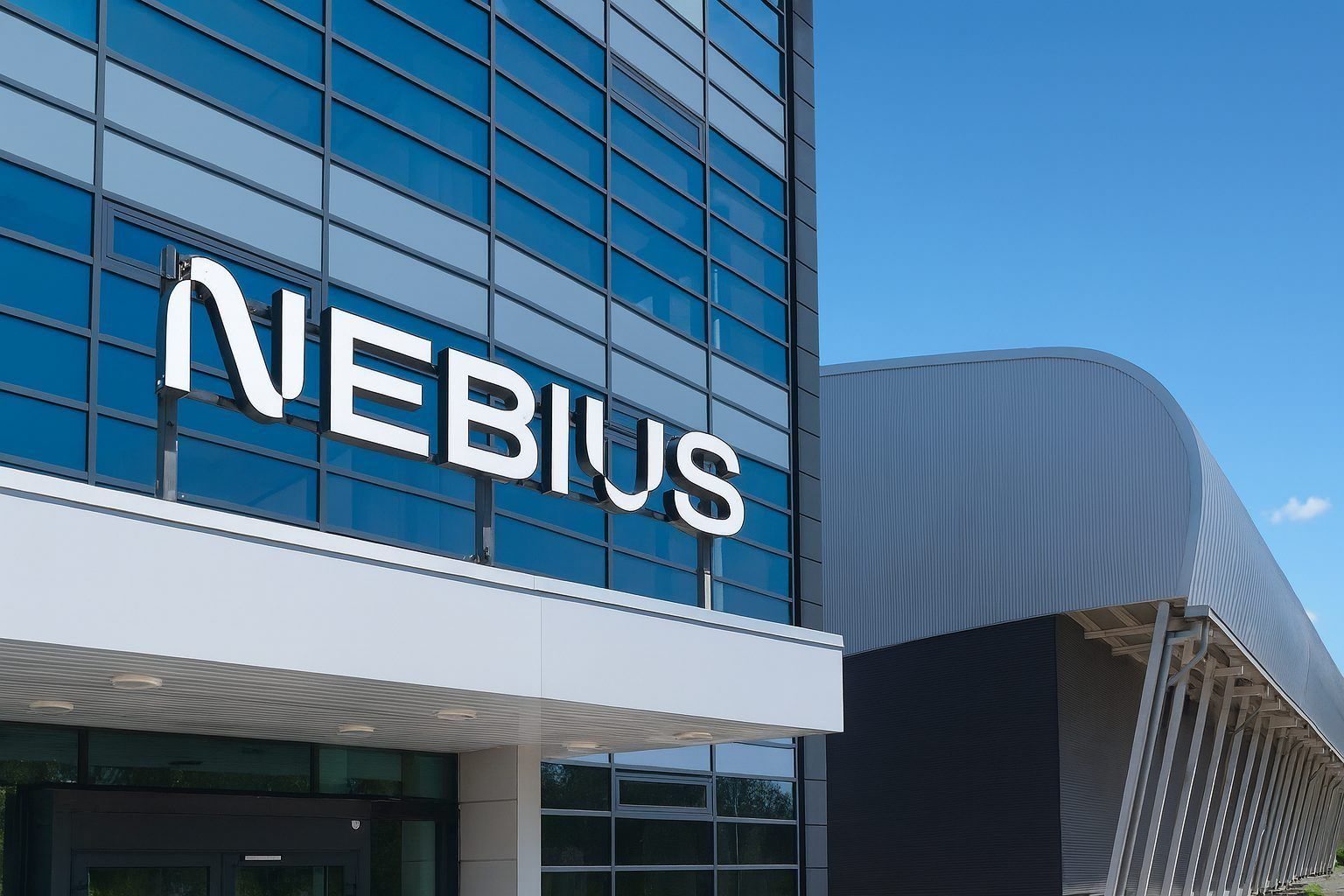

NEW YORK, Dec. 28, 2025, 2:48 p.m. ET — Market closed
Nebius Group N.V. (Nasdaq: NBIS) heads into the final trading days of 2025 with investors still debating a familiar AI-infrastructure question: is the recent pullback a healthy reset—or the start of a deeper volatility cycle? Friday’s session offered a reminder of how quickly sentiment can swing in high-beta “AI buildout” names, even as the company continues to stack headline-sized contracts and capacity plans.
NBIS ended Friday at $87.59, down about 3.9% on the day, after trading as low as $86.74. Trading volume was also lighter than usual versus the stock’s average, according to MarketBeat.
At the same time, the longer view remains dramatic: a recent Motley Fool analysis noted the stock has more than tripled in 2025 (around +225% year to date) while also sitting roughly 33% below all-time highs set in October, underscoring how wide the trading range can be for fast-scaling AI infrastructure plays.
NBIS stock price action: what the tape is saying
With U.S. equity markets closed for the weekend, the most actionable near-term reference points are still Friday’s close and the levels many traders use to gauge trend and risk.
MarketBeat’s recap highlighted that NBIS is currently below its 50-day moving average (about $99.35) but above its 200-day moving average (about $82.23)—a setup that often fuels “bounce vs. breakdown” debate into the next session. The same report also flags the stock’s high beta (3.83) and a negative P/E (reflecting current losses), both consistent with the idea that NBIS can move sharply with risk appetite, rates, and AI-spending headlines. MarketBeat
The business story investors keep coming back to
Nebius positions itself as a full-stack AI infrastructure and AI cloud platform provider, headquartered in Amsterdam and listed on Nasdaq.
The company has been particularly visible in 2025 because of its hyperscaler-scale contracts:
- In its Q3 shareholder letter, founder and CEO Arkady Volozh referenced a large enterprise AI infrastructure win with Microsoft valued between $17.4 billion and $19.4 billion, with Nebius expecting revenue from that deal to start ramping throughout 2026.
- The company also announced an agreement to deliver AI infrastructure to Meta valued at approximately $3 billion over five years, and said it planned to deploy the required capacity over the next three months.
These deals reinforce the “AI capacity scarcity” narrative that has boosted several so-called neocloud providers. Reuters has described Nebius as part of that cohort supplying GPU-powered cloud capacity amid broader industry constraints. Reuters
Fresh NBIS headlines in the last 24–48 hours
Even on a weekend, NBIS drew a cluster of timely coverage focused on valuation, upside potential, and positioning:
- TipRanks (Dec. 28) highlighted NBIS’s 2025 surge and framed the next debate around execution and forward expectations, noting a Strong Buy consensus and an average price target around $164.20 (as presented by TipRanks).
- The Motley Fool (Dec. 27) published a bullish-forward-looking thesis arguing NBIS could have significant upside into 2026, while still emphasizing the stock’s volatility and “expensive” nature. The Motley Fool
- MarketBeat coverage (Dec. 26–Dec. 28 window) focused on Friday’s selloff and also tracked institutional activity and ownership updates—useful context for investors watching whether dips are being bought by longer-horizon holders.
Fundamentals: the latest disclosed financial snapshot
Nebius’ most recent quarterly disclosure (Q3 2025) remains central to how investors model the “scale now, profit later” trajectory.
In its Q3 results release filed in the U.S. via Form 6-K exhibit, Nebius reported for the quarter ended Sept. 30, 2025:
- Revenue: $146.1 million (up 355% year over year)
- Net loss from continuing operations: $119.6 million
- Capex (purchases of property, plant and equipment): $955.5 million for the quarter SEC
That combination—surging revenue alongside heavy spend—captures the core tension in NBIS: the market is rewarding capacity and contract momentum, but it is also quick to reprice the stock when investors focus on burn rate, funding needs, or broader risk-off moves.
Reuters, in coverage of the company’s Meta deal and Q3 results, pointed to the same dynamic: rapid revenue growth, but major expansion spending and sizeable losses tied to the race to secure GPUs, land, and power.
Guidance and long-range targets: capacity, ARR, and the “2026 ramp” narrative
The bull case for NBIS increasingly rests on how fast Nebius can convert power and GPU capacity into durable revenue—and whether those economics hold up as more supply arrives industry-wide.
Key forward-looking signals that investors cite include:
- Annualized run-rate revenue (ARR) of about $551 million at the end of September, as referenced in the Q3 shareholder letter (Nebius defines ARR as taking revenue from the last month of the quarter multiplied by 12).
- A target of more than 2.5 gigawatts of contracted power at the end of 2026, reflecting the company’s raised capacity ambition (as presented in the shareholder letter graphics/text).
- Reuters reported Nebius is targeting $7 billion to $9 billion in annualized run-rate revenue by the end of 2026, versus ARR of about $551 million at September-end—an aggressive ramp that would require sustained execution and continued demand.
In other words: NBIS trades less like a traditional “current earnings” story and more like a capacity ramp option—and those tend to be priced by confidence, not just by quarterly beats.
What Wall Street is signaling: ratings, price targets, and the valuation argument
Analyst outlooks (as aggregated by third-party trackers) show a wide spread between bullish targets and the stock’s current price—one reason NBIS remains a magnet for both momentum buyers and skeptics.
MarketBeat’s latest compilation described the consensus as “Buy” with a mean price target around $144.71, and it also listed examples of published targets such as Citizens JMP (market outperform, $175) and DA Davidson (buy, $150), among others. MarketBeat
TipRanks, in its recent update, likewise presented a Strong Buy consensus and an average target around $164.20. TipRanks
The pushback is straightforward: even supporters often concede the stock looks “very expensive” on conventional metrics due to current losses—so the multiple investors pay is essentially a wager on contract conversion, capacity activation, and competitive durability. The Motley Fool+1
Positioning check: short interest and what it can mean for volatility
NBIS also has meaningful short positioning—fuel that can either amplify downside in risk-off periods or accelerate upside during sharp rallies.
MarketBeat’s short-interest page lists 33.07 million shares sold short as of Dec. 15, 2025, representing 13.13% of public float, with a days-to-cover ratio of about 2.8.
A short base at that size does not guarantee a squeeze, but it does help explain why NBIS can move fast when sentiment shifts—especially around contract headlines, funding news, or broad AI-sector rotations.
What investors should know before the next session
Because the market is closed now, the near-term edge is about being ready for Monday’s open—particularly in a thin, holiday-adjacent tape where liquidity can exaggerate moves.
Here are the key items worth having on the radar:
1) Economic and macro catalysts (rates-sensitive setup)
High-growth AI infrastructure names can react sharply to rate expectations and macro surprises. For the week ahead, Scotiabank’s calendar flags:
- Pending Home Sales (Monday, Dec. 29, 10:00 a.m. ET)
- S&P/Case-Shiller Home Price Index (Tuesday, Dec. 30) and Chicago PMI (Tuesday, Dec. 30)
- FOMC meeting minutes (Wednesday, Dec. 31, 2:00 p.m. ET) Scotiabank
2) Treasury supply
U.S. Treasury bill auctions can influence short-end yields and broader rate sentiment. Treasury’s tentative schedule shows auctions for 13-week and 26-week bills on Monday, Dec. 29, 2025.
3) Holiday market structure
The week includes New Year’s Day (Thursday, Jan. 1), when U.S. stock markets are closed; holiday schedules can reduce liquidity and increase volatility around key levels. Kiplinger also noted the week is light on major earnings.
4) NBIS-specific watchlist items into Monday
- Any incremental updates on capacity activation timelines, particularly around servicing the Meta agreement and the Microsoft ramp into 2026.
- Financing and dilution sensitivity: Nebius has discussed mechanisms such as an at-the-market equity program (up to 25 million Class A shares) as part of its broader funding toolkit.
- Sentiment and narrative risk: Reuters previously quoted co-founder Roman Chernin describing a focus on long-term margins and acknowledging investor debate around AI exuberance—useful framing when the stock is moving more on “AI trade” psychology than on near-term earnings. Reuters
Bottom line for NBIS stock heading into Monday
Nebius remains one of the most closely watched AI infrastructure stories because it sits at the intersection of real hyperscaler demand and extreme scale-up requirements. The upside case leans on management’s ability to translate contract wins and power capacity into a 2026 revenue ramp. The bear case points to dilution risk, capital intensity, and the possibility that AI infrastructure supply catches up faster than demand—compressing returns for newer entrants.
With markets closed today, NBIS investors’ practical task is to enter Monday with a plan: know the key technical levels from Friday’s trade, track macro catalysts that could hit rates-sensitive AI names, and watch for any company-specific updates that add clarity on capacity, funding, and execution.
Related articles: NASDAQ:NBIS