
LONDON, April 19, 2026, 16:36 BST
Oil’s Friday bounce didn’t last long. By Monday, fresh pressure crept in after U.S. President Donald Trump leveled accusations that Iran broke a ceasefire, while Reuters flagged renewed delays for tankers in the Strait of Hormuz. So, crude’s direction at the open rests with Gulf news flow, not supply numbers.
Timing proved critical here, with traders recently slashing the war premium—the extra cost built in for supply risk—once Iran announced the strait was open to commercial traffic. Brent finished Friday off $9.01, or 9.07%, at $90.38 a barrel. U.S. West Texas Intermediate lost even more ground, down $10.48, or 11.45%, to $83.85. SEB Research’s Ole Hvalbye pointed out that Europe’s market would remain tight for now, since Gulf barrels need about 21 days to reach Rotterdam. Tamas Varga at PVM Oil Associates flagged the risk that shipments could halt again if sanctions and nuclear negotiations stall.
That’s what sets the coming week apart from a typical supply-demand story. Brent and WTI continue to trade above the pre-war $70 mark, though they’re a far cry from those late-March peaks near $120. The slide on Friday didn’t spare the majors: Exxon Mobil and Chevron both finished the day in the red, while airline stocks caught a tailwind from the prospect of lower fuel costs.
Diplomacy is the immediate hurdle. According to Reuters, Iran won’t send a negotiating team to Pakistan “as long as there is a naval blockade,” quoting Tasnim news agency on Sunday. The line dents the more optimistic story that had helped push crude prices down late last week. Reuters
Shipping data gives a muddled picture—more telling than official comments right now. TUI Cruises reported that two ships cleared the Strait of Hormuz following approvals. Crucially, those vessels were sailing with skeleton crews, since passengers were already flown home. It’s a hint that some traffic is resuming, but doesn’t confirm that tanker operations are back to normal.
Goldman Sachs is sticking with its 2026 Brent and WTI targets—$83 and $78 a barrel—on the view that Hormuz shipments return to normal around mid-May. The bank flagged that if Gulf supplies rebound more quickly, oil could slide further. It also cited softer demand for petrochemical feedstocks and jet fuel, with high refined-product prices weighing on consumption in regions like Asia and Africa.
Longer-term fallout is tougher to gauge. Fatih Birol, who leads the International Energy Agency, told Neue Zuercher Zeitung that it could take roughly two years for Middle East energy output to climb back to where it was before the war. Emergency reserve releases? Birol said they’re “definitely under consideration,” but for now, not necessary. Reuters
The IEA’s April market report lays out the numbers: global supply dropped by 10.1 million barrels per day in March, landing at 97 million bpd. Refineries in the Middle East and some Asian plants facing feedstock shortages pared back April crude runs by an estimated 6 million bpd. Notably, the agency now expects oil demand in 2026 to decline by 80,000 bpd—quite a reversal from its previous projection of growth.
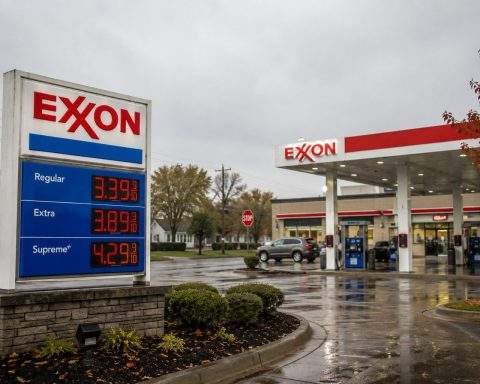
Consumers are already exposed. On Sunday, U.S. Energy Secretary Chris Wright said gasoline prices have “likely peaked,” but staying above $3 a gallon is possible through next year. AAA’s Sunday reading for regular gasoline landed at $4.05 per gallon, a jump from $3.16 this time last year. Political stakes remain tightly linked to what crude does next. Reuters
Investors are still watching U.S. figures, but Hormuz is the main event. The Energy Information Administration is set to release its Weekly Petroleum Status Report on April 22, following up on the April 10 numbers. The report typically drops just after 10:30 a.m. Eastern. What matters: whether refiners are tapping more domestic barrels as flows from the Gulf remain in limbo.
Oil’s floor is obvious — any lasting agreement, tankers getting through, freight rates easing, and Brent and WTI could shed even more of their risk premium. Flip it, though: the threat on the upside hasn’t vanished. If the strait remains shut or another vessel comes under fire, Friday’s slump might be nothing but a head fake.
Right now, traders are sticking to a tight checklist: ships first, negotiations next, gasoline data after. That’s how the price will move.
Related articles: NYSE:CVX