
New York, May 12, 2026, 10:11 EDT
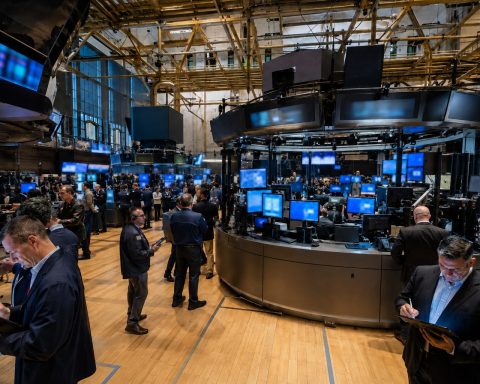
Stocks slipped at the open Tuesday, with the Nasdaq bearing the brunt after April inflation numbers ran hotter than analysts had forecast—throwing a wrench into hopes for imminent Fed rate cuts. Both the S&P 500 and Nasdaq started in the red. The Dow managed a short-lived uptick, but that didn’t last as selling picked up.
That move made waves in a market still hovering close to its peak. The S&P 500 slipped 0.4% off the record it notched just the day before, while the Dow dropped 185 points by 9:35 a.m. Eastern. The Nasdaq slid 0.6%, according to AP.
April’s Consumer Price Index—tracked by the Labor Department—climbed 0.6%, following a 0.9% surge in March. Year over year, CPI advanced 3.8%, notching higher than March’s 3.3% gain and topping the 3.7% rise economists expected, according to a Reuters survey.
Energy was the main culprit. According to the Bureau of Labor Statistics, the energy index jumped 3.8% in April, making up over 40% of the monthly gain. Gasoline prices didn’t help—up 5.4% for the month, soaring 28.4% compared to a year ago.
Core CPI—excluding food and energy—came in up 0.4% for April, pushing the annual rate to 2.8%. Shelter costs jumped 0.6%. Airline tickets, too, saw a 2.8% bump. So the price pressure went beyond just gas.
Stocks took a hit as bond markets shifted. Treasury yields jumped after the data; the two-year hit 3.98%, the 10-year touched 4.45%. The dollar index climbed 0.3%, Reuters’ market reaction file showed.
AI stocks took the brunt of the hit, cooling after a strong run. Micron Technology dropped 3.9%, CoreWeave was down 5%, and Broadcom shed 1.6%, according to AP, as traders pulled back from growth names with exposure to rate moves.
Edward Jones senior economist James McCann called the economy “resilient,” energy shock notwithstanding. Over at Spartan Capital Securities, chief market economist Peter Cardillo flagged “energy inflation spreading.” Guggenheim’s Matt Bush, citing the numbers, pointed to the Fed’s “wait-and-see approach.” Reuters
The Fed’s hands are tied for now. According to Reuters, markets are betting the U.S. central bank holds steady on interest rates through 2027, after policymakers stuck with the 3.50%-3.75% benchmark overnight rate last month.
The risk cuts both ways. Should crude prices slump and stay down, some pressure on CPI could lift and growth stocks might find footing. But oil sticking at current levels—or pushing costs higher for flights, utilities, groceries, and wages—could spark a wider selloff outside tech. Adam Sarhan, chief executive at 50 Park Investments, summed it up: “inflation is here to stay” unless oil retreats. Reuters
Another key date sits on traders’ calendars: June 10, 8:30 a.m. Eastern, when the Bureau of Labor Statistics is set to publish the May CPI report.
Related articles: NASDAQ:AVGO