
Houston — It’s 09:05 CDT on May 12, 2026.
- Coterra Energy’s run as an independent ticker is over. Shares last traded ahead of the open on May 7. Investors get 0.70 Devon shares for every Coterra share held.
- CTRA’s late surge boiled down to deal math. With a fixed exchange ratio in play, Coterra’s price tracked Devon’s after-earnings action—so investors couldn’t really get a pure read on Coterra itself.
- Bulls highlight Devon’s bigger asset base, an $8 billion buyback program, and a fatter dividend. Bears flag the revenue miss, potential pitfalls with integration, and a commodity tape that remains choppy. ([Devon Energy Investors][2])
Coterra Energy’s ticker isn’t showing any action anymore, but the trade’s alive elsewhere. Former holders of the company are sitting on Devon Energy stock now, and that’s where the market is setting the deal’s worth as it happens.
This wasn’t just any typical dip for CTRA. On May 6, shares tumbled 8.62% and finished at $32.56, right as Devon’s post-earnings weakness piled on. The merger terms dictated: every Coterra share swapped for 0.70 Devon share—forcing CTRA to track DVN’s moves into the bell, like a shadow. Just mechanical, unforgiving arithmetic.
Tuesday morning’s numbers told a scattered story. Devon hovered around $46.52, off roughly 0.4%. Diamondback Energy inched up, but gas-focused EQT lost over 1%. The Energy Select Sector SPDR Fund managed a small gain. Energy stocks as a whole weren’t getting tossed—investors were picking their spots, separating out the strong from the weak.
Scale is the key argument for the deal, with the Delaware Basin front and center, but the reach doesn’t stop there—Anadarko, Eagle Ford, Marcellus, Powder River, and Williston are also in the mix. Devon projects $1 billion in annual pre-tax synergies by the end of 2027. Those synergies, the company says, represent the anticipated cost savings or operational bumps after the merger. ([Devon Energy Investors][3])
Devon didn’t face a soft quarter. The company posted $1.7 billion in operating cash flow and $816 million in free cash flow—cash remaining after its business outlays and capex were covered. Oil output averaged 387,000 barrels per day. Capital spending finished 6% under the midpoint of guidance.
Management took a direct approach. CEO Clay Gaspar, speaking on the earnings call, described the $1 billion synergy goal as “the floor, not the ceiling,” noting that integration teams have already pinpointed 156 value-capture opportunities. That’s the pitch: Coterra isn’t just about adding scale. It’s supposed to make Devon run leaner. Investing.com
The board wasted no time addressing capital returns. Devon rolled out an $8 billion buyback and bumped the dividend by 33%, pushing it to $0.320 per share. Guidance for the merged company is set for mid-June. For those who came over from Coterra, that’s the first concrete perk tied to their new shares: stick around for integration, and collect payouts in the meantime. ([Devon Energy Investors][2])
Bulls have a straightforward case here. Devon’s sitting on a bigger pile of inventory, deeper Delaware Basin exposure, and fatter cash flow—fuel for dividends and buybacks. Oil prices aren’t hurting either: WTI cleared $101, Brent topped $107, with crude holding firm as supply jitters from the U.S.-Iran standoff lingered.
Bears aren’t mincing words. Devon’s earnings-per-share came in ahead of estimates, but revenue fell short, and shares slipped after the report—investors seemed more concerned with the softer top line than expense management. Revenue, the total cash coming in before costs, remains critical; when that number falls short, buybacks only go so far.
Governance and strategic direction are front and center here. Kimmeridge Managing Partner Mark Viviano didn’t mince words, cautioning that “scale alone does not create value.” He’s pressuring Devon to offload non-core holdings, warning against a conglomerate discount—where a large, scattered operation can end up valued less than the sum of its individual parts. That’s the core of the bearish view: even after getting bigger, shale players risk burning through capital if each basin demands its own cut. Reuters
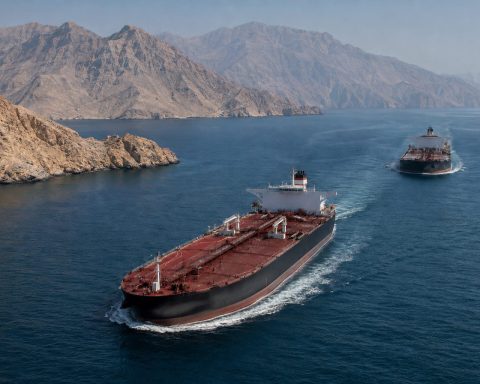
Prediction markets offer a glimpse into why traders aren’t just cheering stronger crude. Over at Polymarket, odds of Strait of Hormuz traffic normalizing by the end of May are pegged at just 10%—that figure only climbs to 47% if you push the timeline out to July 31. Takeaway: few think the supply disruption clears up quickly. That’s a boon for oil prices, but it spells trouble for inflation, rates, and demand risk.
Gas complicates things. With Coterra, Devon took on sizable gas exposure, but Henry Hub natural gas futures are hovering near $2.9 per million British thermal units. Demand remains sluggish, storage levels are high, and that pressure hasn’t let up. So, the merged Devon now finds itself straddling two trends: oil’s tightness is a tailwind, but soft gas prices limit how much it helps.
The Coterra story’s moved on. Now, it’s about Devon. Can it squeeze more per-share cash flow out of Coterra’s portfolio—without letting the footprint balloon? Eyes shift to mid-June guidance for answers: capital heading into the Delaware, pace of buybacks coming back online, and which legacy assets make the cut.
[2]: https://investors.devonenergy.com/investors/press-releases/press-release-details/2026/Devon-Energy-Announces-Capital-Return-Update/ “
Devon Energy Corporation – Devon Energy Announces Capital Return Update
“
[3]: https://investors.devonenergy.com/investors/press-releases/press-release-details/2026/Devon-Energy-and-Coterra-Energy-Complete-Merger/ “
Devon Energy Corporation – Devon Energy and Coterra Energy Complete Merger
“
Related articles: Energy