
DALLAS, May 27, 2026, 11:03 CDT
- Applied Digital shares held flat late Wednesday morning after the stock rallied on news of a 15-year AI data center lease.
- The company said the deal brings total contracted lease revenue up to $31 billion and takes contracted capacity to 1,200 MW.
- Investors face execution risk now, including issues like power, funding, and how long construction could take.
Applied Digital shares were near $45 on Wednesday after the company signed a 15-year lease for its Polaris Forge 3 AI data center campus. The deal takes Applied past 1 gigawatt of contracted capacity and ramps up its focus on AI infrastructure with heavy power needs. The stock last traded at $45.25, up 0.24%. Intraday volume approached 10 million shares.
Applied Digital Corporation last week said it signed a lease with an unnamed U.S. investment-grade hyperscaler for 300 megawatts of IT load at its fourth AI campus in a northern state. The deal totals around $7.5 billion for the base term, with renewals pushing the value to as much as $18.2 billion.
Applied Digital’s deal shifts the company’s backlog and leaves management with a bigger task. The company reported total contracted lease revenue at $31 billion for four AI Factory campuses. That figure could jump to $73 billion if every renewal option is exercised. Applied Digital has 1,200 MW of contracted critical IT load, supported by roughly 1,670 MW of utility power.
Applied Digital signed a second long-term lease with the same customer it landed at Delta Forge 1 in April. Last month, Reuters said that first Delta Forge 1 deal was a 15-year, $7.5 billion lease for 300 MW of computing in the southern U.S.
Chairman and CEO Wes Cummins said Polaris Forge 3 extends what he called “a disciplined, repeatable AI Factory model.” “Momentum continues to build,” Cummins said, with the company now marketing over 1.7 GW of grid-connected utility power at new and existing locations. Stock Titan
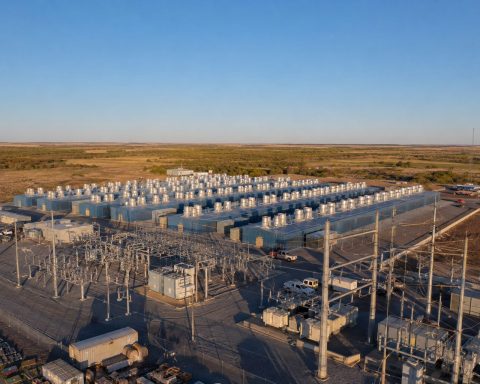
Applied Digital says hyperscalers want big blocks of power and cooling for AI training and inference. The company claims it can build those sites quickly. But the leases aren’t standard—projects need land, grid hookups, money, construction workers, and cooling equipment to all line up at the right time.
Wall Street is following the move. Needham’s John Todaro upped his Applied Digital price target to $66 from $51 on May 21 and kept his Buy rating, according to StockAnalysis. Lake Street analyst Robert Brown boosted his target to $70 and said, “the demand environment remains strong,” TipRanks reported. StockAnalysis TipRanks
Big players are crowding the space. Digital Realty and Equinix have ramped up their data center pipelines as AI demand calls for more power-dense builds, S&P Global Market Intelligence wrote last year. CoreWeave, which provides GPU cloud services and is a tenant of Applied Digital at Polaris Forge 1, has been a focus as the scramble for AI-ready space heats up.
Applied Digital’s fiscal third quarter numbers have helped put the stock in the spotlight. Revenue jumped 139% from a year ago to $126.6 million for the quarter ended Feb. 28. The company reported a net loss to common stockholders of $100.9 million. Adjusted EBITDA, which leaves out some expenses, came in at $44.1 million.
Funding is still the main risk. Applied Digital closed a $300 million senior secured bridge loan led by Goldman Sachs on May 4, aimed at getting its third AI data center at Polaris Forge 1 underway. CFO Saidal Mohmand said the company is focused on “procuring capital efficiently” and keeping options open for later long-term financing. Applied Digital Corporation
Applied Digital has been making changes. The company finished splitting off its cloud arm into ChronoScale on May 5, now trading on Nasdaq as CHRN. Applied Digital kept around 97% ownership and put in $15.75 million when the deal closed.
The risk is clear. Trefis said Applied Digital’s $44 valuation still needs quick backlog conversion and “flawless operational execution.” The stock has been shaky during past selloffs. Delays in power, rising costs, or softer AI leasing demand would pressure a company now relying on its future campuses to start producing cash. trefis.com