
New York, June 14, 2026, 07:34 EDT
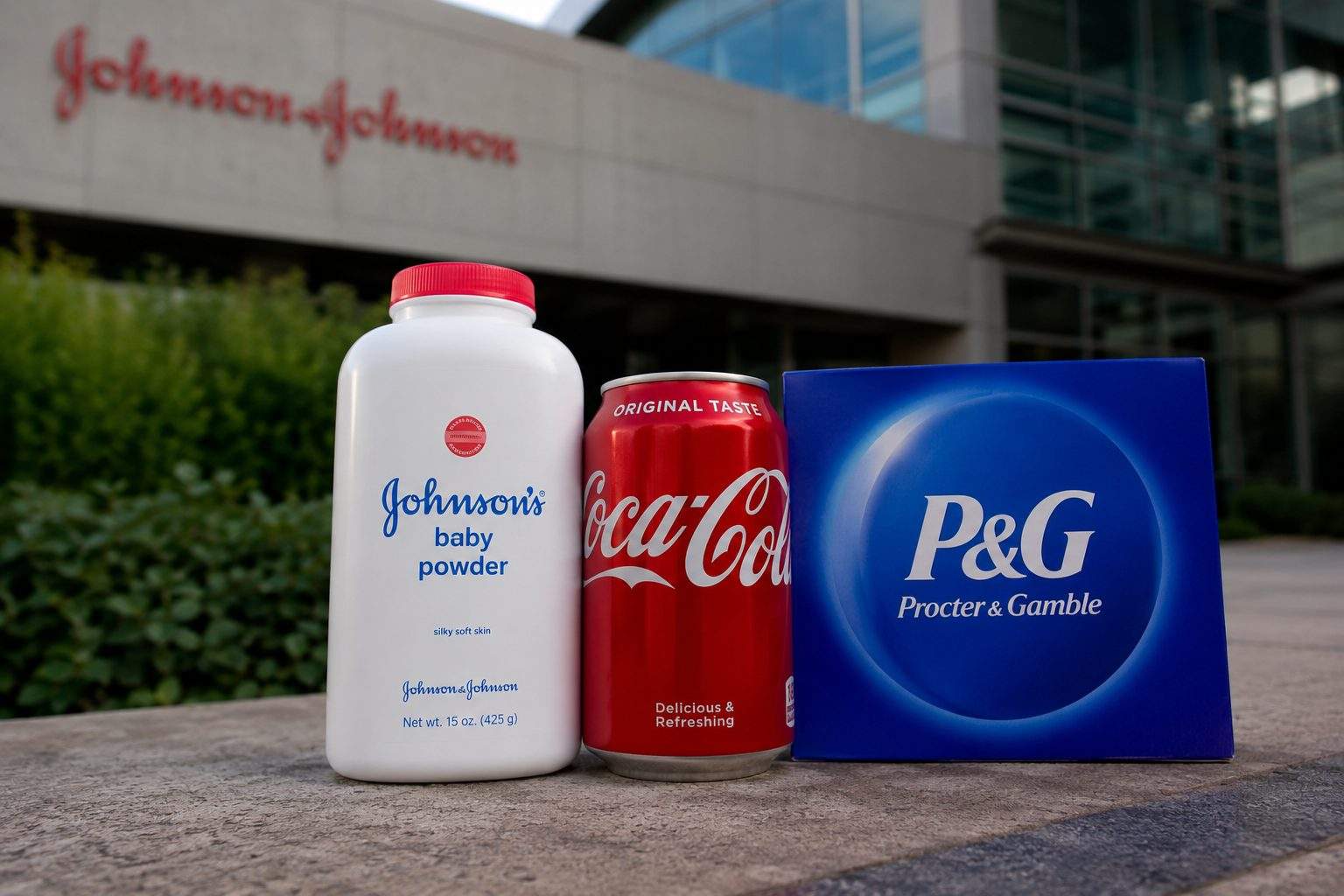
- Johnson & Johnson, Coca-Cola and Procter & Gamble ended Friday in the green. The outlook for these names rests on how steady the payouts are, where the valuations sit and what’s next on the earnings front.
- Dividend yield, which is the annual payout over the share price, goes down as the stock goes up and climbs when the stock drops.
- These are showing up as fair-value defensive plays, not deep value bargains, and still face risks tied to healthcare lawsuits, demand, tariffs, and input expenses.
Defensive dividend stocks joined Friday’s rally as the S&P 500 rose 0.5% and the Dow finished up 0.7%. Johnson & Johnson traded at $240.87, Coca-Cola at $82.62, and Procter & Gamble at $149.61 at the close, Friday figures show. J&J’s P/E ratio is around 27.9, Coca-Cola’s 26.0, and P&G’s 21.9.
Johnson & Johnson is sticking to its role as a healthcare pick for dividend-focused investors who don’t want consumer staples exposure. In April the company bumped its quarterly dividend by 3.1%, putting the annual payout at $5.36 per share. That’s 64 straight years of hikes. At Friday’s close, the yield works out to about 2.2%. J&J is pointing to a stronger 2026 outlook after Q1 sales jumped 9.9% to $24.1 billion and adjusted EPS hit $2.70. It flagged its planned $1 billion Firefly Bio buyout as another step for its oncology pipeline.
Bears point to valuation and execution risk. J&J’s P/E is tight, giving little room if things go wrong. The company’s own filings call out patent fights, product pipeline risks, lawsuits and government action as possible headwinds. Watch the July 15 Q2 earnings call for signs that oncology, immunology and MedTech can keep up the pace and offset Stelara biosimilar hit and legal clouds. At today’s price, J&J trades at fair to a bit rich, with a reliable dividend but exposed if earnings slow.
Coca-Cola keeps its spot as the top consumer-staples dividend name, with steady cash flow tied to its brands and bottling reach. The board in February signed off on a 64th straight yearly dividend hike, moving the quarterly payout up about 4% to $0.53. Another $0.53 dividend goes out July 1 to investors holding shares as of June 15. With shares closing at $82.62 on Friday, that means about a 2.6% yield based on the $2.12 annual payout.
KO could go higher if investors think Q1’s pace keeps up: net revenue climbed 12%, organic revenue was up 10%, and comparable EPS rose 18% to $0.86. But with the shares trading at around 26 times earnings, and management guiding for just 4% to 5% organic revenue growth and 8% to 9% EPS growth in 2026, bulls may be paying up for quality. The company also warned on higher costs, spending on marketing, and tax questions. The big event now is Q2—if results match the guidance, KO looks fairly priced, not a bargain.
Procter & Gamble has the highest current yield among the three, after 70 years of dividend hikes and 136 years of steady payouts. Its latest quarterly dividend of $1.0885 annualizes to about $4.35, giving a yield close to 2.9% based on Friday’s close. Investors looking at P&G’s numbers see strong demand for basics: fiscal third-quarter net sales up 7% to $21.2 billion, organic sales up 3%, diluted EPS up 6% to $1.63. P&G also sent $3.2 billion back to investors through dividends and buybacks.
Bears point to margin pressure. P&G flagged $150 million in after-tax commodity headwinds and $400 million in tariff-related costs for fiscal 2026. The company now sees EPS tracking the low end of its range. That is why dividend names can slip even when payouts look safe—costs can hit future profit and drag down the multiple. The July 29 fiscal Q4 earnings call is the next event to watch, as investors wait for new updates on costs, pricing, and cash return plans. PG is still seen as the most income-driven play here, but risks remain. The stock hinges on efficiency and pricing moves holding the line on margins but not denting sales.
Related articles: NYSE:KO