
NEW YORK, June 21, 2026, 09:02 EDT
- SpaceX last traded at $185 on Friday, still well above its $135 IPO price but down from a Tuesday high of $225.64.
- ARK’s SpaceX buying has pulled Tesla and ETF flows into the same trade, making exposure harder to read for fund holders.
- The next tests are mechanical as much as fundamental: Russell index entry, staged lock-up releases and the first public earnings report.
SpaceX’s first week as a public company ended with the stock still above its offering price, but the trade has shifted from scarcity to supply risk. With U.S. markets shut for the weekend, shares of the Elon Musk-led company last traded at $185 on Friday, down from a Tuesday peak of $225.64 but still about 37% above the $135 IPO price.
That matters now because SpaceX is no longer just a stock-market debut. It has become a test of how retail platforms, active funds and index trackers handle a thinly traded, trillion-dollar company whose public float — the shares actually available to trade — is small by mega-cap standards.
The sharpest signal came through Cathie Wood’s ARK Innovation ETF. Bloomberg reported that ARKK posted a record $4.6 billion inflow late last week, followed by a $6.2 billion outflow in the next session, activity that coincided with ARKK acquiring about 1.7 million SpaceX shares on listing day. ETF specialists described it as possible IPO arbitrage — a trade where investors use a fund to gain exposure to a new listing, then quickly withdraw.
ARK has not treated the move as a one-day rental. Barron’s reported that ARK bought 54,815 Tesla shares across two funds after selling some Tesla last week in a move that appeared to make room for SpaceX. ARK held about 3.29 million SpaceX shares as of June 12, while Tesla remained its top holding in ARKK.
Retail investors face a messier choice. CNBC reported, via TheStreet, that small investors received only a fraction of requested SpaceX IPO shares, while several brokers attached anti-flipping penalties to early sales. Fidelity, Robinhood and SoFi apply holding windows or IPO-access restrictions; Schwab was described as an outlier with no anti-flipping policy unless an issuer requires it.
The lock-up schedule adds another clock. Reuters reported that up to 20% of restricted shares can be sold after second-quarter earnings, with another 10% tied to the stock staying at least 30% above the offering price. Mayer Brown attorney Ali Perry said the staggered structure “smoothes out the initial impact,” but does not remove it. Reuters
Skeptics are focused on valuation and volatility. Paul Meeks, head of technology research at Freedom Capital Markets, told Business Insider that he thought SpaceX fair value was around $63 a share and said the market was “investing in the Elon Musk cult.” He also pointed to options-implied volatility of 97.5%, a measure of how large a move traders expect over the next year. Business Insider
There is a counterweight. Moody’s, Fitch and S&P Global Ratings gave SpaceX investment-grade ratings with stable outlooks after the IPO. S&P cited strength in the company’s space and connectivity businesses, while flagging uncertainty in artificial intelligence because of high capital needs and competition.
Index buying may keep near-term demand alive. FTSE Russell said SpaceX will be added to the Russell 1000, Russell Top 200 and other Russell U.S. indexes after the close on June 26. Reuters also reported that MSCI is set to add the stock on June 29 and that Jefferies estimated $2.68 billion of passive inflows from FTSE Russell inclusion.
That is why the SpaceX trade now looks less like a clean bet on rockets and more like a market-structure story. Franklin Templeton’s Dina Ting put it plainly: the IPO is the headline, but “the real story is about index methodology.” Investors who own broad funds may end up owning SpaceX because of rule books, not conviction. Reuters
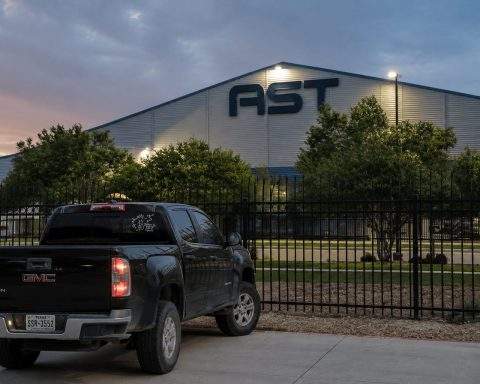
The wobble has hit peers, too. When SpaceX shares fell on Thursday, Rocket Lab and Planet Labs dropped around 3%, while AST SpaceMobile and Intuitive Machines also declined, according to Reuters. The reaction suggests SpaceX is now setting the tone for the listed space trade, even for companies with very different balance sheets and business models.
The risk is that the first earnings report lands just as new supply becomes eligible for sale and investors ask harder questions about SpaceX’s AI spending. The company agreed to buy Anysphere, the startup behind Cursor, in a $60 billion all-stock deal, and bankers are preparing to discuss a bond offering of at least $20 billion, Reuters reported. Strong index demand could cushion the stock; a weak earnings print or another AI funding surprise could do the opposite.
Related articles: NASDAQ:ASTS

![Asia Stock Market Today 26/08/2026 [UPDATE: 07:03 SGT] [Korea Opens Block Trading After Asia’s Broad Rebound]](https://ts2.tech/wp-content/uploads/2026/08/Asia-market-dashboard-2026-08-26-0703-480x384.jpg "Asia Stock Market Today 26/08/2026 [UPDATE: 07:03 SGT] [Korea Opens Block Trading After Asia’s Broad Rebound]")