WASHINGTON, July 8, 2026, 10:01 (EDT)
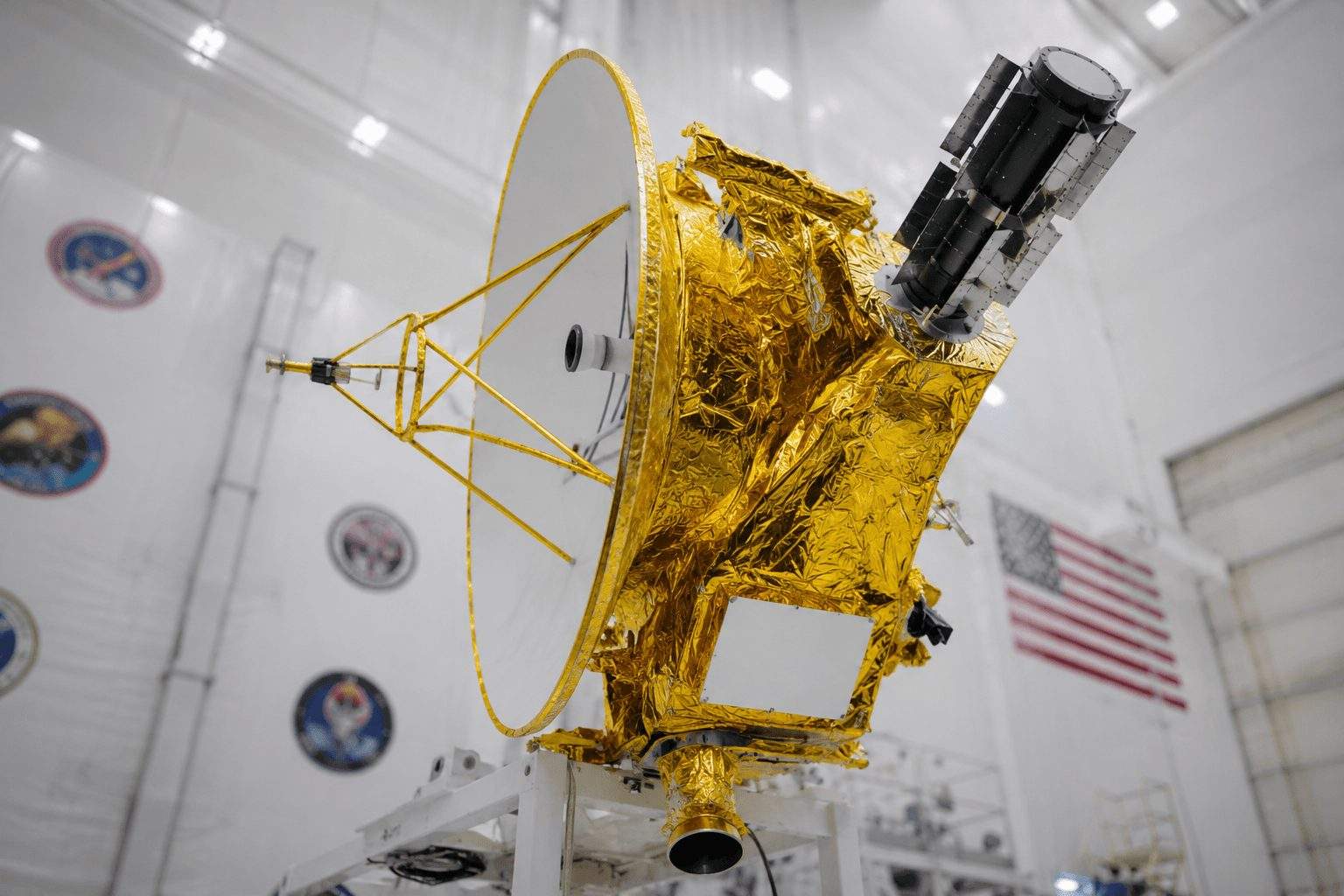
- New Horizons came back online in good shape after 321 days of hibernation, roughly 5.9 billion miles from Earth.
- One-way signal time came in at 8 hours, 52 minutes—well past what NASA’s commercial Near Space Network can reach.
- The investable theme isn’t Pluto. It’s cislunar and near-space communications, with NASA giving contracts to Intuitive Machines and Viasat.
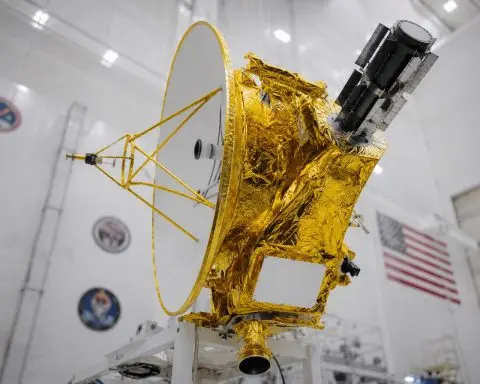
NASA’s New Horizons mission is showing how far commercial space communications still have to go. The agency’s Near Space Network handles missions as far as 2 million km from Earth, but New Horizons is about 9.5 billion km out. That’s around 4,750 times farther than the edge of NASA’s current commercial network. The agency buys commercial direct-to-Earth and relay services only within that range.
NASA said July 7 that flight controllers at the Johns Hopkins Applied Physics Lab confirmed New Horizons woke up from a 321-day hibernation that started Aug. 7. The signal, sent via NASA’s Deep Space Network near Madrid, took 8 hours and 52 minutes to reach Earth.
New Horizons kept up its weekly “green” beacon while in hibernation, Alice Bowman, the mission operations manager at APL, said. The team plans to pull down health and safety data first, then get data from three science instruments. Phys.org
| Operating metric | New Horizons | Market read-through |
|---|---|---|
| Distance from Earth | 9.5 billion km | Roughly 4,750x further than NASA Near Space Network range |
| One-way signal time | 8 hr 52 min | Slow cycles up the need for more autonomous ops |
| Latest hibernation | 321 days | Extended downtime eases wear and day-to-day ops |
| Prior hibernation record | 273 days | Latest downtime ran 48 days longer, or 18% more |
| Average extended operations cost | $14.7 million/year | Costs stay small against multibillion-dollar comms platforms |
NASA didn’t mention any public company in its New Horizons update. The mission is managed by APL for NASA, with science led by Southwest Research Institute. Communications go through the government-funded Deep Space Network.
NASA is bringing in more commercial money for near-Earth services. The agency awarded Near Space Network contracts worth up to $4.82 billion. The base period runs from February 2025 through September 2029, with an optional extension through September 2034. Intuitive Machines NASDAQ:LUNR picked up task orders for GEO-to-cislunar and x-cislunar direct-to-Earth links, which NASA said should boost capacity and ease the load on the Deep Space Network. Viasat NASDAQ:VSAT landed a task order for low-Earth orbit science support.
NASA’s Kevin Coggins, deputy associate administrator for Space Communications and Navigation, said industry will play a role in letting missions send back more data and science. Commercial relay services for NASA missions could arrive by 2028, with tests and validation expected through 2031.
| Company | Google Finance ticker | NASA link | Early U.S. trading snapshot |
|---|---|---|---|
| Intuitive Machines | NASDAQ:LUNR | Cislunar direct-to-Earth and relay services | $18.07, up 1.23%. Market cap stands at $2.67 bln |
| Viasat | NASDAQ:VSAT | Direct-to-Earth support for low-Earth-orbit science missions | $77.22, gained 0.65%. Market cap is $10.88 bln |
Shares barely budged as of 09:47 EDT. There’s still no sign of New Horizons on the tape. The moves just reflect the usual names traders use for the closer-in market—lunar, cislunar and Earth-orbit links—not the deep Kuiper Belt work.
Funding risk still ties back to the science. New Horizons’ Alice ultraviolet spectrograph is now set to study hydrogen in the outer heliosphere. The probe’s plasma, energetic-particle and dust detectors are still taking data. Pontus Brandt, New Horizons project scientist at APL, told Space.com a possible future termination-shock encounter would offer “a treasure trove for space physicists worldwide.” Space
New Horizons offers a look at how older missions stay funded. The Planetary Society lists its cost at $780.6 million, and says ongoing work has averaged $14.7 million a year since 2017. That’s a small share compared to NASA’s Near Space Network, which at peak funding could pay for around 328 New Horizons-style annual budgets.
Alan Stern, principal investigator for the mission at Southwest Research Institute, said in NASA’s August hibernation update that “science data collection never stops” even while the spacecraft is in hibernation. NASA said it’s also working on ground-system software upgrades, with testing going on now and set to run through the year. NASA Science
Related articles: NASDAQ:LUNR