
SAN FRANCISCO, July 8, 2026, 06:08 PDT
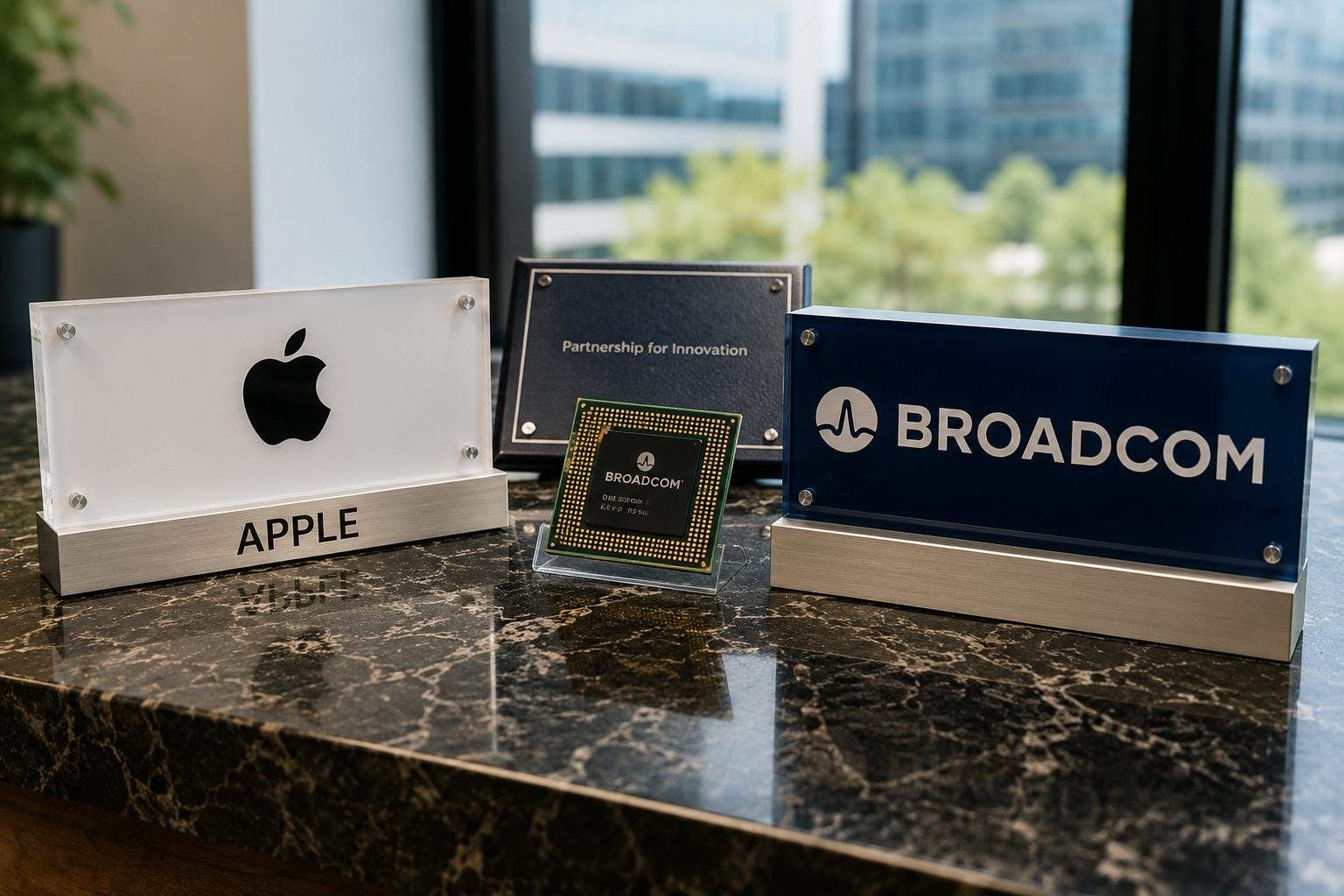
- Apple NASDAQ:AAPL said its new Broadcom NASDAQ:AVGO deal is expected to exceed $30 billion, produce more than 15 billion U.S.-made chips and fund a $1.5 billion Fort Collins expansion.
- Broadcom’s SEC filing says the Apple work runs through 2031 and covers custom ASIC silicon for multiple Apple product generations.
- The headline figures point to about $2 per chip and about $20 of Apple spend for each $1 of Broadcom factory capex; actual pricing, mix and timing were not disclosed.
- At the dateline time, Nasdaq cash trading had not opened; the latest finance feed showed Apple at $310.66 and Broadcom at $370.78 before the 9:30 a.m. ET market open.
Apple NASDAQ:AAPL will spend more than $30 billion with Broadcom NASDAQ:AVGO under a U.S. chip supply deal that gives investors a clearer dollar figure on a supplier relationship that had been hard to size. The contract is expected to produce more than 15 billion U.S.-made chips and support Broadcom’s $1.5 billion expansion in Fort Collins, Colorado, Apple said.
The investor read is simple. The deal is less about moving iPhone assembly to the United States and more about locking in a high-volume U.S. source for radio-frequency and wireless parts while Apple faces tariff and component-cost pressure. Apple’s 2025 filing said a significant majority of its manufacturing is handled by outsourcing partners mainly in China mainland, India, Japan, South Korea, Taiwan and Vietnam, and warned tariffs can hit costs, pricing and gross margin.
The numbers give the announcement a sharper edge than most reshoring pledges. Using the headline figures, Apple’s commitment works out near $2 per chip. Broadcom’s own plant spending is about 5% of the Apple purchase figure. That ratio matters because it points to revenue visibility for Broadcom without a matching factory-spending burden.
| Deal measure | Headline math | Investor read |
|---|---|---|
| Apple purchase commitment per planned chip | About $2 | Based on more than $30 billion and more than 15 billion chips; product mix was not disclosed. Apple |
| Broadcom capex vs Apple spend | About 5% | $1.5 billion Fort Collins capex against more than $30 billion of Apple spend. Apple |
| Share of Apple’s four-year U.S. pledge | About 5% | Apple has pledged $600 billion in U.S. investment over four years. Apple |
| Deal size vs Broadcom FY2025 revenue | About 47% | Broadcom reported fiscal 2025 total net revenue of $63.887 billion; contract revenue timing was not disclosed. SEC |
Broadcom had already told investors on Monday that Apple and Broadcom had entered new long-term agreements through 2031 for custom ASIC silicon. Wednesday’s Apple release put the spend, chip count and factory expansion around that filing.
Apple CEO Tim Cook said the Fort Collins components are “essential” to Apple device “performance and connectivity.” Broadcom CEO Hock Tan said the company was “pleased to expand” its manufacturing footprint there. Apple
That gives Broadcom a direct answer to a concern that has followed Apple suppliers for years: Apple can design more of its own chips. Reuters reported Monday that the deal eased fears Apple would replace Broadcom parts in the near term. EMarketer analyst Jacob Bourne said “locking in Broadcom through 2031 buys supply-chain certainty” for Apple. Reuters
The risk does not disappear. Broadcom’s own annual report says its top five end customers accounted for about 40% of fiscal 2025 revenue, and that the loss of a top customer or a sharp demand cut could hurt results. Analysts cited by Reuters said Apple accounts for about 20% of Broadcom’s annual revenue.
| Company | Google Finance ticker | Latest quoted price | Move | Main investor issue |
|---|---|---|---|---|
| Apple | NASDAQ:AAPL | $310.66 | -0.63% | More U.S. chip sourcing, but hardware supply chain still depends on Asian production hubs. SEC |
| Broadcom | NASDAQ:AVGO | $370.78 | -0.90% | Longer Apple revenue runway, but customer concentration remains part of the stock story. SEC |
The new contract also extends a 2023 Broadcom-Apple arrangement for 5G radio-frequency parts, including FBAR filters, that Apple said would be designed and built in several U.S. manufacturing and technology hubs, including Fort Collins.
For Apple, the deal adds a measurable U.S. supply-chain number at a time its filings point to tariff risk. For Broadcom, it keeps a major Apple line of business in place through 2031, even as Apple keeps pulling more silicon design inside.
Related articles: NASDAQ:AVGO
![Asia Stock Market Today 23/08/2026 [UPDATE: 08:08 SGT] [Yield Shock Splits Asia: Weekly Recap and Week Ahead]](https://ts2.tech/wp-content/uploads/2026/08/Asia-market-dashboard-2026-08-23-0808-480x384.jpg "Asia Stock Market Today 23/08/2026 [UPDATE: 08:08 SGT] [Yield Shock Splits Asia: Weekly Recap and Week Ahead]")
![Australia Stock Market Today 23/08/2026 [UPDATE: 08:38 AEST] [Healthcare Surge: Weekly Recap and Week Ahead]](https://ts2.tech/wp-content/uploads/2026/08/AU-market-dashboard-2026-08-23-0843-480x384.jpg "Australia Stock Market Today 23/08/2026 [UPDATE: 08:38 AEST] [Healthcare Surge: Weekly Recap and Week Ahead]")