
NEW YORK, July 9, 2026, 16:11 (EDT)
- Eli Lilly NYSE:LLY closed at $1,216.55, just off its all-time highs, putting its market cap around $1.09 trillion.
- Lilly posted a 56% jump in first-quarter revenue, though weaker realized prices shaved 13 points off its top-line growth.
- Starting July 1, a Medicare GLP-1 Bridge program gives eligible Part D members access to select weight-loss meds at $50 per month, running through Dec. 31, 2027.
Eli Lilly NYSE:LLY grabbing headlines with its four-digit stock price and split plan, but there’s a messier reality for investors. The drugmaker is giving up higher net prices in order to sell a lot more units.
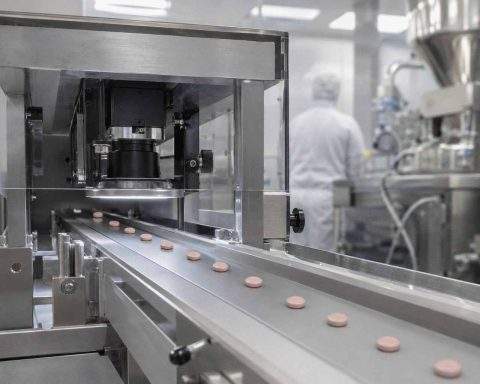
This matters now since access just got wider. The Medicare GLP-1 Bridge program launched this month. It offers eligible Medicare Part D patients a $50-per-month way to get some GLP-1 drugs, which copy gut hormones linked to blood sugar and appetite. Lilly says qualifying patients can get Zepbound or the company’s new obesity pill Foundayo for that $50.
Lilly grabbed retail attention this week after the stock went over $1,200. 24/7 Wall St. tagged it as a “massive stock split” candidate, while writers for Motley Fool discussed if it’s too late to buy and put out a $1,400 year-end target. A split would drop the share price but bump up the number of shares. Investors wouldn’t get Lilly for less just because of a split. 24/7 Wall St.
The tougher issue is whether Lilly can keep trading lower prices for more sales. In the first quarter, revenue hit $19.8 billion, as volume climbed 65%. That gain was partly knocked back by a 13% drop due to lower net prices, which is what Lilly actually pockets after rebates and discounts.
| Lilly metric, Q1 2026 | Result | Investor read |
|---|---|---|
| Total revenue | $19.799 billion, +56% | Revenue growth keeps pushing past lower prices |
| Mounjaro revenue | $8.662 billion, +125% | Mounjaro drives the diabetes portfolio |
| Zepbound revenue | $4.160 billion, +80% | Obesity drug trend still strong |
| Volume / realized price mix | +65% volume, -13% price | Leaning on demand from coverage gains |
Foundayo is the difference-maker. Lilly says patients can take the once-daily pill whenever they want, no need to worry about food or water, which isn’t true for some rivals. CEO David Ricks said this could “level the playing field” for people stopped by access, stigma, or hard-to-follow treatment. Eli Lilly and Company
Eli Lilly USA president Ilya Yuffa said the company thinks around 20 million Medicare patients could qualify for obesity drugs based on clinical criteria. Yuffa said the $50 program lets doctors and patients choose between a pill or an injectable. That’s the commercial risk behind the share price.
| Company | Obesity-drug position | Market snapshot |
|---|---|---|
| Eli Lilly NYSE:LLY | Mounjaro, Zepbound, Foundayo in market; retatrutide late stage | Market cap near $1.09 trillion |
| Novo Nordisk NYSE:NVO | Wegovy shot and pill, fighting for Medicare Bridge share | Market value around $216 billion |
| Viking Therapeutics NASDAQ:VKTX | VK2735, both oral and injectable, in pipeline | Market cap roughly $4.7 billion |
Novo Nordisk NYSE:NVO has moved to expand access to its weight loss drugs. The company said eligible Medicare patients can now get Wegovy injection and pill for $50 a month. Novo Nordisk also said there have been over 3 million prescriptions for the Wegovy pill since it came out in January. PR Newswire Viking Therapeutics NASDAQ:VKTX, which is much smaller, still has a pipeline rival in the works, saying its oral VK2735 is being developed for obesity and other metabolic diseases.
The access story isn’t one-sided. In May, Reuters said Foundayo prescriptions hit 7,335 by week four, which was a slow start compared to Novo’s Wegovy pill. RBC Capital’s Trung Huynh told Reuters that investors were “looking past initial weekly script tracking metrics.” Huynh also said the pill needed around 22,000 scripts a week to meet consensus for second-quarter sales. Reuters
Valuation is tight for any stumble. The average price target from analysts polled by StockAnalysis using S&P Global data sits at $1,240, just above where shares trade now. Lately, RBC lifted its target to $1,500 and J.P. Morgan upped theirs to $1,400.
The next Lilly trade turns on more than management’s split decision. The key is whether $50 access, simpler dosing and more supply will keep volumes growing despite price headwinds. If volume growth slows, defending that trillion-dollar valuation premium won’t get easier.
Related articles: NYSE:LLY


![US Stock Market Today 08/24/2026 [UPDATE: 01:05 EDT] [Nasdaq Futures Slip as Overnight Chip Weakness Holds]](https://ts2.tech/wp-content/uploads/2026/08/US-market-dashboard-2026-08-24-0102-480x384.jpg "US Stock Market Today 08/24/2026 [UPDATE: 01:05 EDT] [Nasdaq Futures Slip as Overnight Chip Weakness Holds]")