
NEW YORK, July 31, 2026, 11:00 a.m. EDT
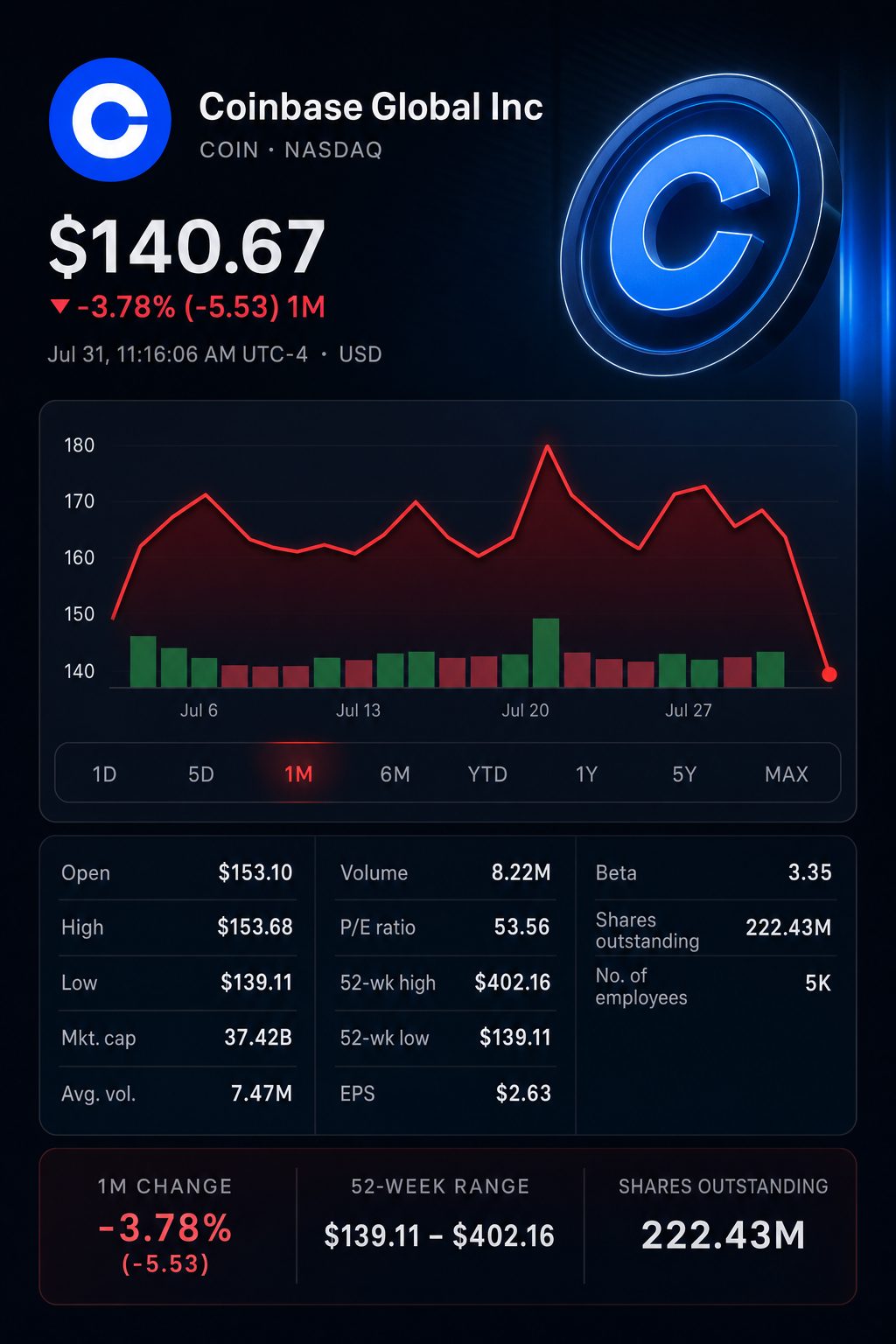
- Coinbase stock dropped 14.1% to $140.48 in early trading.
- Services accounted for 48% of net revenue, marking a 5% decrease from Q1.
- Initial third-quarter calculations show a decline in core revenue, with adjusted expenses remaining unchanged.
Shares of Coinbase Global NASDAQ:COIN dropped 14.1% to $140.48 in early Friday trade. The decline came after the company reported its third consecutive quarterly loss alongside wider revenue shortfalls. Bitcoin slipped 3.1% to approximately $62,613.
The main worry for investors is Coinbase’s cost structure in the third quarter. The platform made around $130 million in transaction revenue as of July 26. If this trend continues, and using the company’s services outlook, core revenue would be about $1 billion at the midpoint—down 13% versus the previous quarter. Adjusted expenses are forecasted to stay about the same. This estimate is preliminary and does not reflect company guidance.
The 48% share for services could exaggerate the buffer. Subscription and services revenue declined 5% compared to Q1 and 12% year-on-year. Its proportion increased since transaction revenue decreased at a quicker rate. That difference is significant for margins.
| $ millions, except percentages | Q2 2026 | Q1 2026 | Q2 2025 | Q/Q | Y/Y |
|---|---|---|---|---|---|
| Total revenue | 1,220.1 | 1,413.0 | 1,497.2 | -14% | -19% |
| Transaction revenue | 599.2 | 755.8 | 764.3 | -21% | -22% |
| Subscription and services | 555.1 | 583.5 | 632.2 | -5% | -12% |
| Adjusted EBITDA | 207.8 | 303.3 | 512.1 | -31% | -59% |
| Net income or loss | -359.5 | -394.1 | 1,428.9 | Loss reduced | Turned from profit to loss |
Data is sourced from company disclosures. Adjusted EBITDA does not conform to GAAP standards.
Total revenue was approximately $70 million under consensus estimates. Transaction revenue lagged forecasts by $29 million. Services revenue was $44 million lower than predicted. Both segments failed to meet expectations.
Coinbase reported a GAAP loss of $359.5 million, which factored in $209.5 million in losses from crypto investments. The company registered a restructuring charge of $52.4 million. Adjusted EBITDA stayed positive at $207.8 million, but declined at over double the pace of revenue.
| Subscription and services, $ millions | Q1 2026 | Q2 2026 | Q/Q |
|---|---|---|---|
| Stablecoin revenue | 305 | 292 | -4% |
| Blockchain rewards | 101 | 83 | -18% |
| Interest and finance fees | 68 | 66 | -3% |
| Other services | 109 | 114 | +5% |
| Total | 583.5 | 555.1 | -5% |
Figures may not total exactly due to rounding.
Coinbase’s average USDC holdings climbed to an all-time high of $20 billion. However, stablecoin revenue declined by 4%. The impact of reduced rates and higher off-platform balances balanced out the increased base. Blockchain rewards decreased 18% amid softer token prices and protocol rates.
Coinbase CEO Brian Armstrong stated the company was “no longer a bet just on the price of Bitcoin.” Quarterly figures partly back this up. Non-Bitcoin spot activities accounted for 88% of net revenue. However, many of these areas remain influenced by cryptocurrency prices and interest rates. Coinbase Investor Relations
| Trading indicator | Q1 2026 | Q2 2026 | Change |
|---|---|---|---|
| Coinbase overall trading volume | $1.371 trillion | $1.300 trillion | -5% |
| Crypto derivatives turnover | $1.032 trillion | $1.027 trillion | -0.5% |
| Transaction income | $755.8 million | $599.2 million | -21% |
| Coinbase reported market share | 9.1% | 10.3% | +1.2 points |
Total volume across the broader cryptocurrency market decreased by 15%. Spot trading volume slipped 25%, and derivatives volumes were lower by roughly 12%.
Coinbase increased its market share even as the overall market contracted. The company’s total trading volume dropped by roughly 5%, a smaller decline than the broader market. Derivatives trading volume remained nearly unchanged. Revenue and contracts from its prediction-market segment climbed 106% quarter-on-quarter, surpassing a $100 million annualized revenue pace.
Zacks strategist David Bartosiak noted that “the business mix keeps improving.” Third Bridge analyst Jacob Zuller took a more reserved stance, warning that stablecoins might have to balance out spot market weakness if a broader crypto rebound does not occur. reuters.com
Robinhood Markets NASDAQ:HOOD posted a 38% drop in crypto transaction revenue for the second quarter, reaching $100 million year-on-year. This performance highlights subdued trading activity. Coinbase improved its standing in comparison, though it was not unaffected.
| Preliminary Q3 sensitivity, $ millions | Q2 actual | Q3 indicator | Sequential change |
|---|---|---|---|
| Transaction revenue | 599 | Approx. 460 mechanical run rate | -23% |
| Subscription and services | 555 | 500–580; midpoint 540 | -10% to +4%; midpoint -3% |
| Core revenue¹ | 1,154 | 960–1,040; midpoint 1,000 | -17% to -10%; midpoint -13% |
| Adjusted expenses | 1,035 | 980–1,080; midpoint 1,030 | -5% to +4%; midpoint flat |
¹Core revenue refers to transaction along with subscription and services revenue. The transaction projection extends $130 million up to July 26 over the 92-day quarter. Coinbase noted that revenue does not progress in a linear fashion, and this figure should not be treated as formal guidance.
The table provides insight into the decline. The more stable revenue stream is expected to decrease by just 3% at the midpoint. Trading revenue, based on the current rate, could decline around 23%. If costs remain unchanged, adjusted EBITDA would be under pressure unless there is improved activity in August and September. This assessment is based on the initial scenario.
Risks: Crypto revenue may fluctuate rapidly, with increased volatility potentially altering the early run rate. Earnings could also be impacted significantly by declining token values, shifting rates, regulatory shifts, product expenses, and investment valuation changes.
Coinbase has demonstrated it can capture market share during a downturn. However, it is still unproven whether its revenue outside trading can expand amid such conditions. Third-quarter services revenue will be the most decisive measure.
Related articles: NASDAQ:COIN