
NEW YORK, August 24, 2026, 05:18 EDT
- The Iranian rial fell to an all-time low of 2.02 million against the U.S. dollar ahead of fresh U.S. sanctions set to take effect on Monday.
- Brent slipped 1.6% to $92.90, following a 6.39% rise last week; WTI declined 2% to $85.32.
- Exxon gained 3.1% over the past week, increasing its market value by about $20.6 billion.
- The analyst price target of $169.68 represents a 2.8% increase from Friday’s closing price of $165.11.
Iran’s economic turmoil took focus in equity markets on Monday as the rial sank to a historic low ahead of new sanctions from Washington. Oil prices slipped as investors locked in gains following a two-week climb.
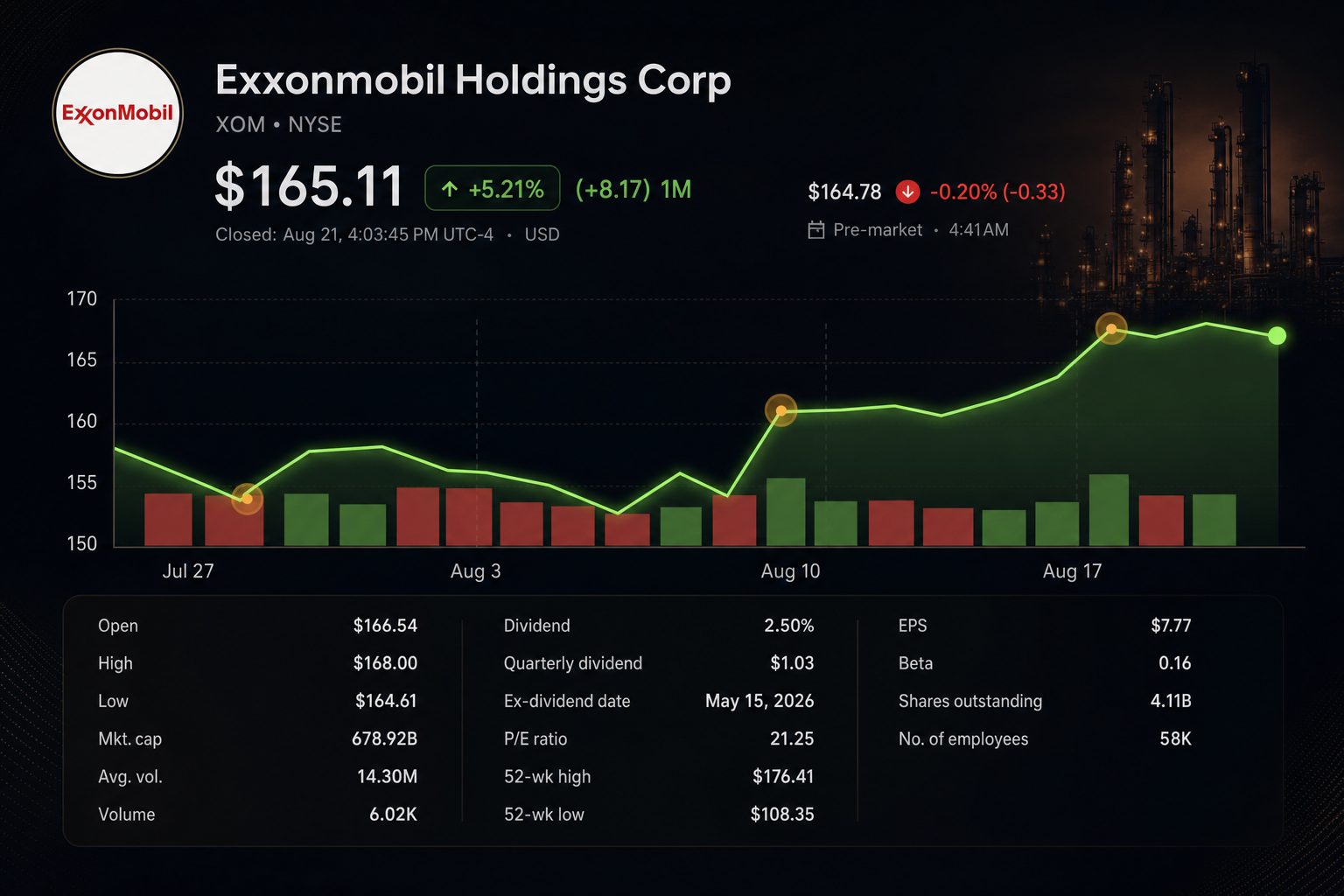
The shift subjects Exxon Mobil Corporation NYSE:XOM to an initial challenge. Last week, its stock increased by 3.1%. This rise boosted its market value by about $20.6 billion.
The stock remained behind oil prices. Brent increased by 6.39% and WTI advanced 5.66%. Monday’s decline indicates investors had factored in significant supply risk beforehand.
| Asset | Last verified level | Weekly move | Monday move |
|---|---|---|---|
| Brent crude | $92.90 | up 6.39% | down 1.6% |
| WTI crude | $85.32 | up 5.66% | down 2.0% |
| Exxon Mobil NYSE:XOM | $165.11 | up 3.13% | Premarket pending |
| ConocoPhillips NYSE:COP | $134.87 | up 6.38% | Premarket pending |
| Chevron NYSE:CVX | $205.27 | up 2.64% | Premarket pending |
The rial traded at 2.02 million to the U.S. dollar on the informal market. U.S. sanctions and a naval blockade had strained Iran’s economy before the conflict, which continued for almost six months and increased the economic strain.
| Iran pressure point | Latest reading | Market channel |
|---|---|---|
| Unofficial rial exchange | 2.02m / U.S. dollar | Imported inflation impact |
| Hormuz share of oil trade | About 20% of global oil | Supply risk premium |
| Commodity ships over weekend | Under 20 | Energy transport constraints |
| U.S. scheduled update | 14:00 EDT Monday | Secondary sanctions threat |
| European energy stocks | -0.4% | Profit-taking on crude prices |
Treasury Secretary Scott Bessent will deliver remarks at 2 p.m. EDT. He has issued a warning about imposing the most severe sanctions ever. President Donald Trump similarly cautioned Iran’s trading associates about facing penalties.
The immediate effect on supply could be less significant than indicated by the wording. Empire FX analyst Crispus Nyaga noted that Iranian exports are currently facing substantial restrictions. The greater threat comes from potential retaliation or additional shipping incidents.
Physical market signals are still firm. Morgan Stanley analysts pointed to a significant drop in oil stored offshore. They also highlighted reduced onshore inventories, notably in China. Fewer than 20 commodity ships transited the Hormuz Strait over the weekend.
| Analyst | Firm | Rating | Target | Upside |
|---|---|---|---|---|
| Devin McDermott | Morgan Stanley | Buy | $177 | +7.2% |
| Manav Gupta | UBS | Buy | $174 | +5.4% |
| Betty Jiang | Barclays | Buy | $177 | +7.2% |
| Jason Gabelman | TD Cowen | Buy | $168 | +1.8% |
| Arun Jayaram | J.P. Morgan | Buy | $166 | +0.5% |
The analyst table suggests limited potential for a typical oil rally. Exxon’s average target price points to just 2.8% upside. Fourteen out of the 25 analysts monitored give it a Hold rating, though the consensus remains Buy overall.
| Sanctions outcome | Oil response | Equity read-through |
|---|---|---|
| Limited enforcement | Risk premium declines | Exxon could give back some recent gains |
| Effective secondary sanctions | Lower Iranian supplies | Upstream cash flow benefits |
| Shipping retaliation | Spikes in volatility and prices | Producers advance; transportation and airline stocks under pressure |
| Diplomatic opening | Market reflects restored supply | Integrated majors trail standalone refiners |
Exxon’s scale provides stability. As of Friday, the company’s market capitalization stood at $678.9 billion. The projected $20.6 billion gain this week represents roughly 3% of that amount.
Risks: Crude and Exxon could rise if a tougher sanctions package is implemented or if Iran retaliates. The current energy premium may disappear if enforcement is lax, alternative tanker routes develop, or diplomacy prevails.
Related articles: NYSE:XOM