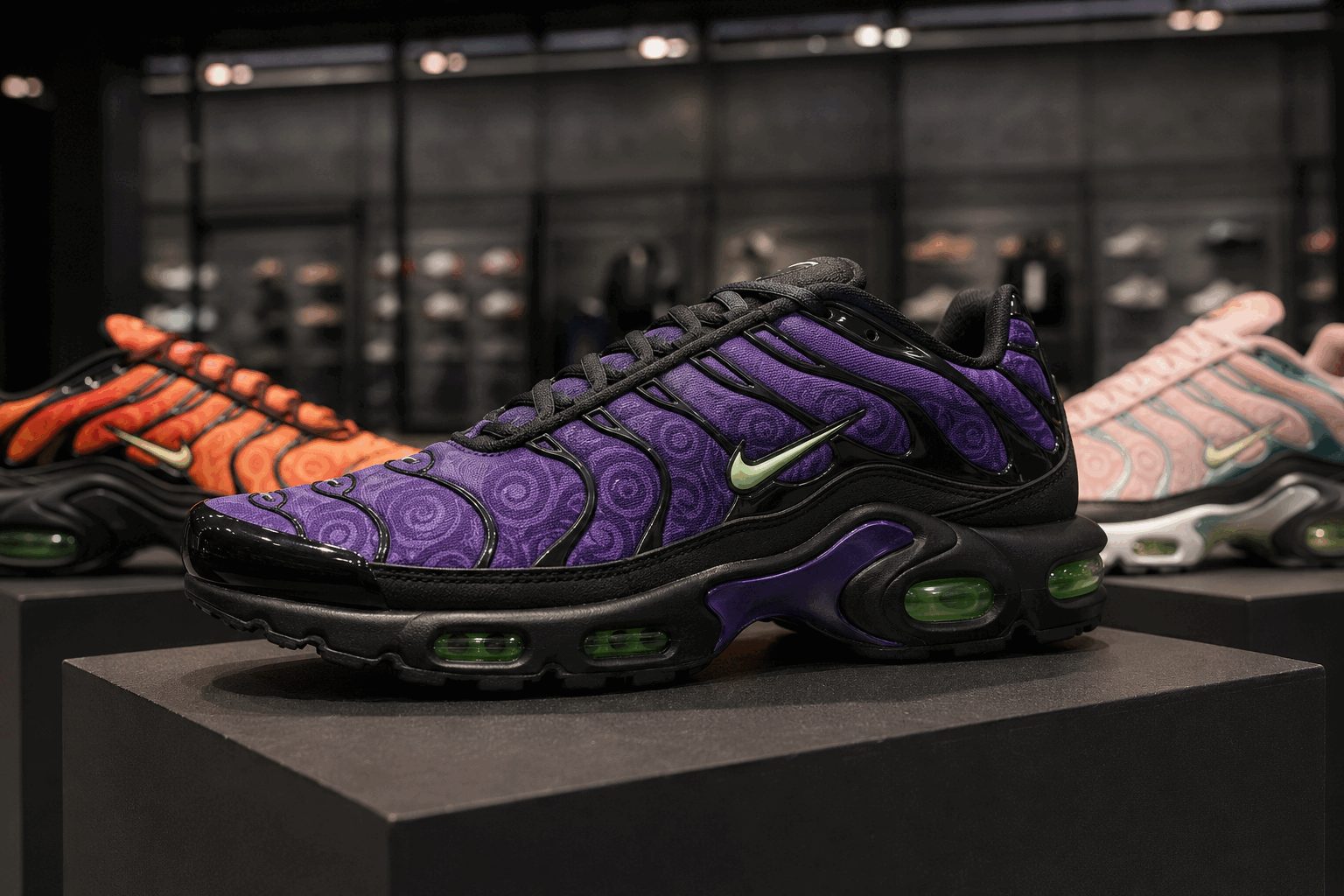

BEAVERTON, Oregon, August 24, 2026, 23:35 EDT — Nike is pushing forward with its One Piece launch just as the company faces a 12% drop in digital sales.
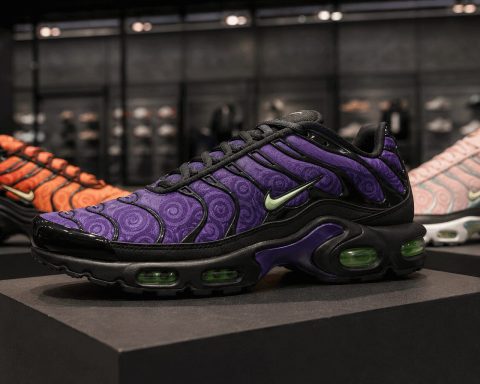
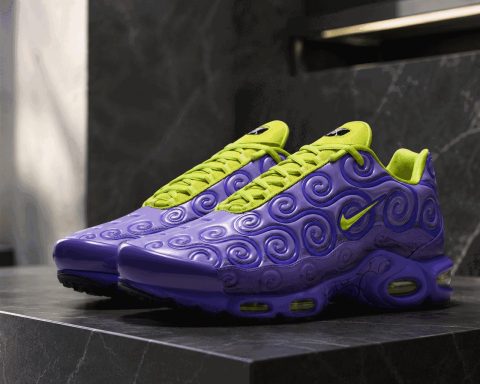
- Nike plans to launch three Air Max Plus models inspired by One Piece, rolling them out in phases throughout September.
- The launch comes after Nike Brand Digital sales dropped 12% in the fourth quarter.
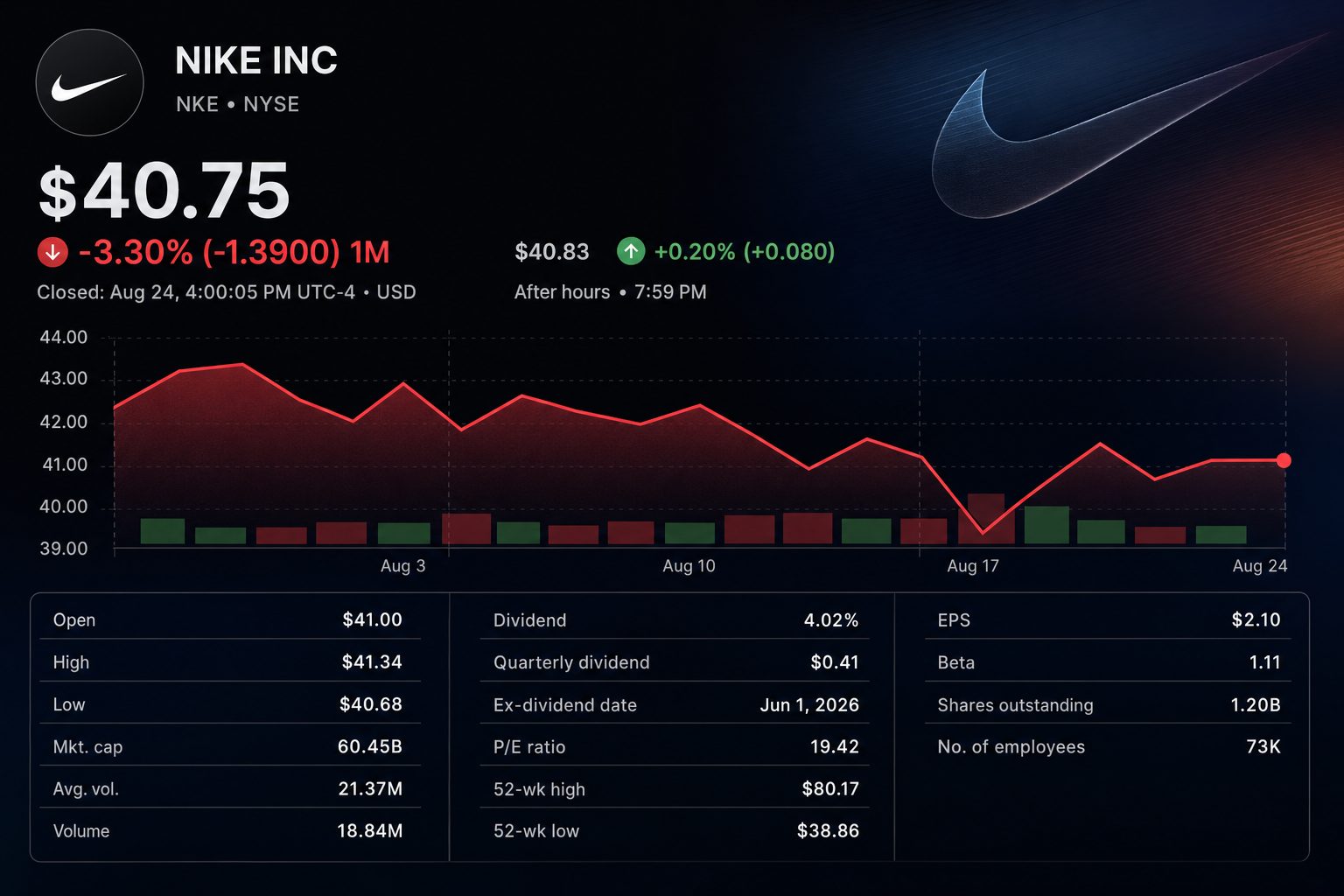
- Nike stock ended at $40.75 on August 24, finishing the session nearly flat.
- The stock has an average Hold rating from analysts, who set a consensus price target of $50.66.
NIKE, Inc. NYSE:NKE is using a One Piece partnership to gauge digital demand. The collection debuts as the sportswear company moves to boost traffic while avoiding widespread markdowns.
The “Devil Fruits” collection features three updated Air Max Plus sneakers along with coordinated apparel. The rollout starts at an event in Tokyo, followed by staggered regional releases, leading up to a worldwide SNKRS launch on September 25. Crunchyroll
The key investor indicator is sell-through rather than just the capsule collection’s sales. Nike reported $46.4 billion in revenue for fiscal 2026. A single licensed line does not significantly affect that overall figure.
| Launch stage | Date | Investor read-through |
|---|---|---|
| Tokyo pop-up | September 4–6 | Initial lines and aftermarket demand |
| Regional releases | September 12 and 19 | Retention of local premium buyers |
| Global SNKRS | September 25 | Online volume and completion rates |
| Sydney event | October 16–18 | Ongoing consumer enthusiasm |
However, timing plays a key role. Nike Direct sales in the fourth quarter declined 7% to $4.1 billion. Digital revenue for Nike Brand slipped 12%, while wholesale income climbed 4% to $6.6 billion.
| Fiscal 2026 measure | Result | Change |
|---|---|---|
| Full-year revenue | $46.4 billion | No change on a reported basis |
| Q4 revenue | $11.0 billion | Down 1% on a reported basis |
| Q4 wholesale | $6.6 billion | Increased by 4% on a reported basis |
| Q4 Nike Direct | $4.1 billion | Decreased by 7% on a reported basis |
| Q4 Nike Brand Digital | Not separately disclosed | Down 12% |
The gap highlights SNKRS conversion as a more valuable metric than social media engagement. Quick sellouts with minimal markdowns would back management’s push to revive product scarcity. A sluggish release would reveal softer demand behind online buzz.
Nike Chief Executive Elliott Hill stated the company is “investing in marketplace elevation” as it updates its product lineup. The launch of the One Piece collection aligns with this approach, leveraging a popular franchise alongside limited distribution. Nike
U.S. price reports indicate a range of $180 to $210, according to multiple release trackers. While the higher price boosts the clean sellout’s overall worth, it also heightens execution risk. Confirm final regional pricing upon launch.
Nike ended the regular session at $40.75 at 16:00 EDT on August 24. In after-hours trading at 17:32 EDT, the stock was at $40.80. The share price stayed mostly unchanged during the session, but was up 4.2% since August 17.
| Analyst or measure | Rating | Target | Upside/downside vs. $40.75 |
|---|---|---|---|
| J.P. Morgan, August 4 | Sell | $40 | -1.8% |
| Wells Fargo, July 25 | Hold | $40 | -1.8% |
| Evercore ISI, July 23 | Hold | $46 | +12.9% |
| Bernstein, July 29 | Buy | $68 | +66.9% |
| 39-analyst consensus | Hold | $50.66 average | +24.3% |
Analysts are divided. Among 39 analysts, the consensus is Hold, with price targets ranging from $23 to $94. This wide spread underscores the uncertainty around Nike’s direct-channel rebound and resilience of margins.
Retailers are reporting varied demand signals. JD Sports Fashion Plc LON:JD lowered its profit outlook after recording a 6.8% drop in North American like-for-like sales. The company pointed to weaker demand for Nike products as a key challenge.
Investors are advised to monitor app rankings, inventory levels, and resale premiums following each release. These indicators help reveal if search activity translates to actual purchases.
Risks: Licensed launches may sell out due to limited supply, which could exaggerate actual demand. Slow consumer spending, active resale speculation, or subsequent markdowns might also obscure the picture.
Related articles: NYSE:NKE

![US Stock Market Today 08/25/2026 [UPDATE: 01:08 EDT] [Memory Rally Builds as QQQ Reaches $709 Overnight]](https://ts2.tech/wp-content/uploads/2026/08/US-market-dashboard-2026-08-25-0104-480x384.jpg "US Stock Market Today 08/25/2026 [UPDATE: 01:08 EDT] [Memory Rally Builds as QQQ Reaches $709 Overnight]")