
WASHINGTON, August 25, 2026, 08:43 EDT — U.S. premarket trading was active.
- President Donald Trump threatened 50% tariffs on Canadian cars, trucks and parts from January 1, 2027.
- Canada exported C$81.6 billion of vehicles and auto parts to the United States in 2024.
- A mechanical 50% charge on that full value would equal C$40.8 billion; actual exposure could be lower.
- Canada plans dollar-for-dollar counter-tariffs from September 8 and a business-support package.
Trump’s latest Canada tariff threat puts a C$40.8 billion mechanical upper bound on the annual auto-trade bill. That estimate applies the threatened 50% rate to C$81.6 billion of 2024 Canadian vehicle and parts exports. It is a stress test, not a forecast.
The calculation matters because the same components can cross the border repeatedly. Final rules may tax only non-U.S. content or provide other relief. Without those details, the headline rate overstates some exposures and understates the disruption risk.
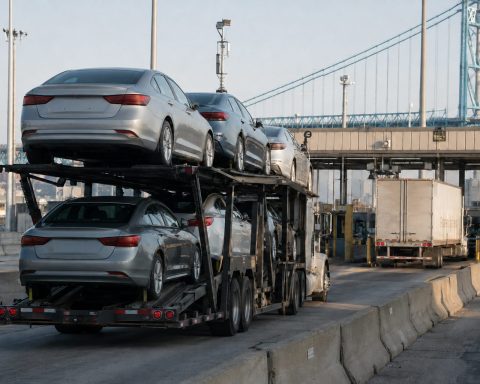
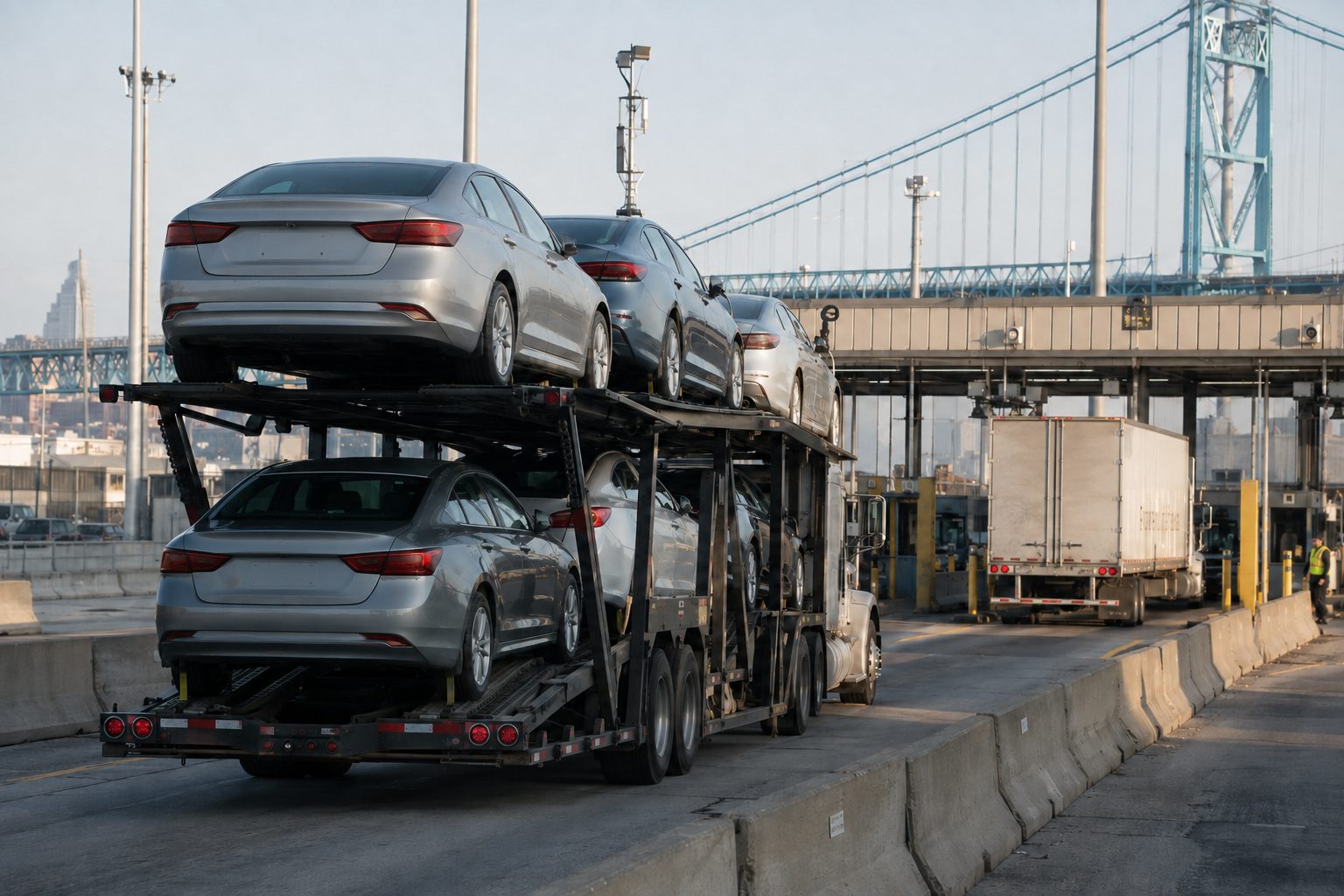
Trump said Monday that all Canadian-made cars, trucks and automotive parts could face a 50% U.S. tariff from January 1. The failed deal would instead have cut the top rate on Canadian cars and light trucks to 15% from 25%.
Investors sold the integrated manufacturers. Ford Motor NYSE:F fell 3.6% on Monday. Stellantis NYSE:STLA lost 4.2%, while General Motors NYSE:GM dropped 1.6%. Toyota Motor’s U.S. shares NYSE:TM fell 1.5%, and Honda Motor’s ADRs NYSE:HMC declined 2.1%.
That reaction points to parts, not just finished vehicles. Flavio Volpe, president of Canada’s Automotive Parts Manufacturers’ Association, warned: “Without those specific parts, auto assembly throughout the U.S. would halt.” The threat therefore reaches U.S. factories that import Canadian inputs.
| Policy path | Rate and date | Investor transmission |
|---|---|---|
| Collapsed negotiated package | 15% on Canadian cars and light trucks | Lower landed cost; reduced supply-chain shock |
| Trump’s threatened escalation | 50% on Canadian cars, trucks and parts from January 1, 2027 | Higher input costs, vehicle prices and working capital |
| Canadian counter-tariffs | Dollar-for-dollar measures from September 8, 2026 | Pressure on selected U.S. exporters |
| New U.S. duties already imposed | 50% on about $20 billion of Canadian goods | Near-term margin and demand pressure outside autos |
The export base is substantial. Canada shipped C$46.4 billion of automobiles and light trucks to the United States in 2024. Parts exports added C$35.2 billion. The combined C$81.6 billion equals about C$6.8 billion per month.
The broader relationship is larger still. U.S. goods and services trade with Canada totaled $872.3 billion last year. Canada sent roughly three-quarters of its goods exports south and sourced almost half its goods imports from the United States.
Ottawa said dollar-for-dollar counter-tariffs will start September 8. Finance Minister François-Philippe Champagne also promised a support package aimed at business liquidity and workers. Four Canadian ministers were due to outline measures at 11:00 EDT on Tuesday.
The main market question is incidence: who ultimately pays. Automakers can absorb part of the levy, shift sourcing, reduce Canadian output or raise sticker prices. Each option hits a different line, from margins and capital spending to North American vehicle inflation.
Risks: The C$40.8 billion estimate assumes the 50% rate applies to the full 2024 export value. Content-based relief, exemptions or a renewed agreement would reduce it. A full levy with retaliation could instead amplify costs as parts cross the border more than once.
Investors next need Canada’s 11:00 EDT support announcement, the September 8 retaliation list and any White House implementing order. The absence of detailed tariff rules remains as important as the 50% headline.
Related articles: NYSE:F