
DETROIT, August 14, 2026, 08:45 EDT — U.S. cash markets remained shut. Activity was seen in premarket trade.
- Ford stock rose 0.3% ahead of Friday’s market open.
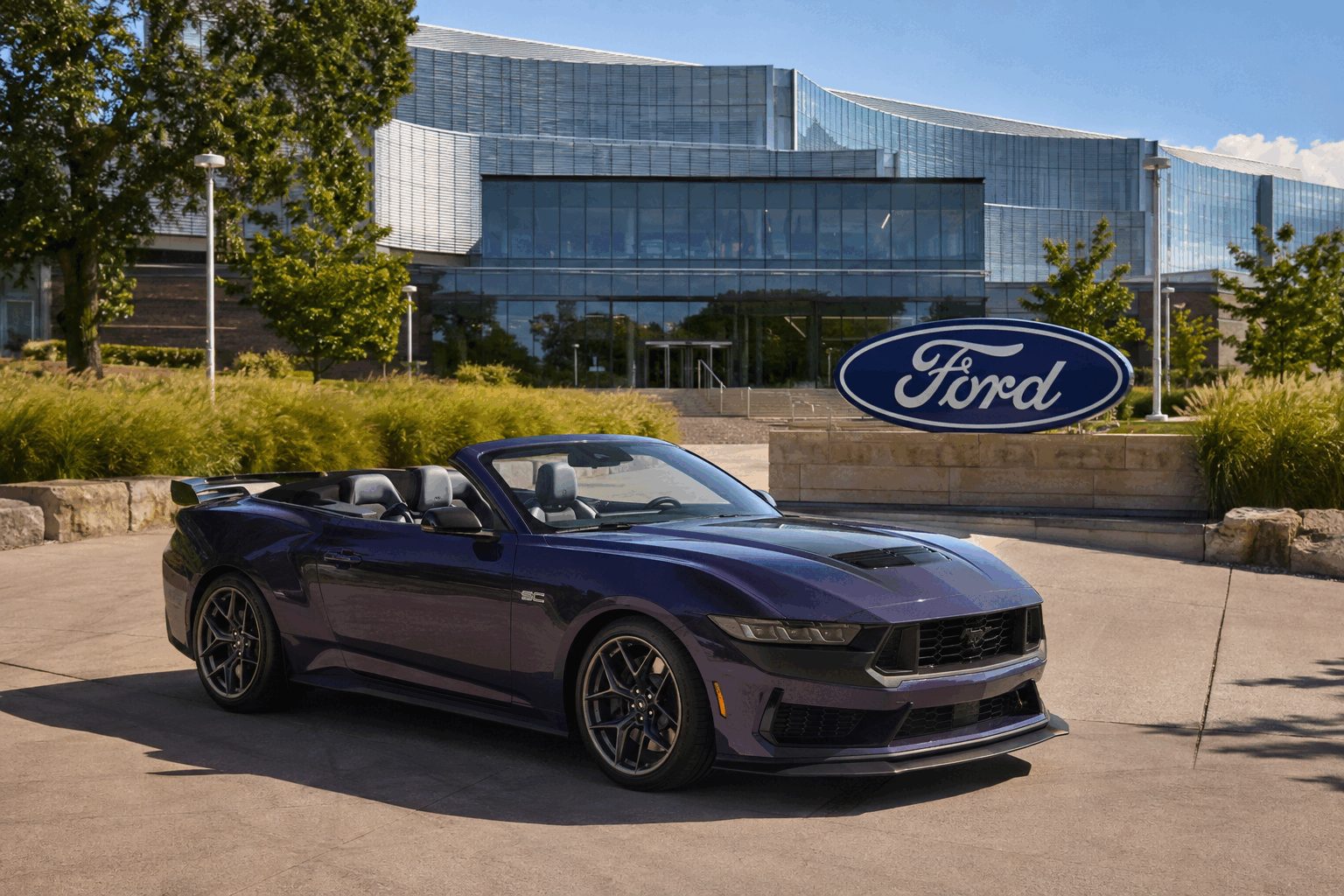
- The Mustang Dark Horse SC Convertible, with 795 horsepower, aims for a premium-car price point.
- The anticipated price is about 2.5 times Ford’s most recent revenue per wholesale vehicle.
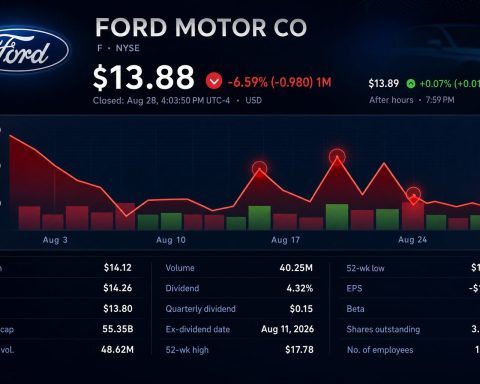
Ford Motor Company NYSE:F gained 0.29% to $13.93 in premarket trading Friday, after unveiling the Mustang Dark Horse SC Convertible. Shares last finished Thursday at $13.89.
The convertible variant delivers 795 horsepower and 660 pound-feet of torque. Pricing details remain undisclosed, but early estimates around $110,000 would position it higher than the $108,485 SC coupe.
The sticker price outweighs the headline horsepower. Ford reported $44.89 billion in automotive sales from 1.039 million wholesale vehicles in the second quarter, averaging approximately $43,200 per unit. The latest Mustang is expected to command a price around 2.5 times higher than that.
| Mustang model | Starting or expected price | Investor read-through |
|---|---|---|
| EcoBoost | $32,995 | Base entry |
| GT | $46,800 | Main V-8 upgrade |
| Dark Horse SC coupe | $108,485 | Verified high-end option |
| Dark Horse SC Convertible | About $110,000 | Initial projection; official price pending |
Ford is launching its first high-performance Mustang convertible in over a decade with the SC Convertible. Customers can place orders starting this fall, and deliveries are scheduled for spring 2027. The model features a supercharged 5.2-liter V-8 engine paired with a seven-speed dual-clutch transmission.
This model is designed with a focus on grand touring as opposed to the SC coupe. It does not include the Track Pack, carbon-fiber wheels or carbon-ceramic brakes found on the coupe. Ford offers open-air driving while maintaining the 795-horsepower engine unchanged.
Ford’s pricing approach is underpinned by its performance vehicle lineup. Mark Rushbrook, the global director of Ford Racing, described development efforts as establishing a “direct pipeline of innovation” linking race cars with consumer models. Ford
| Ford segment, Q2 2026 | Revenue | Adjusted EBIT | Operating signal |
|---|---|---|---|
| Ford Blue | $26.1 billion | $1.1 billion | Profit increased 72% from the previous year |
| Ford Pro | $17.8 billion | $1.7 billion | Most profitable division |
| Ford Model e | $1.0 billion | -$919 million | Loss reduced by $410 million |
The most recent quarter lends weight to the mix thesis. Ford Blue’s profit rose, despite a 4% drop in company revenue. Executives raised their full-year adjusted EBIT outlook to a range of $10 billion to $11 billion.
However, Mustang remains a low-volume model. Ford’s U.S. Mustang sales reached 28,725 in the first half, an increase of 22%. The Mustang accounted for just 2.9% of Ford’s total 1,006,515 U.S. vehicle deliveries.
| Automaker | Latest quoted price | Premarket move |
|---|---|---|
| Ford Motor Company NYSE:F | $13.93 | up 0.29% |
| General Motors Company NYSE:GM | $86.65 | rising 0.30% |
| Stellantis N.V. NYSE:STLA | $5.41 | gaining 0.74% |
| Toyota Motor Corporation NYSE:TM | $188.71 Thursday close | No premarket price visible |
Ford’s action was largely in line with General Motors. Stellantis gained further, while Toyota did not have a premarket quote available. The subdued market reaction indicates investors viewed the Mustang launch as a mixed signal rather than a shift in earnings expectations.
| Analyst and firm | Rating | Target | Date |
|---|---|---|---|
| Elizabelle Pang, DBS Group Holdings Ltd. SGX:D05 | Buy | $17 | Aug. 11 |
| Dan Levy, Barclays PLC LON:BARC | Hold | $14 | Aug. 7 |
| Mark Delaney, Goldman Sachs Group, Inc. NYSE:GS | Hold | $16 | July 28 |
| Rajat Gupta, JPMorgan Chase & Co. NYSE:JPM | Buy | $17 | July 29 |
| Colin Langan, Wells Fargo & Company NYSE:WFC | Sell | $11 | July 29 |
The average target suggests a potential gain of 14.4% over Thursday’s closing price. However, the target range from $11 to $20 remains broad. This difference highlights uncertainty surrounding tariffs, losses in electric vehicles, and whether Ford can maintain its pricing power.
Risks: Pricing for convertibles has not been finalized, and Ford keeps Mustang margin details confidential. Planned North American content regulations may increase yearly expenses by a minimum of $2 billion for each Detroit automaker. Ford has already projected a tariff impact near $1 billion this year.
The immediate challenge concerns pricing discipline. An order book exceeding $100,000 would back up Ford Blue’s product mix narrative. If demand is soft or incentives are high, it would indicate constraints to brand strength.
Related articles: NYSE:F