
Tesla Stock Jumps 5.0% as Autopilot Crash Data Tests $1.45 Trillion Valuation
AUSTIN, Texas, August 31, 2026, 15:12 EDT — Tesla shares advanced by nearly 5% on Monday following the release of a federal crash report that has again thrust the company’s driver-assistance system into the spotlight. The move highlights a persistent debate for investors: the draw of autonomous tech revenue and innovative AI offerings, set against ongoing scrutiny, regulatory challenges, and valuation uncertainty.
- Tesla shares were last at $366.05, rising 4.96%, as roughly 45.3 million shares traded by 15:11 EDT.
- A record filed by Tesla with NHTSA confirms Level 2 driver assistance was active prior to a deadly May accident in Clute, Texas; the filing does not determine cause.
- Tesla trades at about 183 times its expected earnings, a valuation that allows little margin for setbacks in autonomy or declining consumer confidence.
The tape from the markets
| Metric | Reading | Investor context |
|---|---|---|
| TSLA price | $366.05 | 15:11 EDT |
| Session change | +4.96% | Prior close at $348.75 |
| Intraday range | $347.15–$367.80 | Trading near highs for the day |
| Volume | 45.3 million | Indicates elevated trading activity |
| Market capitalization | About $1.45 trillion | Calculated from an estimated 3.95 billion shares outstanding |
| 52-week range | $297.38–$498.83 | Remains under the highest value in 52 weeks |
The surge indicates investors remain prepared to overlook safety concerns when expecting gains from Full Self-Driving subscriptions, robotaxis, Optimus, and Tesla’s larger AI ambitions. However, the new record provides a tangible challenge to that confidence.
Tesla Stock Jumps 5.0% as Autopilot Crash Data Tests $1.45 Trillion Valuation
Snapshot: August 31, 2026 · 15:12 EDT
Safety signal
| Item | Reading |
|---|---|
| Crash report | Fatal, May 2026 |
| ADAS status | Verified engaged |
| Pre-crash speed | 104 mph |
| Causation | Not established |
Business engine
| Q2 metric | Result |
|---|---|
| Revenue | $28.24B, +26% |
| FSD subscriptions | 1.48M, +56% |
| Operating margin | 1.4% |
| Free cash flow | -$1.09B |
Investor bridge
FSD subscription growth can improve recurring software revenue and margins. Safety investigations can delay rollout, add compliance cost and weaken adoption. With the stock valued at roughly 183 times forward earnings, regulatory and execution outcomes have an outsized effect on fair value.
Watch: NHTSA EA26002 updates · supervised FSD miles and interventions · subscription growth · operating-margin conversion.
According to the National Highway Traffic Safety Administration Level 2 advanced driver-assistance crash file, report 13781-15200 documents a fatal crash involving a 2025 Model 3 in Clute in May 2026. Tesla indicated that the system was “Verified Engaged” at the time, with a pre-crash speed recorded at 104 mph.
What the safety record reveals — and what it omits
| Evidence | What it says | Key limitation |
|---|---|---|
| NHTSA crash report 13781-15200 | Confirmed Level 2 ADAS in use; crash resulted in a fatality; speed cited at 104 mph | Does not establish whether the system contributed to the crash |
| NHTSA reporting rule | Incidents involving Level 2 systems must be reported if the system was active within 30 seconds of an eligible crash | Reported data may be partial, unverifiable, or censored |
| Engineering Analysis EA26002 | Assesses reduced-visibility detection for roughly 3.20 million Tesla cars | Inquiry is ongoing; schedule for rollouts and software impact are still being examined |
| Tesla’s stated design | FSD mandates supervision, with the driver required to stay attentive | Supervision on the road and the way the system acts still face scrutiny |
The difference is significant. NHTSA’s standing order counts crashes if a covered system was active within 30 seconds before the collision. This database is for monitoring purposes and does not assign fault. NHTSA cautions against making comparisons between manufacturers without considering differences such as fleet size, how data is reported, and the number of miles traveled.
NHTSA is also conducting an engineering analysis into the way some Tesla vehicles sense and handle decreased roadway visibility. The regulator’s documents mention nine crashes, two involving injuries, and one resulting in a fatality among a fleet of about 3.20 million vehicles. According to the report, Tesla started to develop an update following notification of a fatal crash. The agency is still determining the timeline for the update’s rollout and assessing which cases it may have impacted.
The autonomy sector is expanding
| Q2 2026 measure | Result | Year-over-year change |
|---|---|---|
| Total revenue | $28.24 billion | Up 26% |
| Automotive revenue | $20.52 billion | Gained 23% |
| Operating margin | 1.4% | Lower than 3.2% |
| Free cash flow | -$1.09 billion | Down from +$1.46 billion |
| Cash and investments | $43.52 billion | Up 19% |
| Active FSD subscriptions | 1.48 million | Rose 56% |
Tesla’s second-quarter numbers show why investors hesitate to view each safety disclosure as evidence of a failed thesis. Deliveries grew by 25% to 480,126 vehicles, and active FSD subscriptions climbed 56% to 1.48 million. This installed base has the potential to generate steady, high-margin software income if adoption persists.
On the other hand, spending served as a financial counterbalance. Capital expenditure surged 142% to $5.79 billion, sending quarterly free cash flow down to negative $1.09 billion. Operating income dropped 57% to $398 million, while the operating margin slimmed to 1.4%, despite revenue growth.
Valuation makes safety a financial factor
| Valuation / analyst measure | Reading | Interpretation |
|---|---|---|
| Trailing P/E | 361.9x | Significant premium against established automakers and the wider market |
| Forward P/E | 183.2x | Implied need for considerable growth in upcoming profits |
| Price-to-sales | 13.3x | Valuation reflects expectations of software-like margins |
| Price-to-free-cash-flow | 239.1x | Indicates major reliance on performance and funding |
| Average analyst target | $390.09 | Roughly 6.6% higher than current trading levels |
| Consensus | Buy, 46 analysts | Broad target spread indicates heightened uncertainty |
The connection for investors is straightforward: greater FSD adoption can improve the software mix, boost margins, and drive recurring revenue. However, safety probes may delay rollout, add to compliance expenses, and dampen uptake. With shares valued at $1.45 trillion, even modest shifts in autonomy outlooks can impact the stock much more than short-term delivery numbers.
Risks: Regulators might mandate extra protections, limit functionalities or widen probes. Lawsuits, higher insurance expenses and harm to reputation could intensify following major crashes. On the other hand, investigation of crash data might yield no negative outcomes for Tesla, advancements in software could decrease accident rates, and quicker uptake of FSD could make the current valuation appear more reasonable.
Key items for investors to monitor include the next EA26002 update from NHTSA, Tesla’s report on supervised FSD miles and interventions, trends in subscription growth, and whether revenue from autonomy is contributing to margin improvement instead of just covering increased capital expenditures.
Sources: TS2 U.S. Google Trends; NHTSA Level 2 ADAS crash data; NHTSA Standing General Order; NHTSA Engineering Analysis EA26002; Tesla Q2 2026 results; Tesla Vehicle Safety Report; Google Finance; StockAnalysis valuation data; StockAnalysis analyst forecast. Market data current as of 15:11 EDT.
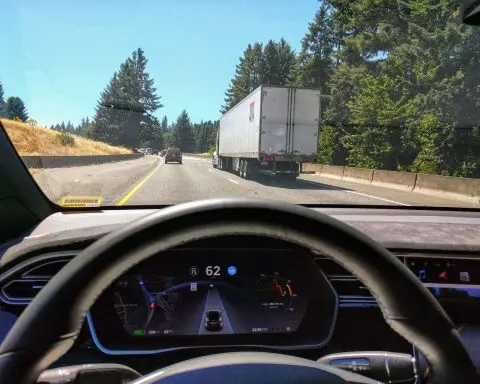
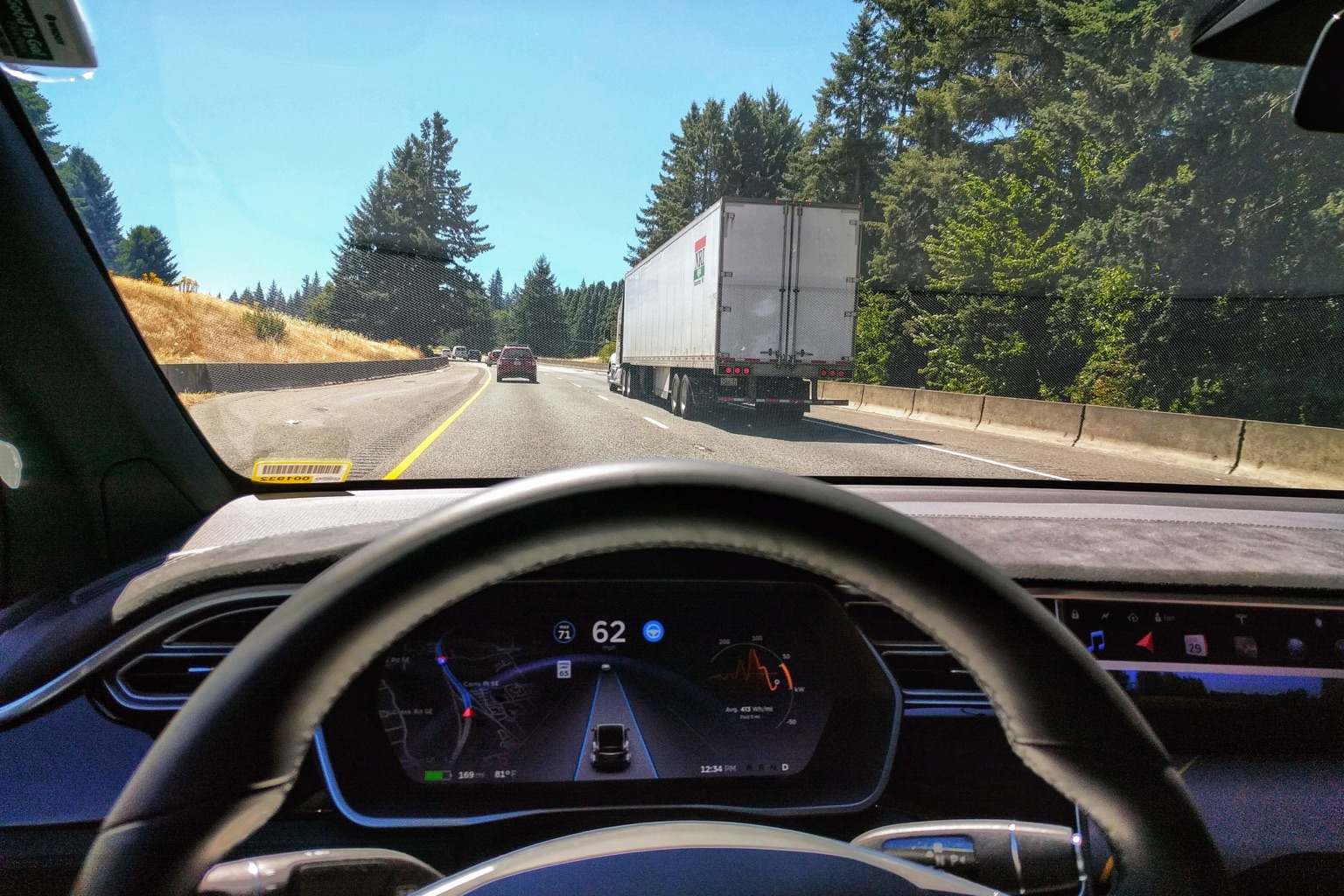
Image: Tesla Autopilot active in a Model X, Ian Maddox/Wikimedia Commons, CC BY-SA 4.0; image cropped and scaled.
Related articles: NASDAQ:TSLA