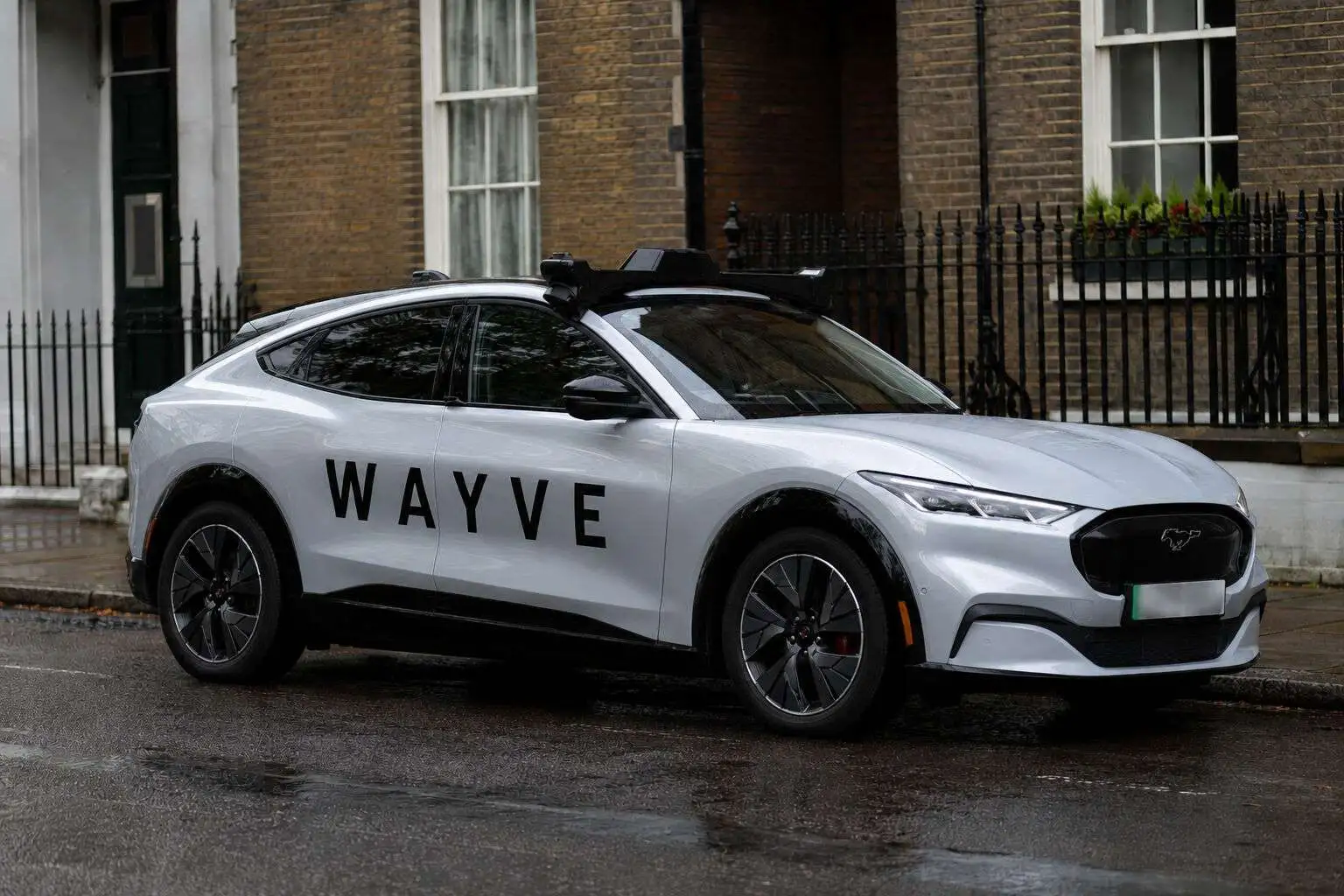

LONDON, September 3, 2026, 09:55 BST — Wayve commenced paid passenger services in London on Thursday, deploying only 15 authorised autonomous vehicles. This marks the first real-world trial of its $8.6 billion private valuation using a limited, monitored fleet.
- With approximately 100,000 customers expressing interest in autonomous rides, just 15 cars are currently licensed.
- In February, Wayve secured $1.2 billion in funding, resulting in a post-money valuation of $8.6 billion.
- Each journey in London continues to have a safety driver on board and does not include airport routes.
The service integrates Wayve’s driving technology with Uber Technologies NYSE:UBER. Riders can select a Wayve vehicle via Uber’s regular app. The launch fleet consists of modified Ford Motor NYSE:F Mustang Mach-E cars Associated Press.
The rollout presents a notable stress for available capacity. For every licensed vehicle, there are about 6,700 registered customers. While this ratio does not predict demand, it highlights the limited supply that currently underpins Wayve’s valuation The Guardian.
No introductory surcharge applies. Fares are identical to standard Uber journeys, and tipping is not required from passengers. Cost reductions are not yet realized, as a licensed driver continues to supervise each ride.
London launch capacity gap
Log scale; customer registrations are interest, not completed bookings.
Wayve relies on an alternative funding approach. In February, it secured $1.2 billion, giving the company a post-money valuation of $8.6 billion. Uber’s milestone-based support increased the sum of committed capital to up to $1.5 billion Wayve.
Latest disclosed private valuations
Wayve equals 6.8% of Waymo’s valuation; Waymo is 14.7 times larger. These February financing marks are not public-market prices. Sources: Wayve and Associated Press.
The disparity among peers is significant. Alphabet’s NASDAQ:GOOGL Waymo secured $16 billion in funding at a $126 billion valuation in February. At that point, the company was already delivering over 400,000 rides each week.
The comparison is not exact. Waymo runs a well-established service, whereas Wayve offers a software platform. However, the 14.7-fold difference in valuations highlights the significant premium investors place on demonstrated use.
Wayve ride services are available throughout Greater London, with airports not included. Customers may choose autonomous matching and can either accept or decline the offered vehicle. A licensed private-hire driver is always present Wayve ride information.
There is no specific timeline for achieving full autonomy. Chief Executive Alex Kendall stated the technology is “still maturing.” He also said, “I don’t want to put a timeline on it” The Guardian.
The commercialization path
Supervised London rides test reliability, acceptance and fleet operations.
Wayve and Uber plan broader deployment using outside fleet capital.
Wayve targets supervised L2+ software in manufacturer-built cars.
Sources: Wayve financing release and The Guardian.
Uber reports that self-driving vehicles are currently in use on its platform across seven cities, aiming to expand to up to 15 cities by the end of the year. Its partners have pledged around 120,000 vehicles for the coming years Uber second-quarter remarks.
The network could reduce Wayve’s financial load. Wayve provides software licenses to car makers, whereas Uber intends to own and manage its own fleets. The company states its system has operated in over 500 cities without additional city-specific adjustments.
Risks: Approval for driverless operation is not guaranteed. Any safety incidents may postpone rollout and push up insurance premiums. Limited ride activity could also challenge the rationale for a capital-light valuation.
The following significant data will concern operations. Investors require details on trip volume, use of safety mechanisms, and expansion of the vehicle fleet. Kendall stated that Wayve must demonstrate its system on Nissan Motor TYO:7201 vehicles produced by the manufacturer prior to withdrawing human drivers.
Related articles: NASDAQ:GOOGL