
NEW YORK, July 31, 2026, 16:05 EDT — U.S. markets have ended trading.
- Alibaba finished the session at $122.28, rising 5.1%, bringing its gain over five days to 9.0%.
- An article connected Moonshot with the acquisition of approximately 20,000 chips via Alibaba. Reuters has not independently verified the deal.
- The next macroeconomic focus is Monday’s private China factory survey, with economists predicting a modest loss of momentum.
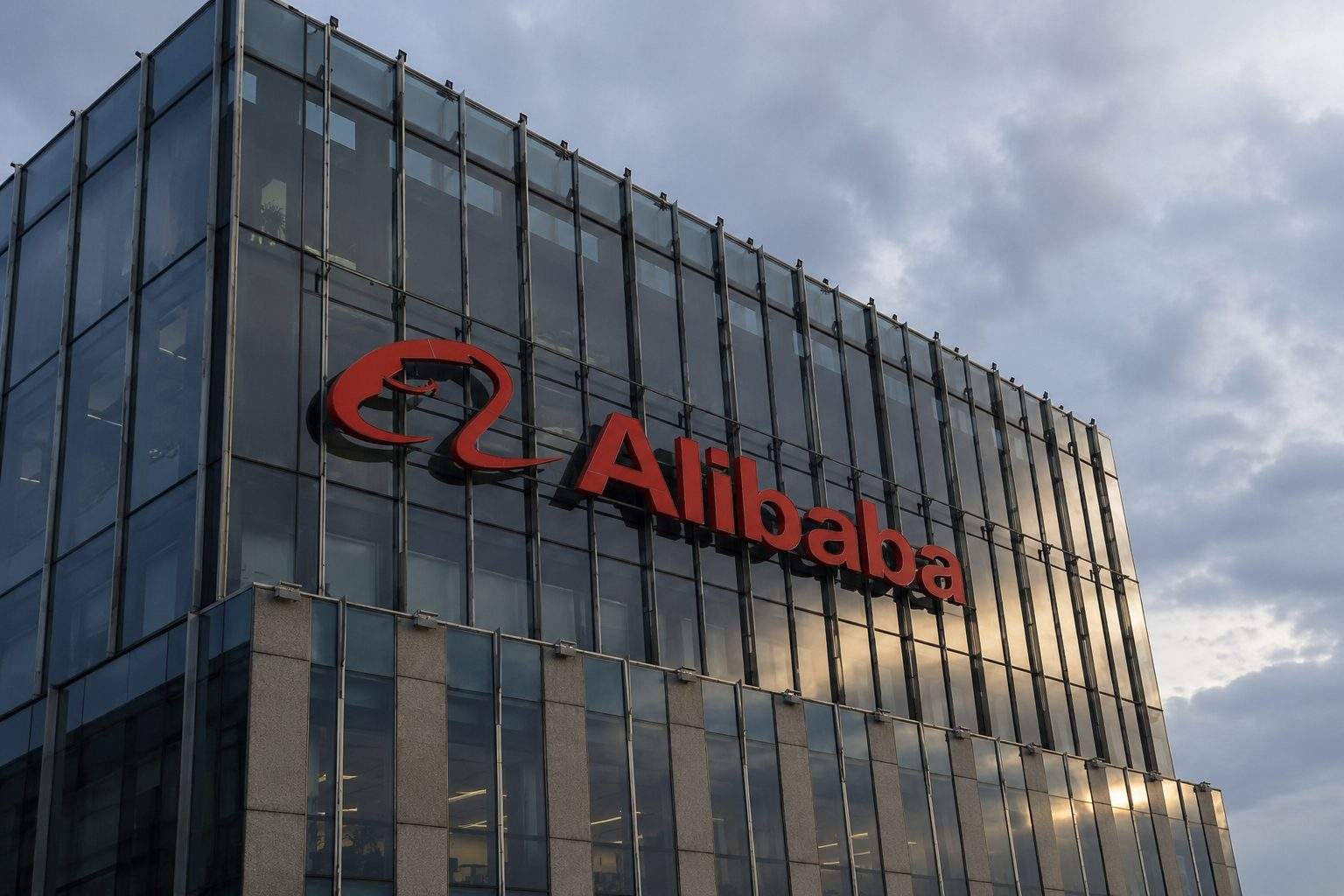
Alibaba Group Holding Limited (NYSE:BABA; HKG:9988) ended Friday’s session up 5.1% at $122.28. The stock gained after a report connected its cloud infrastructure to Moonshot’s artificial intelligence models.
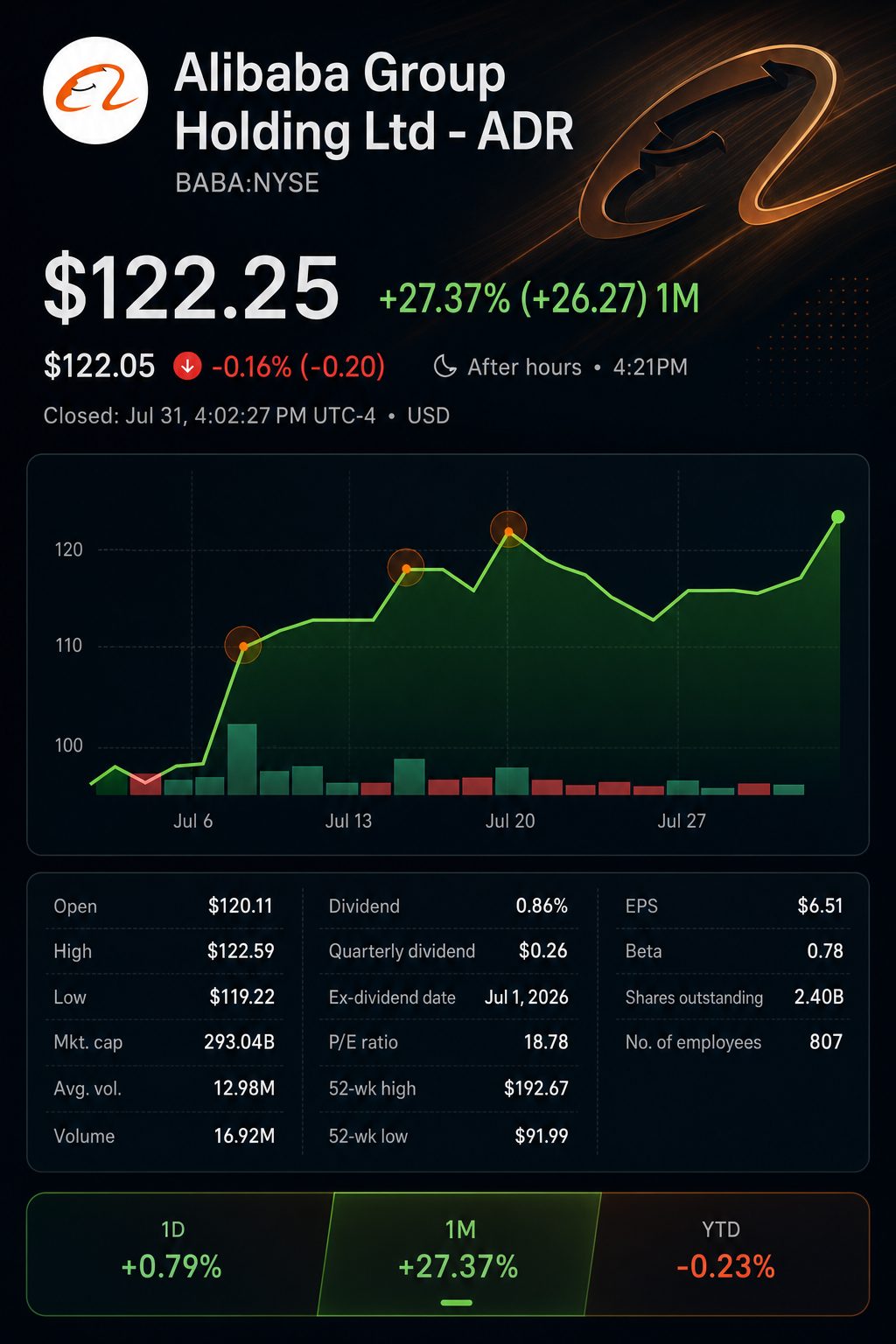
The development is significant as Alibaba looks to spend more than 380 billion yuan on AI over three years. Sector outperformance indicates that investors responded positively to proof that deployed capacity is attracting users.
Alibaba outperformed the China-internet benchmark by roughly 3.7 percentage points, and surpassed e-commerce rivals JD.com Inc NASDAQ:JD and PDD Holdings Inc NASDAQ:PDD. The margin suggests the presence of a stock-specific AI premium.
| Friday close | Price | Daily move | Gap versus Alibaba |
|---|---|---|---|
| Alibaba ADR | $122.28 | +5.12% | — |
| JD.com ADR | $33.01 | +2.17% | -2.95 points |
| PDD ADR | $88.56 | +1.28% | -3.84 points |
| KraneShares CSI China Internet ETF (NYSEARCA:KWEB) | $28.47 | +1.46% | -3.66 points |
According to Bloomberg, Moonshot’s agreement with Alibaba involved around 20,000 Nvidia Corp NASDAQ:NVDA chips. This chip cluster is said to have delivered significant computing resources for Moonshot’s Kimi models.
The report referenced prior Hopper-generation processors. In a statement, Alibaba denied providing H200 chips, labeling the allegation as “completely groundless.” Reuters was unable to confirm the computing agreement independently. Reuters
Moonshot does not operate as a fully independent customer trial. Alibaba ranks among its top investors and anticipates that portfolio firms will adopt its cloud. As a result, the report backs usage, though widespread external demand is still unproven.
Initial calculation: using Friday’s $5.96 increase on 2.28 billion shares suggests an additional $13.6 billion in market capitalization. Trading volume was approximately 16% higher than its 65-day average.
This week’s rally extended beyond Friday’s trigger. Alibaba’s ADR climbed 9.0%, with its Hong Kong-listed stock up 6.4%. KWEB increased approximately 8.3%.
| Security | July 24 close | July 31 close | Weekly move |
|---|---|---|---|
| Alibaba ADR | $112.14 | $122.28 | up 9.0% |
| Alibaba Hong Kong shares | HK$110.00 | HK$117.00 | up 6.4% |
| KWEB | $26.29 | $28.47 | up 8.3% |
The ADR is still down 36.5% from its 52-week peak of $192.67. While Friday’s gains boosted some investor sentiment, the previous drop in valuation has not been recovered.
Alibaba’s recent cloud expansion is almost aligned with leading U.S. firms. Cloud Intelligence revenue climbed 38% in the March quarter. Amazon.com Inc NASDAQ:AMZN posted 37% cloud growth, whereas Microsoft Corp NASDAQ:MSFT saw Azure increase by 43%.
| Cloud provider | Latest reported growth | Measurable monetization signal |
|---|---|---|
| Alibaba Cloud | +38% | AI offerings contributed to 30% of external cloud sales |
| Amazon Web Services | +37% | Fastest expansion in over four years |
| Microsoft Azure | +43% | Cloud backlog climbed to $678 billion |
The periods and reporting approaches vary, but Alibaba remains in a comparable growth range. The more challenging issue is whether this growth will translate into higher margins.
Bill Birmingham, the managing director of REX Financial, stated that investors are currently seeking “visible, near-term revenue and margin expansion.” While the Moonshot report deals with revenue clarity, it provides limited data on margins. Reuters
In May, Chief Executive Eddie Wu stated that Alibaba’s investments were “beginning to pay off commercially.” However, adjusted EBITA dropped 84%, and quarterly revenue came in below the LSEG consensus. Spending on AI infrastructure and quick-commerce accounted for most of the financial strain. Reuters
China’s official manufacturing Purchasing Managers’ Index declined to 49.2 in July, marking the lowest level in five months. The non-manufacturing index also slipped, reaching 49.0. Continuing sluggish domestic demand is weighing on Alibaba’s broader commerce segment.
Monday kicks off with the RatingDog manufacturing PMI release. Reuters’ poll projects a reading of 51.5, compared to June’s 51.7. Alibaba’s investor site does not show any scheduled corporate events for the week.
Risks are still significant. The Moonshot deal has not yet been confirmed. U.S. regulations limit access to advanced chips, and outlays on AI and quick-commerce could continue to weigh on margins. Sluggish demand from Chinese consumers may also counterbalance gains in cloud services.
Related articles: NYSE:BABA