
December 15, 2025 — Alibaba Group Holding Limited (NYSE: BABA; HKEX: 9988) is heading into year-end with investors focused on one big question: can its aggressive AI-and-cloud push translate into durable profits before the bills for chips, data centers, and instant-delivery subsidies come due?
As of Monday, Dec. 15, 2025, Alibaba’s U.S.-listed ADR was trading around $155.68.
Below is a deep, current read of the main catalysts and risks shaping Alibaba stock right now—based on the most recent reporting and analyst updates available as of 15.12.2025.
Alibaba stock price today: where BABA stands on Dec. 15, 2025
Alibaba’s ADR is hovering in the mid-$150s, with recent trading showing a day range of roughly $153.80–$158.95 and a 52-week range of about $80.06–$192.67.
That wide range is doing a decent job of summarizing 2025 in one sentence: this is a stock where sentiment can flip fast—often on policy, chips, and China macro headlines as much as on the company’s own execution.
The AI storyline is now the center of the Alibaba investment case
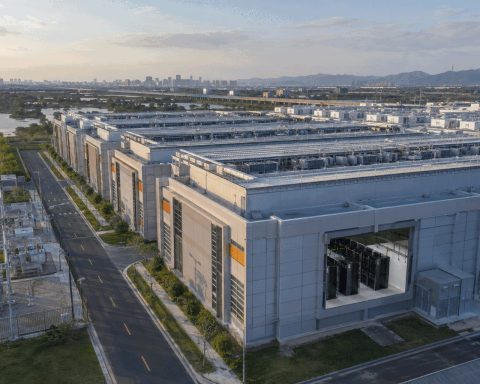
Alibaba has been telling the market—loudly—that AI is not a side quest. The company has previously said it plans to invest at least 380 billion yuan (about $52.44 billion) over three years into cloud computing and AI infrastructure.
That spending plan is a double-edged sword for the stock:
- Bull case: scale AI infrastructure, win cloud workloads, monetize models, and pull more commerce into Alibaba’s ecosystem.
- Bear case: capex (capital expenditure) ramps faster than monetization, squeezing margins while competition stays brutal.
Some market commentary has leaned into that tension. One recent analysis highlighted a capex intensity jump (presented as 12.7% of revenue, up from 7.2% a year earlier), framing it as a deliberate “AWS-style” investment cycle that could pressure near-term earnings. Investing.com
Qwen goes consumer: Alibaba is pushing beyond “enterprise AI”
Alibaba’s AI narrative isn’t just data centers—it’s also product. In late November, Alibaba said its Qwen App passed 10 million downloads within the first week of its public beta launch, positioning it as a consumer-facing assistant powered by its Qwen3 model and built for tasks like research, coding, camera functions, and voice calls.
Reuters has also described Alibaba’s Qwen rollout as a strategic shift toward consumer AI, including a free app experience and an “aggressive push” into a market where Alibaba previously lagged leaders. Reuters
And Alibaba is threading Qwen into existing distribution: China Daily reported that Qwen and Qwen App features have been embedded into Quark, Alibaba’s revamped AI browser, which it described as having over 200 million users in China, and said the integration brings AI assistance to more than 100 million Quark desktop users.
Why this matters for BABA stock: consumer AI is an attention game and a distribution game. If Alibaba can use Quark + commerce traffic to build daily active usage, Qwen becomes less like “another chatbot” and more like an on-ramp to search, shopping, payments, and cloud services.
The Nvidia H200 “green light” is a major near-term catalyst—and a geopolitical stress test
One of the biggest moving pieces for Alibaba stock in mid-December is not an Alibaba product launch. It’s chips.
Reuters reported that ByteDance and Alibaba have asked Nvidia about buying its H200 AI chip after U.S. President Donald Trump said the U.S. would allow exports of the H200 to China. The same report said the H200 is nearly six times as powerful as the previously export-eligible H20, and noted Chinese firms were seeking clarity on supply and still needed Beijing’s approval.
A follow-up Reuters report said Nvidia was evaluating adding H200 production capacity due to strong China demand, and added more color on the politics: China had not yet greenlit purchases, officials discussed the issue in emergency meetings, and there was a proposal to bundle H200 purchases with a required ratio of domestic chips.
What to watch here (and why investors care)
For Alibaba, access to top-tier training hardware can influence:
- Model quality and iteration speed (how quickly Qwen improves).
- Cloud competitiveness (whether Alibaba Cloud can offer attractive AI compute).
- Cost structure (premium chips + data centers can mean margin pressure before revenue catches up).
But the “H200 question” is also a policy thermometer: approvals, quotas, or bundling requirements would signal how China intends to balance “buy the best” vs. “build domestic alternatives.”
Separately, the Financial Times reported that China added domestic AI chips to an official procurement list for the first time—another hint of the policy direction around self-reliance.
Commerce is still the cash engine—but quick commerce is a margin knife fight
Alibaba’s most reliable revenue and cash flow engine remains commerce. But the competitive landscape is intense, especially in China’s “instant retail” / quick-commerce arena (delivery within an hour).
In its late-November quarterly coverage, Reuters reported Alibaba’s quarterly revenue reached 247.80 billion yuan (~$35 billion), beating estimates, while net profit fell 53%—with investment pressure and quick-commerce competition part of the broader backdrop. Reuters also quoted CEO Eddie Wu saying the previously stated 380 billion yuan AI investment “might be on the small side” given demand. Reuters
Days later, Reuters reported JD.com pledged 22 billion yuan (~$3.12 billion) in housing support for couriers, and said JD.com, Meituan, and Alibaba have been locked in a battle for quick-commerce market share that has pushed companies toward heavy subsidies and attracted regulatory calls for more “rational competition.” Reuters
Translation for shareholders: Alibaba can show real momentum in one-hour delivery and local services, but it can also burn real money doing it. The stock’s next leg up likely requires evidence that growth doesn’t permanently demolish margins.
A cloud bright spot investors keep circling
A Reuters Breakingviews column argued Alibaba’s AI credentials are strengthening, pointing to cloud growth and citing research firm Omdia’s estimate that Alibaba held 36% of China’s domestic AI cloud market in the first half of the year. The column also cited reported cloud revenue growth of 34% year-on-year (to 39.8 billion yuan) for the quarter ended Sept. 30, alongside improved cloud profitability metrics.
Even if investors disagree with every conclusion in that commentary, the underlying point is clear: cloud performance is increasingly the scoreboard for Alibaba’s AI ambitions.
Institutional flows: a “quiet confidence” signal, but not a guarantee
On Dec. 15, a MarketBeat filing recap said National Bank of Canada FI increased its Alibaba stake sharply during Q2—adding 475,053 shares to hold 602,233 shares, valued in the report at about $68.29 million.
Institutional accumulation doesn’t “prove” anything by itself—funds can be early, late, or wrong. But for a stock as sentiment-driven as BABA, these disclosures often get attention because they hint at where large pools of capital are positioning.
Analyst forecasts for Alibaba stock: strong-buy camp vs. margin-worry camp
If you want a snapshot of Wall Street’s current stance, it looks broadly constructive—with a loud asterisk about near-term earnings pressure.
Consensus price targets: roughly $189–$198 on many trackers
Different aggregators show slightly different numbers depending on which analysts they include and how they normalize ratings, but the overall shape is similar:
- StockAnalysis lists a consensus rating of “Strong Buy” with an average target of $189.08 (range $135–$230). StockAnalysis
- MarketBeat lists an average 12-month target of $194.00, with $162 low and $230 high.
- Investing.com lists an average target around $197.80, with a wide high/low range and an overall Strong Buy-style rating summary.
At a ~$155–$156 share price, those averages imply around 20%–27% upside over the next year if Alibaba executes and the macro/policy tape cooperates.
The downgrade that spooked the tape: Arete goes Neutral with a $172 target
On Dec. 9, MarketBeat reported that Arete downgraded Alibaba from Buy to Neutral and set a $172 price target.
That move mattered less because it changed the “average” and more because it echoed what many cautious investors already fear: AI capex + quick-commerce subsidies can crush near-term profitability, even if the long-term strategy is sound.
Key risks that can move Alibaba stock fast
Alibaba is not a “set it and forget it” ticker. Here are the risk vectors that can reprice the stock quickly—especially relevant as of mid-December 2025:
1) U.S.–China geopolitics and national-security scrutiny
In mid-November, Reuters reported a Financial Times story saying the White House accused Alibaba of providing technological support for Chinese military operations against U.S. targets; Alibaba called the assertions false, and the report said the stock dropped on the news.
Even without new actions, headlines like this can expand the “political risk discount” on the valuation.
2) AI chip access and policy whiplash
The H200 situation is a perfect example: a change in U.S. export posture can create upside optionality, but it can also trigger additional scrutiny, new conditions, or regulatory bottlenecks on either side.
3) Margin pressure from quick commerce
Regulators are reportedly urging rational competition, but the incentive to subsidize remains strong when rivals are fighting for habit formation and delivery density.
4) The “prove it” gap between AI buzz and AI profits
Alibaba’s spending is large and explicit; the market’s patience is not infinite. Investors will look for evidence that AI and cloud growth are translating into durable operating leverage, not just bigger bills.
What to watch next: the dates and signals that could define BABA’s next move
The next major catalyst: earnings in February 2026
Multiple market calendars list Alibaba’s next earnings around Feb. 19, 2026 (timing can change, so treat as schedule-based rather than company-confirmed unless Alibaba updates it).
The “tell” signals investors will likely focus on
Between now and those results, the market will probably pay extra attention to:
- Cloud growth and AI-related demand (is growth accelerating, and is profitability holding up?).
- Capex guidance and AI infrastructure commentary (is spending stable, rising, or expanding beyond the already-huge plan?).
- Any concrete updates on H200 approvals, supply, or purchase conditions (because this can shift perceived competitiveness quickly).
- Signs the quick-commerce price war is cooling (or that Alibaba is finding a path to growth with less subsidy burn).
- Qwen distribution and usage traction (downloads are one thing; sustained usage is the real prize).
Bottom line for Alibaba stock on Dec. 15, 2025
Alibaba stock is currently priced like a company in the middle of a high-stakes transformation: AI and cloud are becoming the growth engine investors want, while commerce and logistics are the cash engines investors worry could get over-subsidized.
Right now, the consensus analyst crowd leans bullish on valuation and medium-term upside, but the news flow is dominated by chip geopolitics, capex intensity, and the quick-commerce arms race—the exact ingredients that can make BABA move sharply in either direction.
Related articles: NYSE:BABA