NEW YORK, Jan 5, 2026, 04:15 ET
- Breakthrough Listen researchers reported no credible radio “technosignatures” from interstellar comet 3I/ATLAS
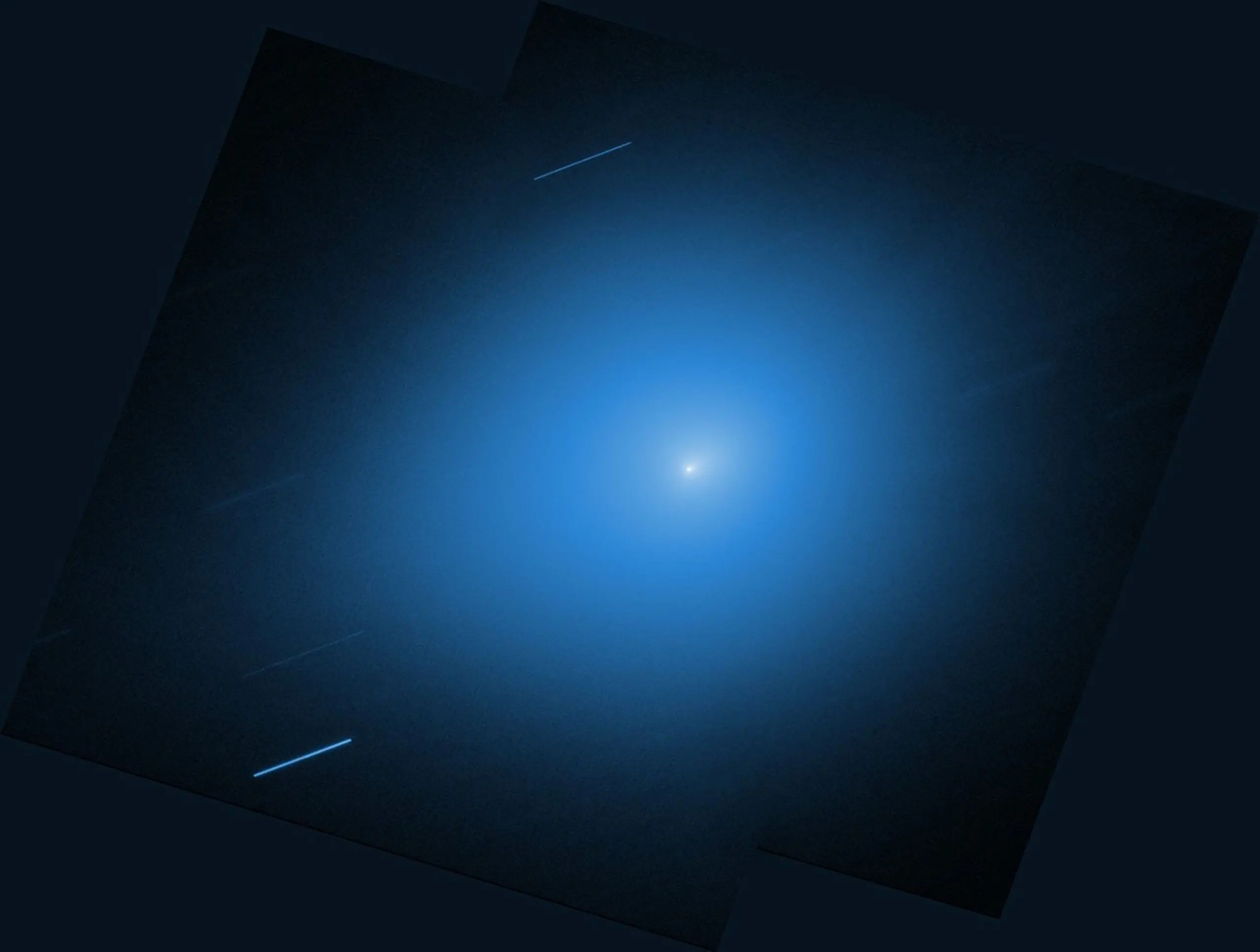
- The null result lands amid heightened scrutiny of the comet’s unusual jet features seen in Hubble images
- Scientists caution that radio silence narrows possibilities but does not answer every question about the object
A search for possible technosignatures — potential signs of advanced technology — in the interstellar comet 3I/ATLAS found no credible radio transmissions, Breakthrough Listen researchers reported. The team said its campaign detected no candidate signals down to the 100 milliwatt level. arXiv
The finding matters because 3I/ATLAS is a rare visitor from outside the solar system, and scientists had a limited window to scrutinize it as it swept past Earth. NASA says the comet posed no threat and came no closer than about 270 million km (170 million miles), after being reported to the Minor Planet Center on July 1, 2025 by the NASA-funded ATLAS survey in Chile.
Interest has stayed high partly because researchers are still trying to pin down how interstellar comets behave when sunlight starts driving off gas and dust. In a recent Medium post, Harvard astrophysicist Avi Loeb pointed to processed Hubble images that he said showed a long sunward “anti-tail” and a smaller, three-pronged inner jet pattern, and he asked whether the geometry might point to something beyond ordinary comet activity.
The Green Bank Telescope run lasted about five hours on Dec. 18, and observers alternated between the comet and nearby sky positions in what is known as an ABACAD arrangement — a switching pattern used to weed out interference, ScienceAlert reported. “This object is a comet,” NASA associate administrator Amit Kshatriya said in a November briefing, according to the report. ScienceAlert
Technosignature searches typically focus on narrowband radio signals — tight spikes in frequency that are efficient for long-distance communication and uncommon in natural astrophysical processes. In practice, the work often becomes a battle against radio-frequency interference: the hum of satellites, aircraft and terrestrial transmitters that can masquerade as something more exotic.
More interstellar visitors may not stay rare for long. The NSF–DOE Vera C. Rubin Observatory, which released its first images in June 2025, is preparing for its decade-long Legacy Survey of Space and Time, expected to accelerate discoveries of fast-moving objects that require rapid follow-up.
The comet has also spilled into broader debate about preparedness and priorities. In an opinion post on The Times of Israel’s blog, writer Rafi Glick called 3I/ATLAS a “wake-up call” and argued for a global framework to respond to interstellar objects, alongside more investment in observation and space exploration. The Times of Israel Blogs
The episode echoes earlier bursts of speculation around ʻOumuamua in 2017 and comet 2I/Borisov in 2019, the only other confirmed interstellar objects seen in the solar system. NASA officials have previously pushed back on the latest conjecture, saying the object’s trajectory and comet-like behavior point to a natural body on a hyperbolic orbit — an open path that will take it out of the solar system.
But the Green Bank result is not a comprehensive audit. The observations were a snapshot, and interference can overwhelm weaker signals; meanwhile, small differences in image processing can amplify or mute subtle structures in a comet’s coma and jets.